






If you spend time in perfume spaces online — from niche communities to databases like Fragrantica — you’ll notice the same names circulating again and again. Mostly French, Italian, Middle Eastern or global luxury houses, and a relatively stable canon of “master perfumers” attached to cult fragrances.
Central and Eastern European perfumery, by contrast, rarely enters that conversation.
But at Paris Perfume Week 2026, I kept finding myself drawn elsewhere — toward smaller brands and voices emerging from places not typically framed as perfume capitals, but increasingly developing their own visual and olfactory languages.At Paris Perfume Week, perfume is everywhere before it even reaches the skin: drifting through stairwells of Palais Brongniart, hanging above exposants’ booths, sprayed onto paper strips of all shapes and forms already curling at the edges by midday.
Somewhere between a smoky dusty oud and an aggressively clean white musk, I found myself wondering: who actually creates the stories we smell?
That question wasn’t exactly why I came.
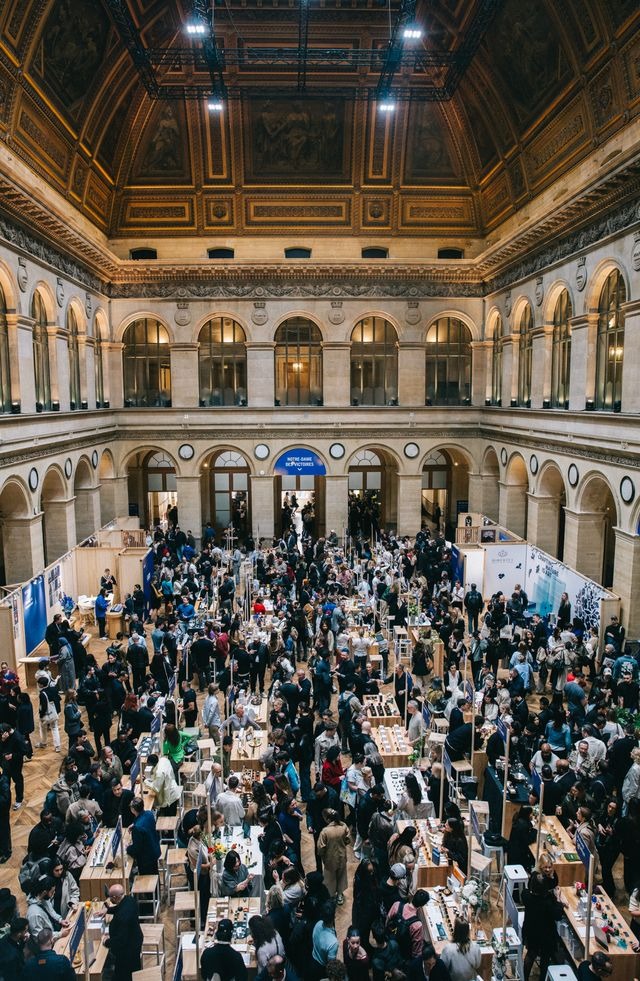
Accredited as press for this year’s edition of the fair, I arrived expecting the familiar mythology of niche perfumery — genius noses, artistic visionaries, weirdly shaped bottles carrying promises of seduction, nostalgia or transformation. Spend enough time on fragrance forums and certain perfumers turn into legendary figures, their names attached to cult creations and ‘masterpieces.’ Most of them, unsurprisingly, are men.
But walking through Paris Perfume Week, I found myself speaking mostly with women.
Not only perfumers, but communication directors, producers, event coordinators and brand representatives — the people translating fragrance into narrative, atmosphere and cultural identity. Contemporary perfumery, I realised, no longer revolves solely around the solitary creator imagined by luxury marketing. Behind every bottle there is an ecosystem of collaborative labour, much of it remaining strangely invisible.
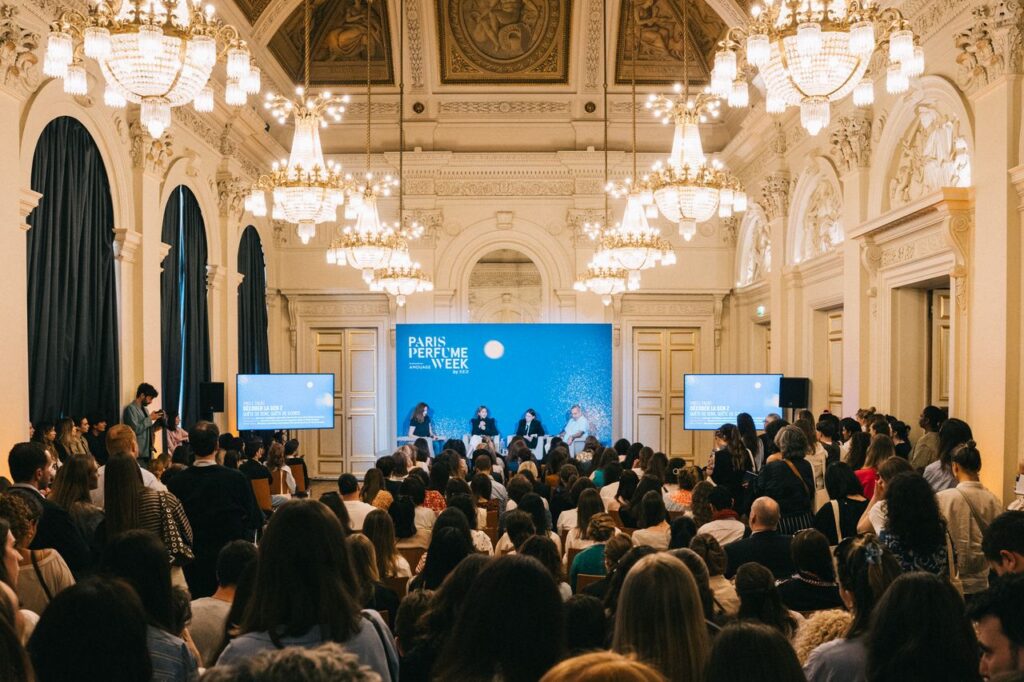
According to the Spanish fragrance and cosmetics association Stanpa, women now occupy 56.6% of executive and leadership positions in the cosmetics and perfume sector. Yet visibility within perfume culture still tends to revolve around a handful of celebrated “noses,” reinforcing the fantasy of singular genius that luxury industries continue to sell exceptionally well. Let’s talk about it.
The Myth of the “Nose”
Perfume culture has always been obsessed with authorship. A fragrance rarely exists as just a smell; it arrives attached to a creator, a mythology, a signature. Certain perfumers become celebrities in their own right, their names repeated across perfume communities with almost auteur-like reverence. Think: Jean-Claude Ellena, Francis Kurkdjian, Quentin Bisch…
And yet, the deeper I moved through Paris Perfume Week, the more unstable that image began to feel.
Between launches and presentations, conversations constantly drifted toward logistics, communication, sourcing, storytelling and collaboration. Fragrance, despite its artistic aura, revealed itself as something profoundly collective — built through networks of people shaping not only how perfume smells, but how it is experienced, narrated and emotionally understood.
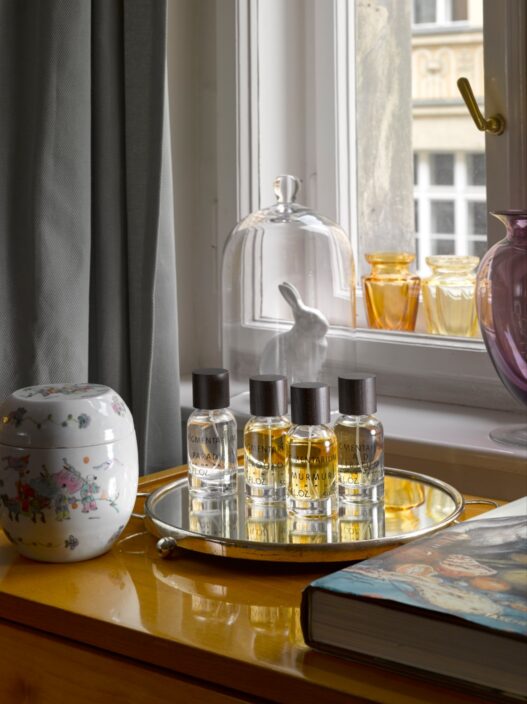
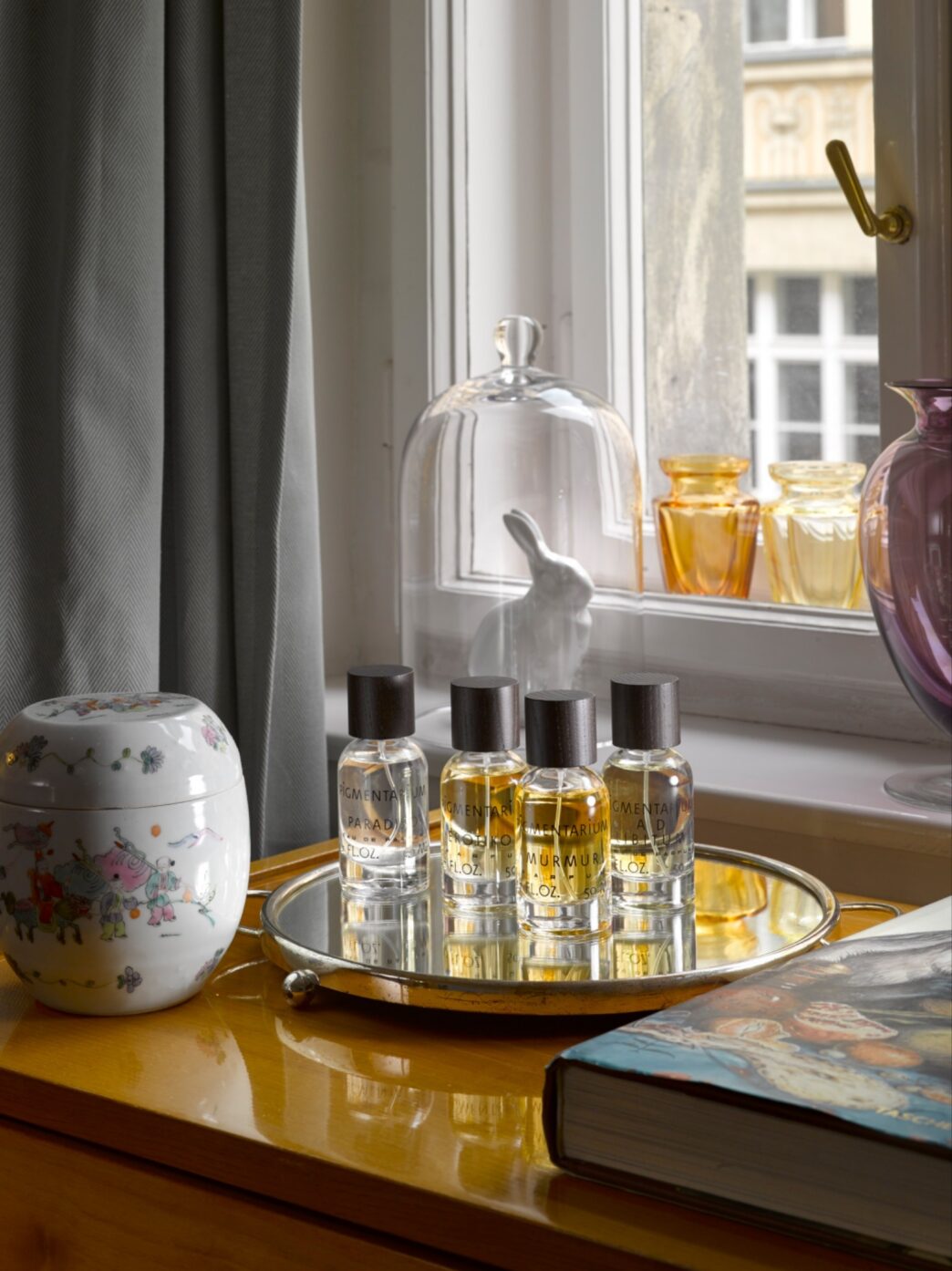
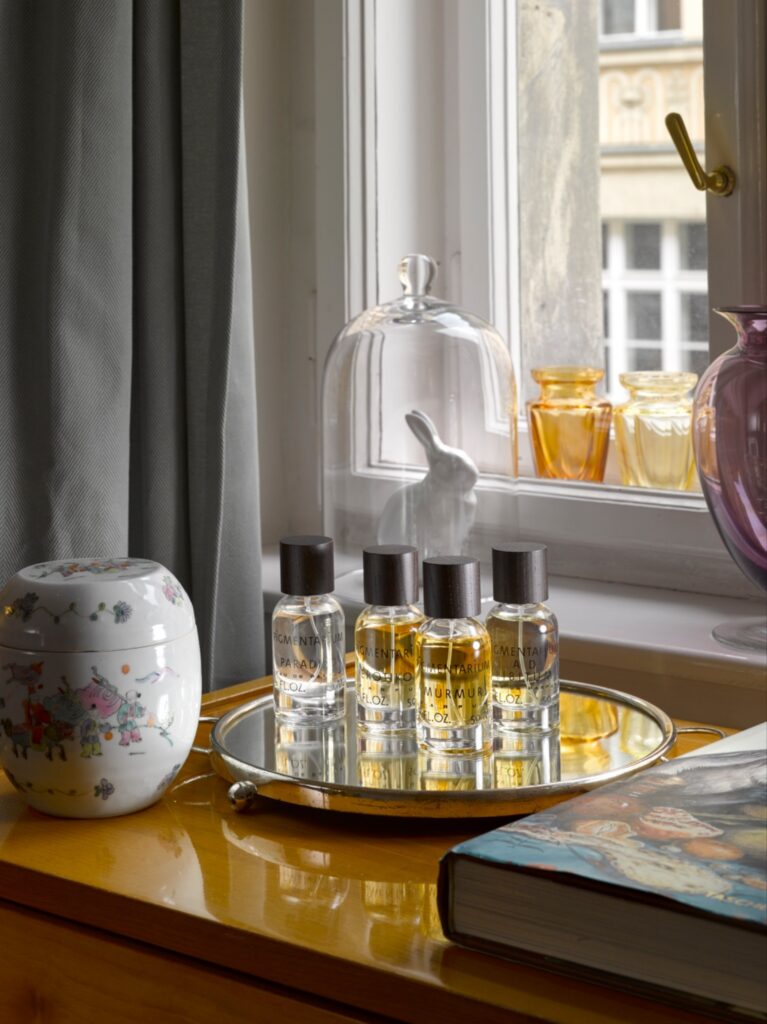
One conversation that stayed with me came from Pigmentarium, an independent fragrance house founded in Prague. I stumbled upon their booth in a smaller room adjacent to the main hall. Around me, conversations drifted between fragrance, brutalist architecture, craft production and Prague itself. Armed with exactly one (1) Czech friend as a conversation starter, I decided to get to know the brand better.
There, I struck up a conversation with Kateřina Dvořáčková, whose work within the brand spans online marketing, e-commerce, influencer collaborations and event production. The breadth of the role itself was telling. In contemporary perfumery, especially within independent brands, creative labour rarely fits neatly into a single category anymore.

“My work naturally spans several areas,” she told me. Rather than defining herself through one fixed title, she described her role as “a connecting point between the brand and its audience, whether through content, digital platforms, or personal encounters.”
The theme of connection returned repeatedly throughout our conversation. While perfume culture often centres the image of the solitary “nose,” Kateřina instead described fragrance creation as something fundamentally collaborative — less a singular act of genius than an ongoing dialogue between perfumers, creative directors, communicators and audiences.
Beyond Singular Genius
At Pigmentarium, fragrances are not developed around trend forecasting or rapid market turnover. Kateřina repeatedly returned to the idea of continuity: long-term creative relationships rather than endlessly rotating collaborations designed for novelty.
“We do not seek out a different author for each fragrance,” she explained. “Instead, we build creative relationships that reflect the artistic continuity of our perfumes.”
In her description, the perfumer remains central, but not isolated. Stories, visual references and emotions emerge collectively through conversations between perfumers, founder Tomáš Ric and the wider creative team. “The perfumer does not bring their own idea,” she said, “but rather the talent, expertise and imagination needed to express the narrative they are entrusted with.”
At the same time, she insisted these collaborations are deliberately protected from the pressure of market logic. “They are never pressured to follow trends or market research. They are guided by the story itself.”
Coming from a background in marketing and communication, Dvořáčková herself becomes involved during the evaluation of fragrance compositions, contributing reflections on emotional resonance and the way a scent communicates beyond the niche perfume bubble. It is a form of creative labour that rarely appears in glamorous perfume campaigns, despite shaping how fragrances ultimately reach audiences.
When I asked about visibility within the industry, her response complicated the simplistic idea between hidden creators and visible brands. At Pigmentarium, she explained, perfumers are treated as an integral part of the fragrance narrative itself.
“We are genuinely proud of the people whose paths cross with ours,” she told me. “Visibility and recognition are a natural part of that relationship.”
Their newest fragrance, launching later this month, was created in collaboration with French perfumer Théo Belmas — his third fragrance for the brand. Rather than hiding creators behind marketing abstraction, Pigmentarium regularly includes perfumers in interviews, campaigns and public presentations. Belmas himself was present during the fragrance’s unveiling in Paris.
What emerged from our discussion was not the complete disappearance of authorship in the modern world, but something more collaborative and honest. Behind the magic of a fragrance bottle lies collective work: perfumers, creative directors, marketing specialists, communicators and craftspeople shaping not only how a perfume smells, but how it ultimately reaches the world.
Prague in a Bottle
Unlike many perfume houses relying on vague Mediterranean fantasies or interchangeable luxury minimalism, Pigmentarium repeatedly returns to its homeland — Prague. Fragrances reference the visual language of Czech modernism and brutalist architecture, while the brand’s broader universe incorporates porcelain, paper craft and small-scale Central European production.
That attachment to place becomes especially interesting in a perfume industry often obsessed with abstraction — selling ‘Italian summers,’ ‘Parisian chic’ or anonymous visions of luxury detached from any real geography. Pigmentarium, by contrast, seems deeply interested in atmosphere as cultural memory.
One of the fragrances that stayed with me most was Erotikon, inspired by Gustav Machatý’s controversial 1929 Czech silent film of the same name. (At this point, I can already hear my friends asking: “Couldn’t you find anything even more niche?”) Built around chocolate, ginger, pink pepper, vanilla and tonka bean, the scent moves between softness and sensuality without fully settling into either. Even its description resists fixed interpretation: “Elegant or seductive, you decide.”
Another fragrance, Brutal, feels cinematic in a different way. Inspired by the aesthetics of the 1970s, it opens with notes of Negroni, black coffee and orange blossom before unfolding into white florals, tobacco and sandalwood. The result evokes not only perfume, but interiors, textures and a very particular Central European nostalgia — amber lighting, magazines, cigarette smoke in cafés.
Rather than using Prague as a branding accessory, the city feels structurally present within the fragrances themselves: not only in visual references, but in mood, architecture and cultural memory.
This philosophy also extends into production. The brand collaborates with Czech craftspeople and small family businesses for various elements of packaging and manufacturing, while certain materials are sourced directly from the regions where their traditions originate. In an industry increasingly shaped by acceleration and endless launches, this slower relationship to production feels like an act of resistance.
The Future of Scent
When I asked Dvořáčková what changes she hoped to see within the perfume industry itself, she returned to the idea of slowness — something that feels increasingly radical within a beauty economy built on constant novelty.
“To me, perfume is something that should be given time,” she said. “Time to emerge, to mature, and to be experienced. Not merely as a product, but as an experience one can continuously return to.”
At Pigmentarium, this philosophy translates into what she described as “creative slowness” — an attempt to allow fragrances to exist outside the accelerated rhythm of trend cycles and algorithmic consumption. I was struck by how closely this idea aligns with the Lazy Women’s vision. We are constantly exploring what it means to create with greater ease and intention, rather than through endless urgency or churn, and it was genuinely exciting and refreshing to encounter a working example of that philosophy in Pigmentarium’s approach.
When discussing the growing visibility of women within fragrance houses and brand structures, her answer avoided the triumphant language of corporate empowerment campaigns. “Women are far more present today,” she reflected, “not only as part of teams, but also as confident and distinctive creative voices shaping the direction of brands.”
What mattered more to her, however, was balance rather than representation as spectacle. “Everyone brings a different perspective, sensitivity and way of thinking into the process,” she explained. “It is precisely this diversity that feels essential to me.”
To me, the most striking part of her answer came at the end of our conversation.
“Perhaps this freedom is where I see the greatest shift today,” she said, “in the fact that it is spoken about less and naturally lived more.”
Of course, perfume remains a luxury. But what stayed with me after leaving the fair was not only the fragrances. It was the contradiction at the centre of contemporary perfumery: an industry still deeply attached to the myth of singular genius, even as its stories are increasingly shaped through collective and often invisible forms of labour.
That is why the conversation I found myself returning to came not from Paris, Milan or one of the industry’s established capitals, but from Prague.
The fantasy remains seductive. Reality, however, smells far more collaborative.
Written by Julie Antropova.
Julie Antropova is a Paris-based journalist and newsletter lead at Lazy Women. A linguist and translator by training, she writes on culture, arts, and beauty.