


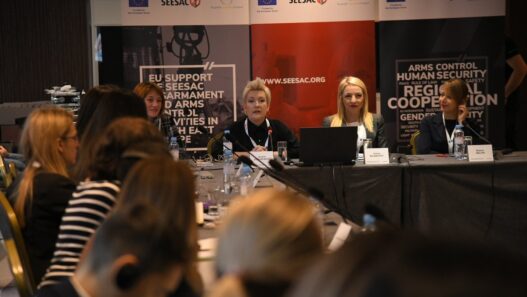






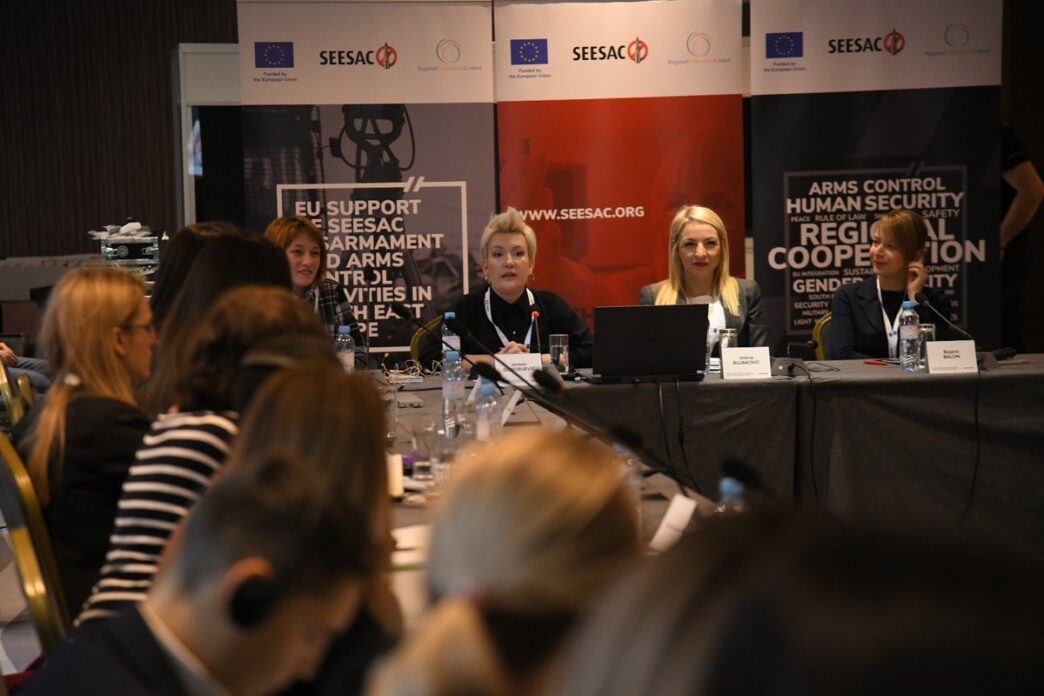
The group Women Journalists Against Violence Toward Women has, since 2017, brought together dozens of female journalists from Serbia who support each other in the demanding and often emotionally exhausting conditions of journalistic work.
Through developing guidelines for ethical reporting on violence, media monitoring of coverage of violence against women, and professional trainings, the group has for nine years functioned as a space for learning, solidarity, and collective response to harmful media practices. It also regularly points out systemic failures in both media and institutions—failures that directly affect public understanding of gender-based violence.
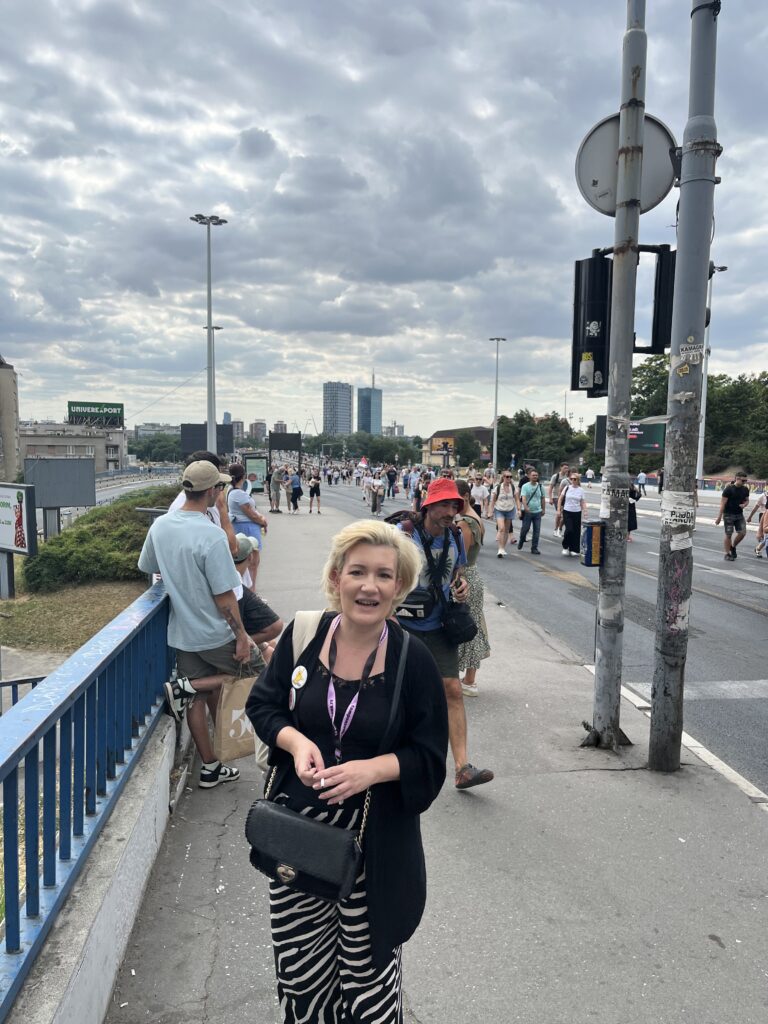
Jovana Gligorijević, a journalist at the weekly Vreme, is one of the group’s founding members. She explains that the initiative was created through cooperation between Serbia’s non-profit non-governmental organization Fund B92 and the United Nations Development Programme (UNDP).
“Fund B92 had been conducting trainings for journalists for years, but the quality of reporting didn’t improve. That showed that the problem wasn’t only journalists, but editorial policies, the market, and the race for clicks. Together with UNDP, they decided to connect those of us already committed to ethical reporting on gender-based violence (GBV). They first invited three of us. Today we joke that it grew like multi-level marketing — each of us brought in three more journalists, and eventually women started joining on their own,” she recalls.
The network brings together both freelance journalists and those working in newsrooms. In practice, it is nearly impossible to focus exclusively on one topic such as violence against women, as journalists are also covering politics, social unrest, and other breaking news — often simultaneously and under pressure. Jovana says this creates constant emotional and professional strain.
“We share the fate of journalists in Serbia. None of us covers only GBV; we also cover politics and social issues. In one moment you are speaking with a woman who survived sexual or partner violence, and shortly after you are at a protest or analyzing political statements. Then you go home and try to function normally. When reporting on GBV, there is always a legal risk if something is misreported or if the presumption of innocence is violated. Even when careful, journalists are often sued for defamation, which is financially and emotionally draining,” she says.
She adds that one of the most difficult systemic issues is institutional silence.
“The worst part is when a story is published, the public reacts, demands action, and institutions do nothing. That silence is the hardest thing to deal with,” she says.
How the Group Works
The group operates on principles of equality and solidarity, without formal hierarchy.
“There are around 100 women on a mailing list. When something happens, one email is sent, usually saying, ‘I think we should react.’ Within minutes, ten of them respond with ready-made proposals for strategies for a specific case. And sometimes a miracle happens, and the media remove the problematic content, better protect someone’s identity, or replace a terrible photo,” Jovana explains.
This collective approach is not limited to rapid reactions. It also shapes the group’s annual monitoring and analysis of media reporting on violence against women. The most recent analysis, published in 2024, showed that Serbian media rarely address violence against women unless there is a specific triggering event.
“About three quarters of media coverage refers to individual cases of violence. This shows that violence against women is rarely treated as a broader social issue. Editorial priorities and insufficient knowledge on how to contextualize GBV contribute to this,” the analysis states.
Jovana explains that the analysis process itself is also a learning experience.
“All GBV-related media content in Serbia is collected and analyzed. UNDP sends us media clippings, and each journalist works on a specific period. Those doing it for the first time are supported by more experienced colleagues. It can be emotionally intense — you go through anger, frustration, even nightmares. The coding sheets include space for qualitative notes, which later become the basis for identifying the best and worst examples of reporting,” she says.
When problematic reporting is identified, the group contacts the newsroom and offers training. According to Jovana, no media outlet has refused. “When we identify good practice, we also reach out and invite journalists to join us and exchange experiences,” she adds.

Journalist Mirna Laković, who participated in several analyses, says the work revealed the scale of media responsibility.
“Working on analyses of reporting on violence against women, as well as on firearm misuse in the context of GBV and mass shootings at school in Belgrade, and also in Malo Orašje and Dubona, made it clear how much power media workers have — and how often it is used irresponsibly. Journalism directly shapes how society sees victims and survivors,” she says.
From Critique to Concrete Solutions
Beyond analysis, the group develops practical tools. It has created guidelines for ethical reporting on violence against women and a photo database designed to replace harmful visual tropes in media reporting.
Jovana says the guidelines are effective for two reasons.
“First, they were written by active journalists who understand newsroom realities. Second, they are based on research conducted with women who survived violence and who were then asked to evaluate media content as either empowering or harmful. They are also developed with experts providing psychological support and grounded in trauma-informed journalism principles,” she explains.
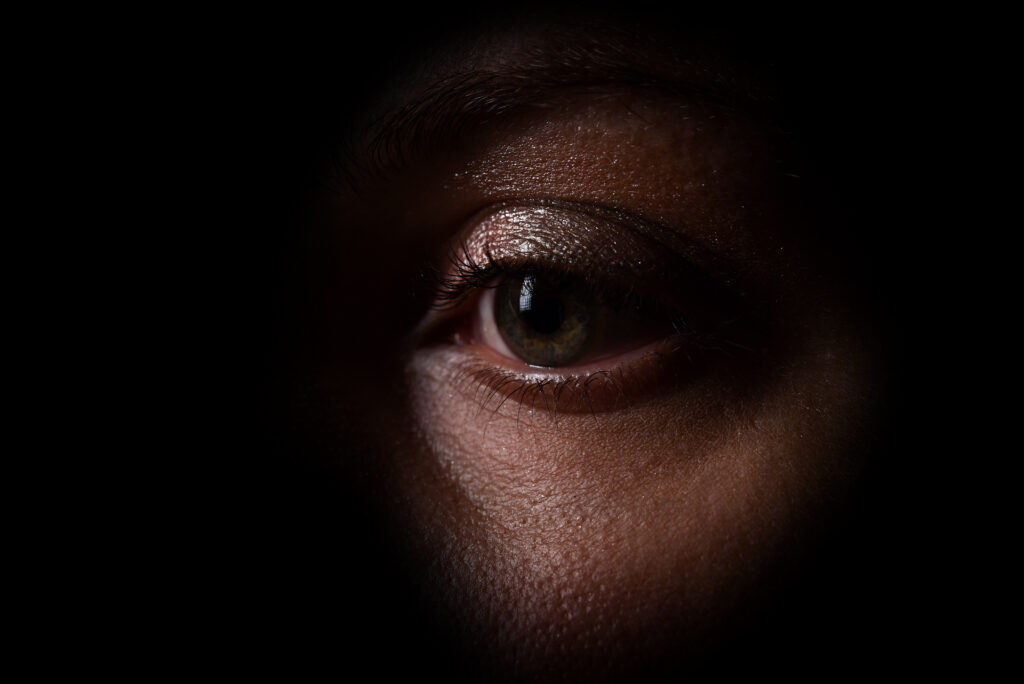
Visual representation is also an important part of reporting. Images such as bruises or crime scene removals remain common in some Serbian media, but the group argues they are harmful and retraumatizing. As an alternative, they developed a photo database created by photographer Marija Janković with contributions from around twenty women photographers.
“Research showed that stereotypical images, like a clenched fist over a woman in a corner, are deeply traumatizing. We wanted to find visuals that are empowering. As far as we know, there are no similar initiatives globally. Media outlets are increasingly using this database,” Jovana says.
A Regional Model of Solidarity
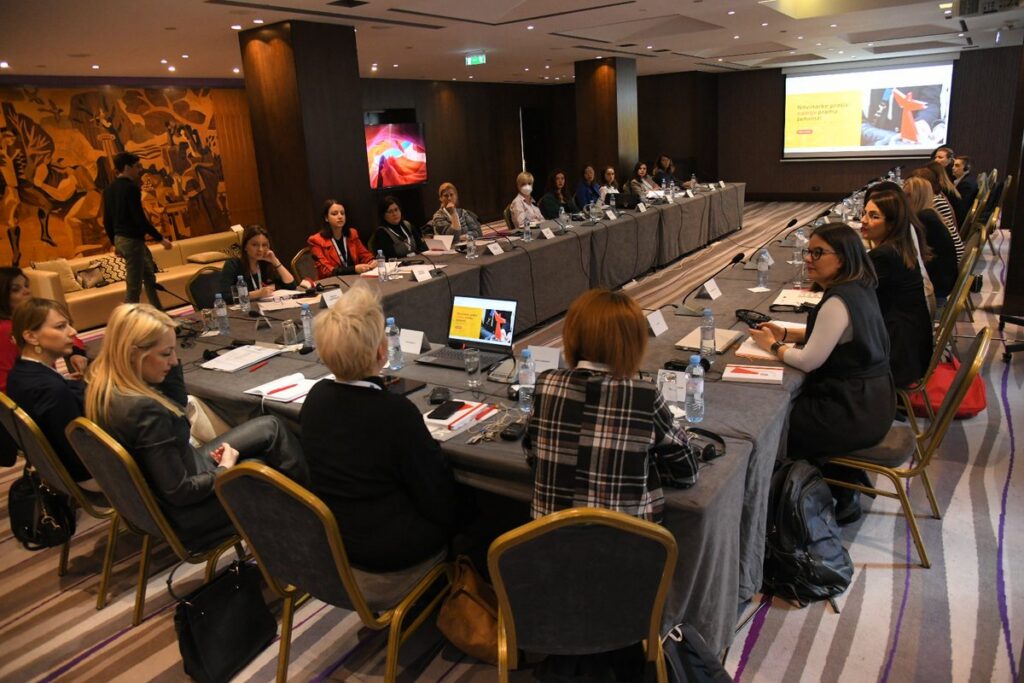
Although based in Serbia, the group has developed regional connections with journalists and activists in Bosnia and Herzegovina, Montenegro, Kosovo*, North Macedonia, and Albania. Inspired by the model, similar initiatives are emerging in the region.
“Our goal is to become a regional network, but that requires significant resources,” Jovana says.
She adds that solidarity among journalists is especially important in contexts of political and social instability.
“The group provides support that newsrooms often cannot. When I worked on the hardest story of my career, my editors supported me professionally, but only colleagues doing the same kind of work truly understood what it meant. When journalists receive threats, which is common in Serbia, we are there for one another,” she says.
Because of increasing pressure and the complexity of cases journalists now face, the group is expanding its focus.
“We are increasingly being asked for advice on reporting not only on GBV, but also on mass shootings, disappearances, and corruption-related tragedies, and other situations that reflect the crisis in Serbia. That is why we are moving toward a broader focus on trauma-informed journalism,” Jovana Gligorijević concludes.
Written by Milica Mihajlović.
Milica Mihajlović is a freelance journalist and narrative storyteller from Serbia. She is the author and host of two narrative podcasts, Glas lokala (focused on local media) and Dnevnik jedne mladosti (exploring youth issues and student protests), and a co-author of the podcast Naša posla, a narrative series about people, communities, and everyday life in the region. Her work has received multiple journalism awards.
All photos courtesy of Journalists Against Violence.


