











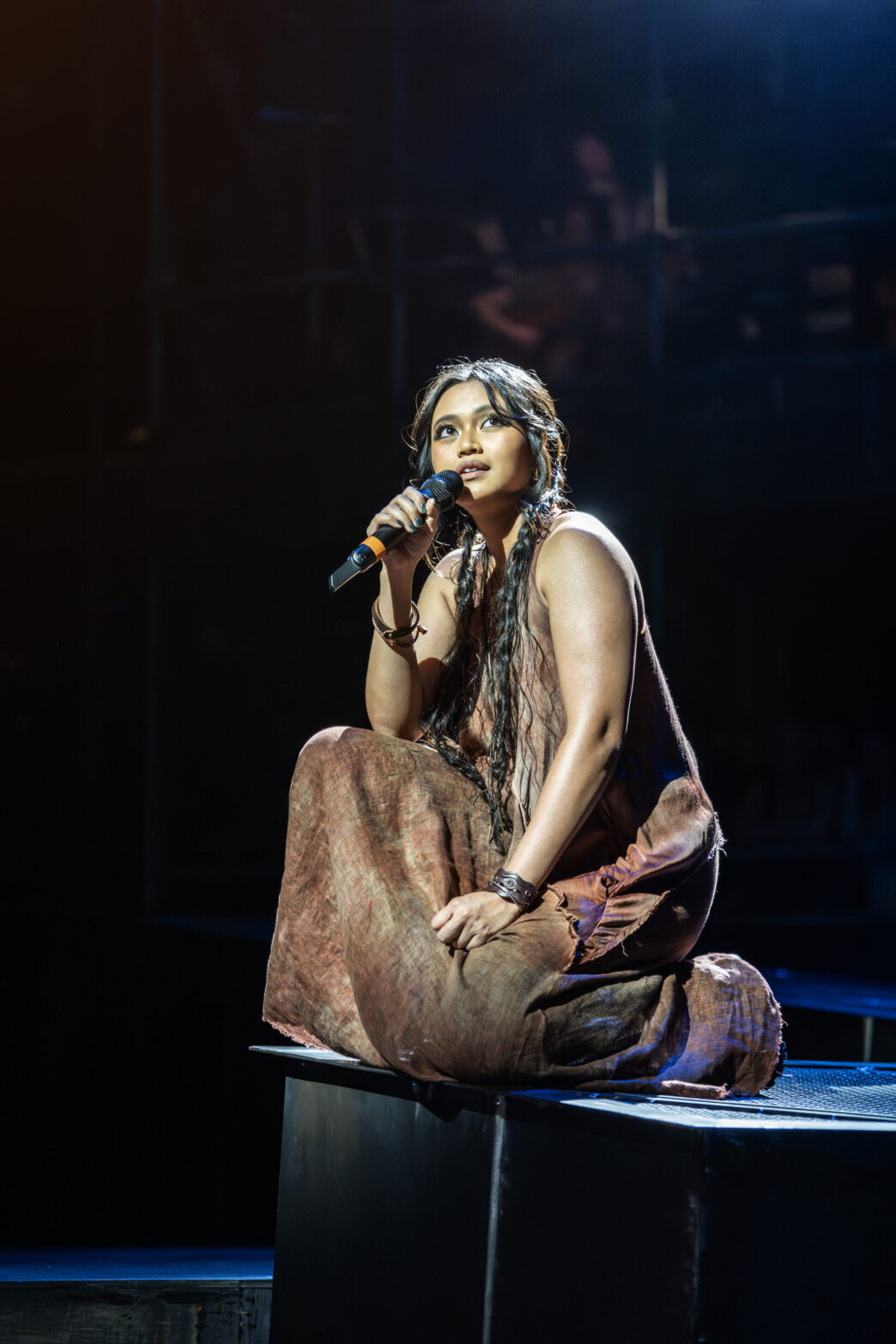
Most nights during her run in Hadestown, there was a phrase in Indonesian that only a handful of people at the Lyric Theatre would catch. ”Nyanyiin dong”, by Desmonda’s own explanation, roughly translates to ”Sing it!”. The ones who did would find Desmonda Cathabel at the stage door afterwards, not quite sure they had heard it right. What they said next was usually the same: they had never seen an Indonesian person on a West End stage before.
There had never been one in a leading role. Cathabel’s Eurydice was a first, and she got there by an unlikely route. Musical theatre barely exists as an industry in Indonesia, and there is nowhere to train in it. She found it on YouTube as a teenager, then spent eight years building the scene she couldn’t find, co-founding the Jakarta Performing Arts Community and staging amateur shows around university and, later, a corporate job. When the pandemic emptied her calendar, she used the time to apply to the Royal Academy of Music. She arrived in London in 2021 knowing almost no one.
Since then, things have moved fast. She was named the Stephen Sondheim Society’s Student Performer of the Year in 2022, then played Princess Jasmine on the UK and Ireland tour of Aladdin, alternate Kim in Miss Saigon at the Sheffield Crucible, and Eurydice. This autumn she is Mary Magdalene opposite Sam Ryder in Jesus Christ Superstar at Theatre Royal Drury Lane.
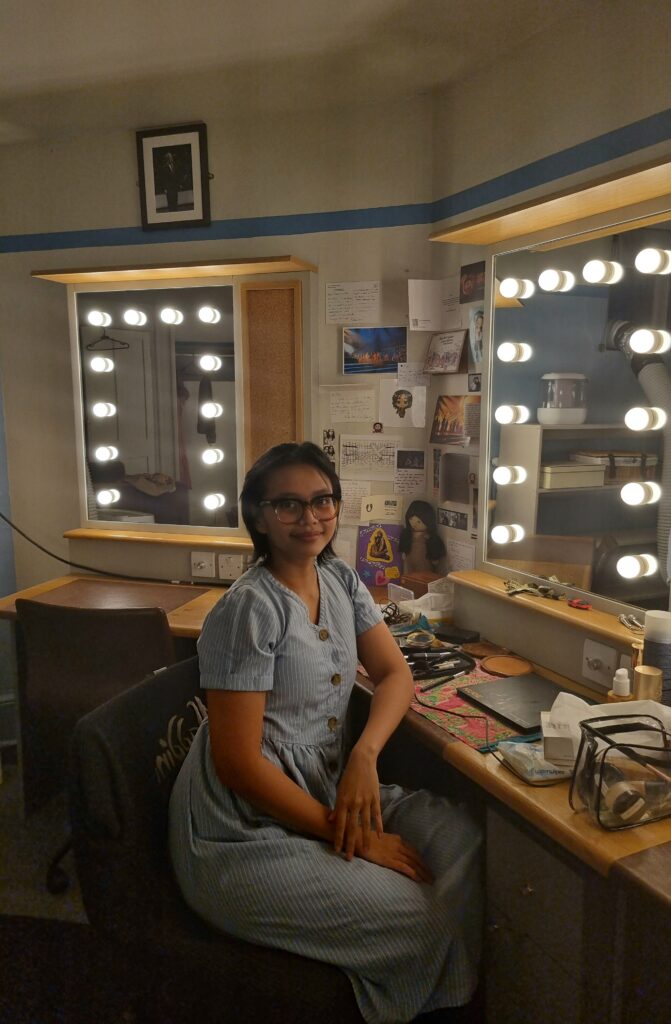
I met Desmonda on a cold, clear October day in her dressing room before her absolutely electric evening show to talk about what it took to get here, community theatre, the myth of suffering for your art, and refusing to play anyone as a stereotype.
The training before the training
Before you came to London in 2021, you had no formal training in musical theatre. What were those years like, and what did they teach you?
The main context to know is that we don’t have musical theatre training in Indonesia. Even musical theatre as an art form is very, very niche there. I never watched any musical theatre growing up, at all. People just don’t put on musical theatre shows in Indonesia. I got into it through the internet around 2012, 2013, when YouTube was where our entertainment came from, and I remember not knowing where to find the community. I love musical theatre and I want to find my people.
It started really small, with me and my friends bonding over the stuff we saw online. Then we found a small expat theatre community. When I say small, I mean tiny: amateur dramatics, friends and family. It grew, and me and my friends co-founded a company called Jakarta Performing Arts Community. We were the first to really put on a lot of amateur musical theatre in Jakarta.
That was my training before my training. I got to be on stage. I got to be really bad at singing, acting and dancing, and that’s fine, because we were just there to have fun. But it kept feeding the love. Once you’re in a musical theatre community, the sense of community is so strong you don’t really find it anywhere else. A lot of people find their home there, including me.
I did that for about eight years, through university and then alongside my corporate job. When I got to London and did a year of training, it felt like I already had it: eight years of knowing how to stand on stage, how to work backstage, how to work with different directors and venues and castmates. That’s what taught me you need to be on stage to learn. You don’t have to go straight to the West End. Whether it’s five people or seventy seats, every time you spend working on your craft, it’s worth it.
You moved here right after COVID, while the world was still working out what it would look like. How did you arrive at the decision to pursue this at the highest level?
As unfortunate as it is to say, COVID had a big part in it. The world just shut down. Looking at the possibility that the world could literally end this second, I was like, then what the hell is stopping me from aiming for the gods? I had no job. Things you think will never change, even on an institutional level, changed. Anything could happen. So why not try? I was at home all this time, so I had time to apply, to record things, to do all the papers. It’s unfortunate that it took a pandemic to realise that.
I was also 24, 25. Not super young, not super old. I knew I could do a corporate job because I’d done one, but I didn’t want to. If I started in five years’ time, maybe my body wouldn’t handle it anymore. It was do or die. And being the logical person that I am, it made sense: if I went to London and nothing came of it, I’d still have an education, and I could go back and climb whatever corporate ladder was available. But if I didn’t try right then, I’d never know.
People might think 25 is too late to get into musical theatre, but I found it the perfect time. I already knew what I could do, and what my mental state was. I wasn’t chasing achievement. I just wanted to know if I could do what I love, and if it would work.
Fortunately, it did.
Unlearning the cult of suffering & learning to set the bar
Moving across the world in your mid-twenties, away from your family, your friends and the community you built, must have been daunting. What did you sacrifice? And people always ask what you learned. I’m curious what you had to unlearn.
Oh my gosh, that’s such a good question.
The sacrifice is massive. When I came here, I didn’t know a single person in the industry. I had maybe two old friends from uni in London, and they helped me massively. But I didn’t know a single thing about theatre here or about drama school. I came in blind: okay, just throw it at me. All my friends, my family, my safe spaces, I left behind. I had no backup plan. My main concern was making sure I could pay my rent and my food and my bills.
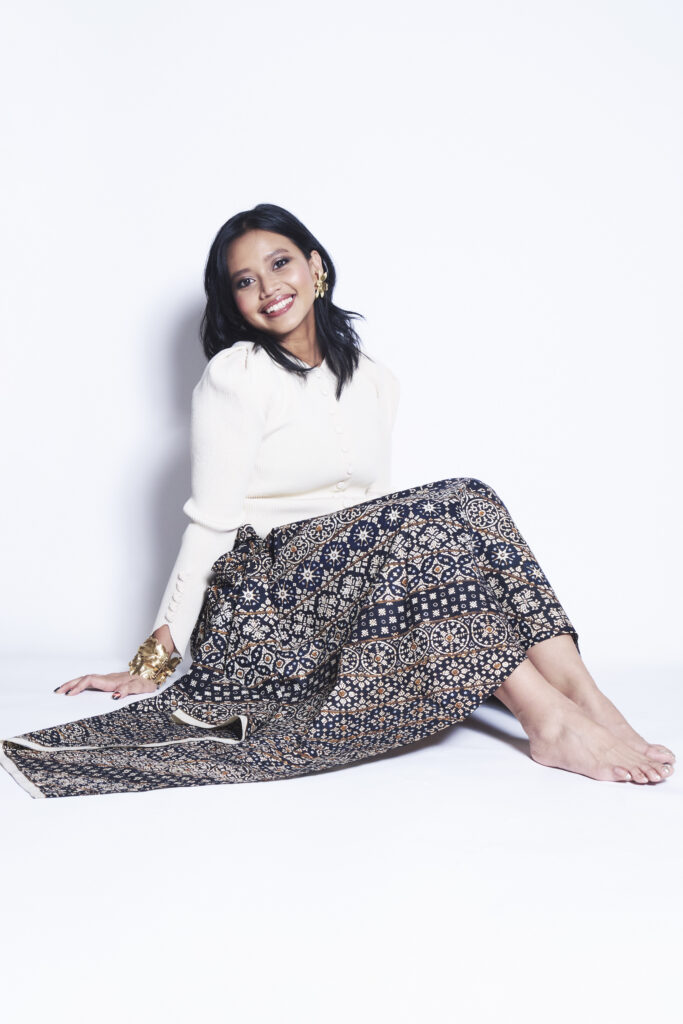
And then, at the Royal Academy of Music, I had to unlearn so much. I had a picture in my head that it would be like the movies: people are mean, the teachers are so hard on you, the pressure is sky high. I think it’s so ingrained in a lot of people in Indonesia that you have to really suffer for your art, and at quite an extreme level. I did cheerleading throughout school, and our coach was so intense. Sometimes it was soul-crushing, the things they would say or do. So I got to drama school expecting that.
I was met with support, with kindness, with genuine friendship. Every single teacher wanted to help you succeed. Sometimes tough love feels a little bit manipulative, and it really wasn’t that at all.
So I had to unlearn the idea that to be amazing, you need violence. It needs love and support and nurture, truly. I wish I could impart that to my friends back home, to everyone pursuing the arts. This is the environment you could give people for them to succeed.
Let’s talk about Hadestown. You became the first Indonesian West End leading lady. Did it feel like the bar had been set, that it wasn’t just about you anymore?
It’s strange, because theatre is still quite niche in Indonesia. There are 200, maybe 300 million people there, the fourth-largest country in the world, and I don’t think the majority of them are looking at me that way. There’s a big community of theatre fans who are like, oh my God, an Indonesian person in the theatre scene. But I don’t carry the burden of the whole country the way you might in TV or film or music.
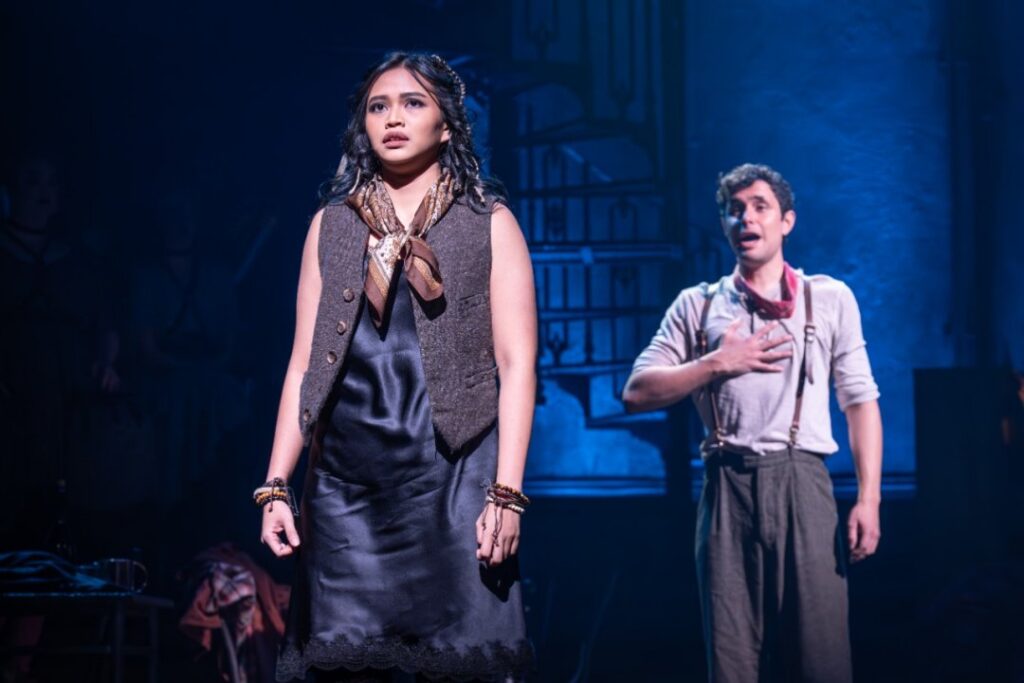
So a lot of the time, I do it for myself. I want to give the best performance every single day because I’ve come such a long way. I’ve paid so much money to be here, with the visas and everything. I’m not about to squander my time on the West End with subpar performances. And it doesn’t feel good to put on a B performance for a live audience. It makes me feel sluggish, like, why am I here? Physically, it feels better to just rip it off and let it all out. It’s become a cathartic release more than a job or a mountain to climb.
But I keep being reminded why it matters. I said an Indonesian phrase in the middle of the show, and it became a thing. Every time there was an Indonesian person at the stage door, they’d say, “I thought I heard that phrase, and I wasn’t sure if I heard it right.” It makes me really happy. There really aren’t a lot of us in London theatre. And it’s so important to see yourself represented. Whenever I see an Asian person on stage, I think, I could do that role as well.
”I try to play the whole spectrum of what this person could be.”
Are you ever afraid of being typecast? Film, music and theatre often push women, especially Asian women, women of colour, and queer women, into boxes they don’t want to live in.
A hundred percent. Something I find about being an actor is that sometimes you’re the last person to have agency over what you do. The writer had a vision of who could play this role, and then there’s the director, the casting director, the producers. You’re the last piece of the puzzle. It can feel quite helpless, not being able to say, no, I want to be seen for this. All actors grapple with that.
I’ve loved the roles I’ve played, because they’re close to who I am. But they’ve also fit nicely into what the industry puts Asian women into: the love interest, the token woman of the play. I’m conveniently ticking those boxes right now. But what if I changed my appearance, or gained weight, or my voice changed as I got older? Is there space for me as an older Asian woman in this industry? That’s what I’m more afraid of.
And I have to ask: what about another Asian actor who is queer, or non-binary, or doesn’t look like what they imagine an Asian woman could be? Where are they? What’s their place? That’s the other side of the coin, and it’s not nice to know it’s there.
So whenever I play these roles, I try to play the whole spectrum of what this person could be. They’re quote-unquote stereotypical roles, but they’re full-fledged human beings. Eurydice is written as suffering, struggling, in love with Orpheus. But is that all she can do in the whole play? I loved playing her joy, her naughtiness, her anguish, all the extremes. Jasmine’s problem, as written, is that her dad won’t let her out. But what does that mean to a whole person? You’re not just going to fawn over Aladdin. You’d probably be angrier, because you’ve been restricted your whole life. Or more joyful, and overwhelmed, when you finally see the world.
Hopefully people see that versatility and think, maybe she can do other things. But as an actor, you don’t really decide what comes next unless you make your own stuff, which a lot of actors do, and that’s amazing too. What I know is that I’m going to try my darndest to play these characters as people, and not as stereotypes.
Mary Magdalene has been represented in so many ways across media. How did you find yours?
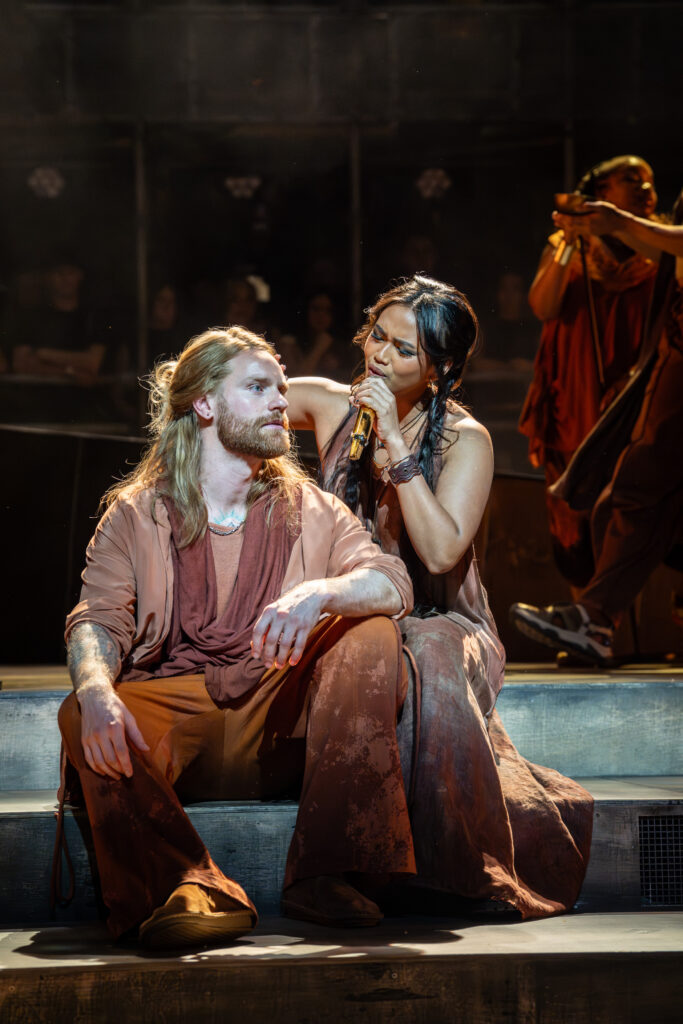
Jesus Christ Superstar is short and sung-through, so there isn’t much text to work with. You fill in the gaps yourself. I don’t come in with a fixed idea of who Mary Magdalene is. I come in as a blank canvas and ask about her relationships with Jesus and Judas.
Our director, Tim Sheader, said this Mary is like the first Christian: the first person to fully understand Jesus’s teaching, living it without knowing it. She’s pure love. So I’m not playing the prostitute a lot of people know, and it doesn’t have to be sensual. I’m playing the genuine outpouring of love that comes from her.
Even “I Don’t Know How to Love Him” isn’t a romantic love song for me. It’s the kind of love that overwhelms you because you’ve found peace, and with it comes confusion, sadness, even a little anger. She’s reached that peace, and she’s grappling with what it means as a normal human being.
”Only do it if you love it”
What has this production taught you, working alongside your fellow artists?
Mostly, it’s taught me about being a musician. The production wants the raw sound of the original 1969 album, so it’s almost a concert. Our musical supervisor, Tom Deering, once had me sing “I Don’t Know How to Love Him” with the full band instead of the piano, and in one go I sang it completely differently. I’m rarely told in musical theatre to listen to the instruments and react. It isn’t about adding riffs or belts. Some nights I hear more of the drums, some nights more of the strings, and it changes.
And riffing off Sam Ryder, our Jesus, and Tyrone Huntley, our Judas, it feels like we’re a bunch of musicians on stage.
How do you unwind from all of this?
That’s a good question, because I need to be better at it. I love routine, and eight shows a week is a massive routine. It can run you down, but I need structure, or everything goes downhill. So it’s simple: I go home, make dinner, and sit by myself.
Scroll on TikTok?
Exactly. Get under my warm blanket and dilly-dally. I scroll a lot, and it’s not good for my brain. I can feel that. But I don’t take my work home. Once I step off stage, I’m myself again. I don’t see why you should carry your character with you. Put that on the record, though. I need to hold myself accountable.
What would you tell performers trying to break into the industry, especially after a career change? What do you wish someone had told you at 25?
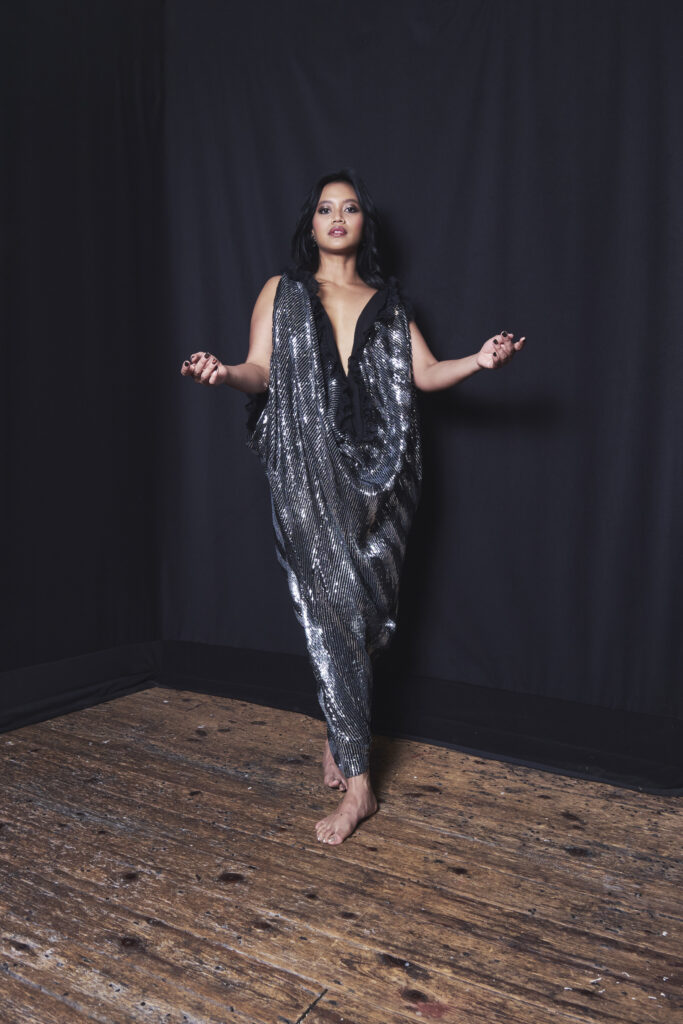
Exactly what I told myself back then: I’m here for myself. Everything I do from this point on is for my benefit. I wasn’t chasing a career or validation. I didn’t know it would be a career overhaul. I thought I was coming here to study, to learn about a new culture, about acting and singing and dancing, about how the industry runs. That was the benefit, and anything after it was a bonus.
Every audition is for my benefit, too. I’ve been seen for soprano roles, and I don’t consider myself a soprano. But it didn’t scare me. You want to see me for a soprano role? Really? Even if you don’t cast me, I get to practise my legit soprano voice.
How lucky am I to do ten-hour rehearsals instead of a nine-to-five in front of a computer? I’ve done that, and I don’t want to do it again. Even waitressing to afford auditions, I’d think, that’s amazing. I’m in London by myself, surviving, and I can pay my rent.
So only do it if you really love it. That love gives back to you. And once doing the thing you love stops giving you any satisfaction, I don’t mean achievement, I mean satisfaction, then stop. It will take too much of you to keep going.
Jesus Christ Superstar runs at Theatre Royal Drury Lane until 9 January 2027. You can purchase tickets here. This interview has been edited for length and clarity.
Written by Teodora Strugaru.


