








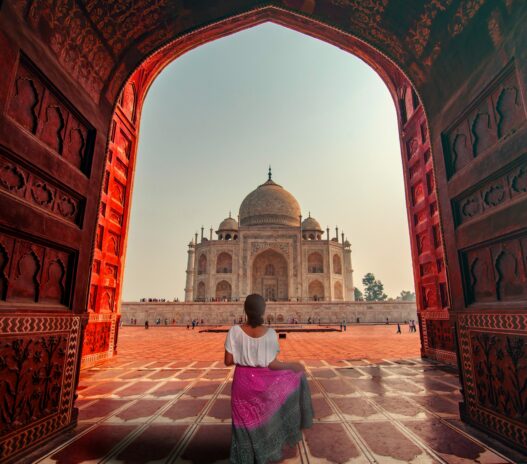
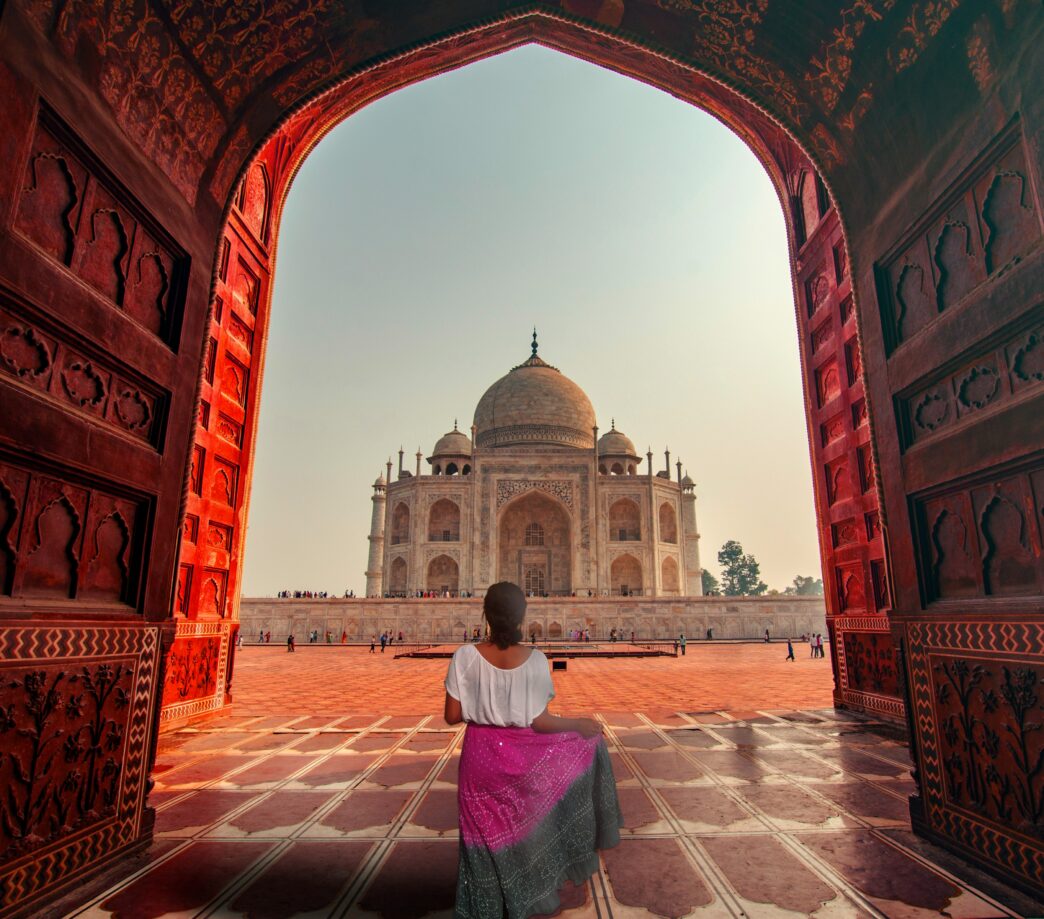
I first caught the travel bug during a university study abroad program in San José, Costa Rica. But with my newfound love of travel, came a nascent awareness on how race shaped my experience. One of the few non-white students in the program, I watched my white peers receive preferential treatment on outings, even when some spoke less Spanish than I did.
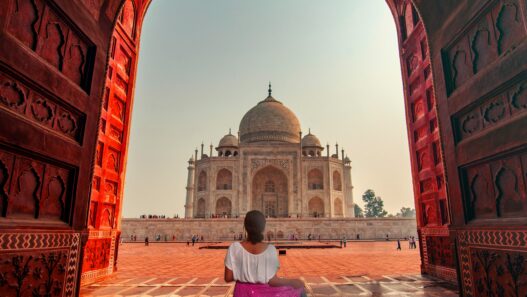
Years later, on a solo trip to Indonesia, I arrived for a sunrise visit to Borobudur Temple. Early morning visitors were photographing the misty clouds hugging the temple’s tallest domes when a sea of Indonesian schoolchildren on an excursion joined us, a chorus of gleeful greetings in English directed at us foreigners. I smiled and greeted them back.
A white British woman who had also been photographing the temple smiled at me and asked, “Are they yours?” It took me a moment to realize she meant whether I was their teacher. I chuckled and watched a glint of confusion – or fleeting embarrassment – cross her face as I replied in my North American accent, “Nope, just a visitor.”
While these are some of the kinder instances of racial bias and othering I’ve encountered on my travels, I’ve learned my brown skin often tells a story before I even speak, and how for some fellow travelers, it’s almost inconceivable that I too would be there, doing the same thing as them.
My years of exploring and living abroad prompted me to become more selective of where I sought travel inspiration, looking beyond conventional advice to firsthand accounts of people who might understand my experiences without needing an explanation. I found I wasn’t alone.
Feeling safe means paying the “avoidance tax”
Over the past decade, women have increasingly surpassed men in the independent travel sphere. According to one stat from the Adventure Travel Trade Association, travel companies dedicated to woman-only clientele have increased by 230% over the last few years, with one multi-national tour company reporting that, of their solo traveler participants, 85% are women.
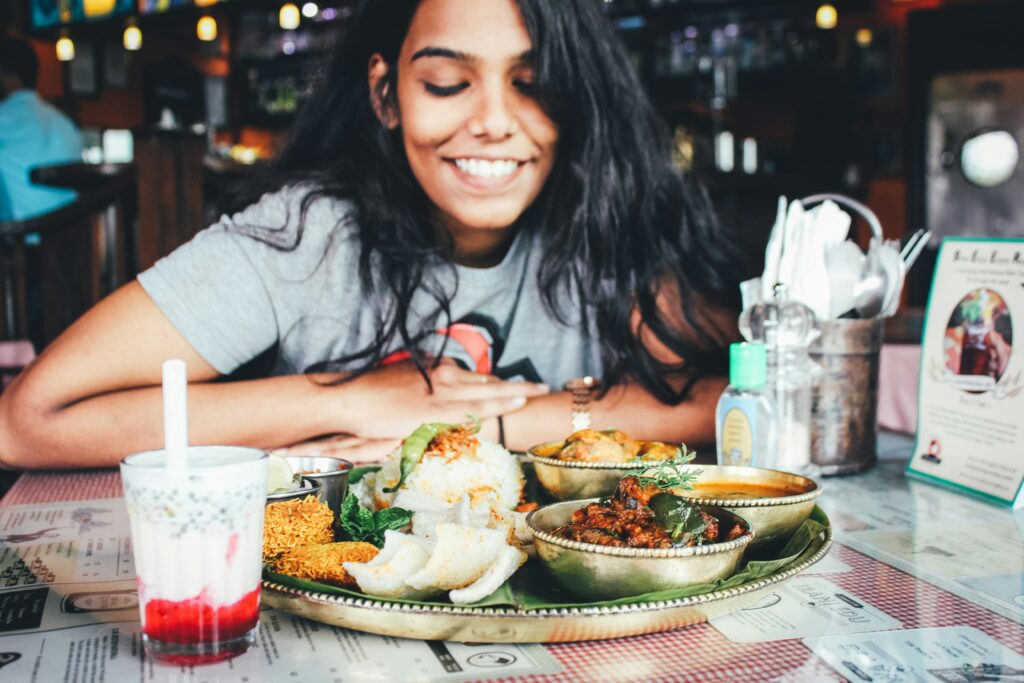
The most uplifting conclusion to draw from these statistics is, that despite the world and its problems – specifically, the oppression of women worldwide, women are choosing to push past the fears and uncertainties that come with traveling alone, and are seeking fulfillment despite it.
Considering that for generations prior, women had often been locked out of travel due to lack of economic power and socio-cultural norms disapproving of their mobility and existence in public spaces, that’s a big win. Add to this that women continue to be on the losing end of wage and income disparities, and it paints a picture of just how rewarding solo travel might be.
That’s not to say that solo travel for women doesn’t come with thoughtful and well-in-advance considerations around known and perceived dangers, and risk to safety.
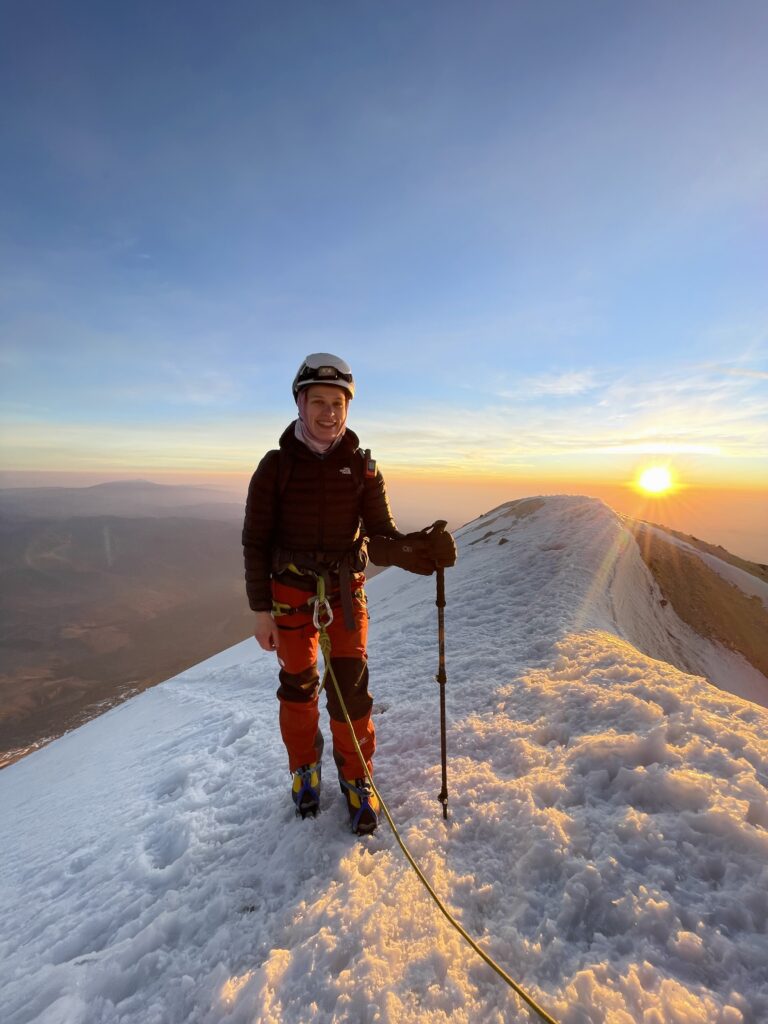
“One thing that stresses me out is transportation and being alone,” says Amina, an avid solo traveler and audacious, budding mountaineer, based in Washington DC. ‘’So figuring that out in advance – I prefer Uber or something with an app that I can track versus just any taxi, depending on where I am.”
What Amina describes is what the Safer Tourist Foundation (STF) coined, the “avoidance tax”, referring to the cumulative financial and psychological toll women absorb by placing limits on their behavior and choices in order to feel safe – such as an exhaustive level of pre-trip safety preparation; avoiding exploring their destination at night, or choosing a direct flight rather than a cheaper flight with an overnight layover; calculations of risk that most male travelers would balk at. It may be easy to second-guess ourselves and wonder if we’re being overly cautious, but STF’s recent She Travels Safe report reveals a grim reality: a 60% rise in reported incidents of sexual harassment and assault of women travelers in 2024. And that’s just the reported ones.
Choosing a destination, for a lot of women, often means weighing the excitement of exploring somewhere new against the conditions that might shape their safety there. For racially and ethnically minoritized women, like Amina, those calculations involve an additional layer.
If mainstream travel advice doesn’t account for you, where do you go instead?
One thing women are is resourceful. Which in part explains the burgeoning swell of firsthand travel accounts, tips shared through blogs and social media, and the growing number of independent tour companies geared solely towards women – and for every kind of travel vibe.
Girls Love Travel (GLT), a Facebook group and global network of active & aspiring womxn travelers, is one of those online forums that has blossomed with the surge in women desiring to see the world.
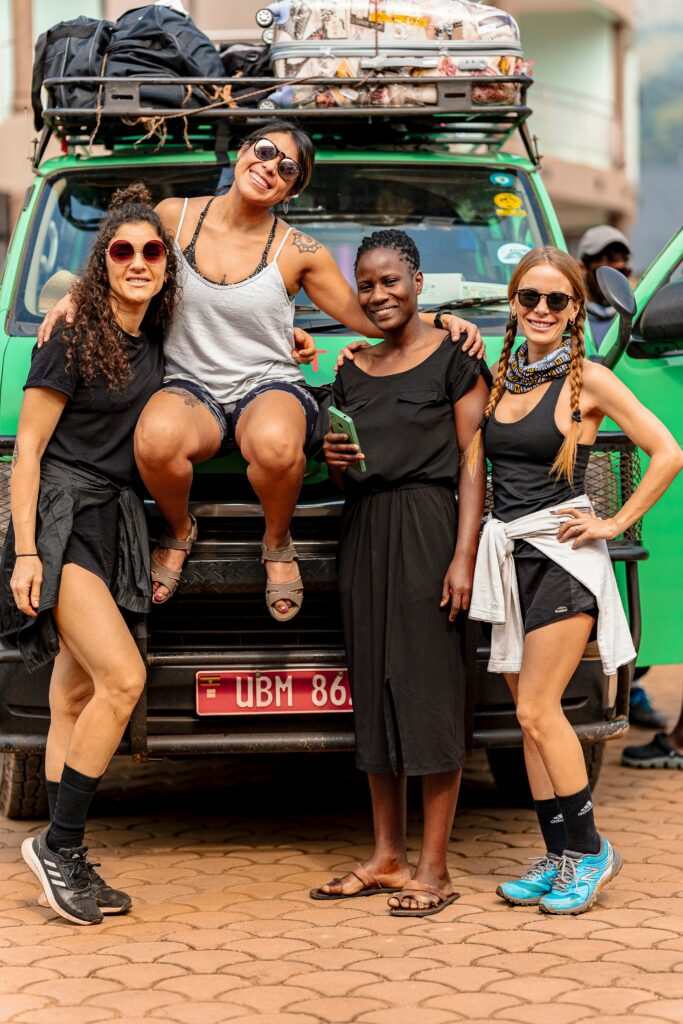
“Girls Love Travel is an international sisterhood, a network to connect with others for safety, socializing, support when you’re out traveling, but also when you’re sitting behind your desk wishing that you were traveling”, says Founder and CEO Haley Woods, who started the group in 2015 as a way to get local recommendations while traveling for work. In its over 11 years of existence, the network has flourished to over 1.5 million members worldwide.
The GLT community has more than a dozen subgroups centering the experiences of minoritized identities or specific lived experiences, including a Pride (LBGTQIA+) subgroup, Curvy (geared toward plus-sized members), and a subgroup for Moms. Mixtries, one of GLT’s largest sub-communities centers the firsthand insight and inquiries shared by women of color.
“As a Hispanic woman, sometimes the conversations that you need to have are difficult, or people may not understand it because they don’t have [the same] lived experiences.”, says Cheila, one of the moderators of the Mixtries group and member of the larger GLT network since 2016. “A lot of travel [advice] has always been very white-centric. Sometimes questions are asked [in the main GLT group], and someone who hasn’t lived that experience wants to answer. So, having a respectful place where you’re gonna get a valuable answer from someone who has experienced that, it really helps.”
While the Mixtries forum serves as a hivemind for practical tips – like finding the right haircare products while traveling, deciding what to wear when attending cultural events, or seeking culturally responsive healthcare abroad, it also demonstrates that the notion of ‘safety’ goes beyond avoiding crime or harassment.
The topics that emerge in posts reveal that planning a trip can also mean bracing for potential racism (What is it like traveling there as a Black woman?), xenophobia and a hostile political climate (Anyone been there recently? Did you feel welcome with everything going on?), Islamophobia (Has anyone been there as a hijabi?), and other forms of discrimination.
“I’m very aware that I’m a Black Muslim woman who wears a hijab”, says Saida, a Minneapolis-based birth doula and public health practitioner, who also documents her solo travels as a content creator. “You do have to think about [it], and it’s sad that we have to deploy all that mental energy. Anti-blackness and Islamophobia is universal, and that also impacts my travel decisions – where I go, where I stay and where I sleep.”
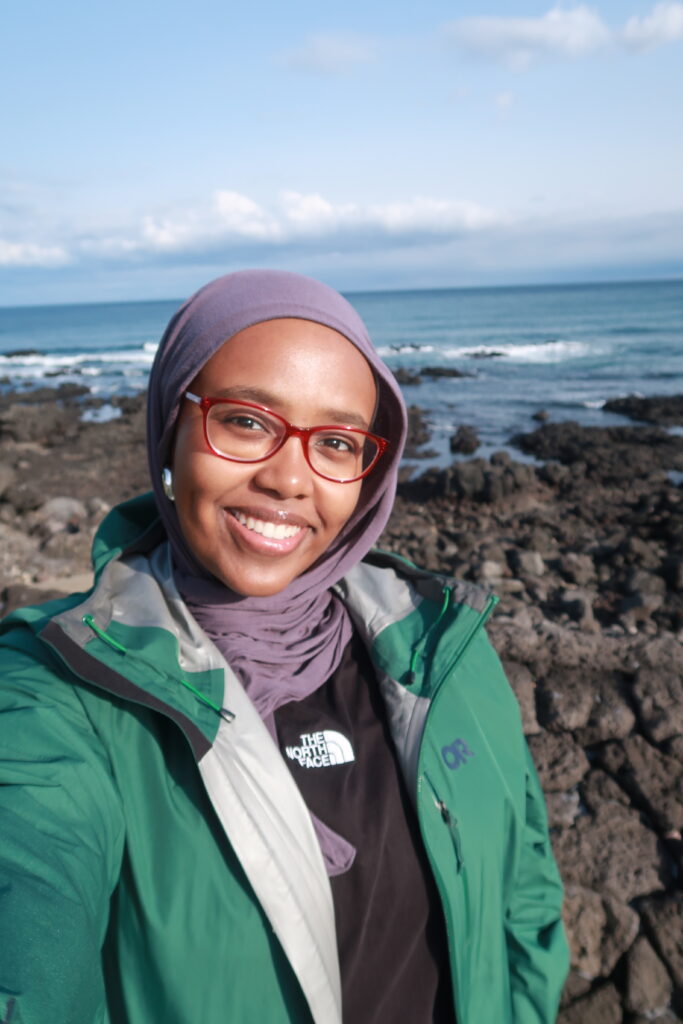
Interestingly enough, both Saida and Amina made similar mention of the risks at home in contrast to the perceived risks abroad. “A lot of [travel] is about trusting your discernment and your best judgment. It taught me that there are more good people than there are bad, and I don’t know if it’s just a result of growing up in the U.S. I think there’s a lot of fear-based upbringing that we go through here, it’s like everyone could be a potential danger or threat to you”, says Saida.
For Amina, an Egyptian-American who was also raised in a Muslim family, the criteria for a desirable destination often pushes against pre-conceived notions and other people’s prejudice. “First, I’m not going to go to another country that doesn’t support these parts of my identity and my family. I also have a lot of narrow-minded coworkers who are shocked by the places I go, but America is not that safe, especially if you’re a minority. I really do feel safer in these other places than I would in a major city here sometimes. Having to explain that to people is kind of funny, they don’t really understand it.”
Cheila from GLT puts a finer point on this when emphasizing the limitations of treating travel advice as a monolith.
“We’re very mindful of the word ‘safe’ because yes, as a woman, we are less “safe” than other people. But you don’t hear people asking those questions about Ireland or the UK. It’s usually marginalized places, and a lot of what makes [those places] safe for you may not make it safe for me. Safety as a person of color or someone who’s part of LGBTQ community is different.”
Traveling beyond the scripts written for us
“I grew up in a working-class family, and travel just wasn’t something that we were able to afford,” says Saida, a Somali-American whose connection to travel began with family ties. “Growing up in a family where you have relatives all over the world, I felt a strong connection to travel…and that sort of piqued my interest. I would watch Travel Channel, National Geographic, and PBS specials.”
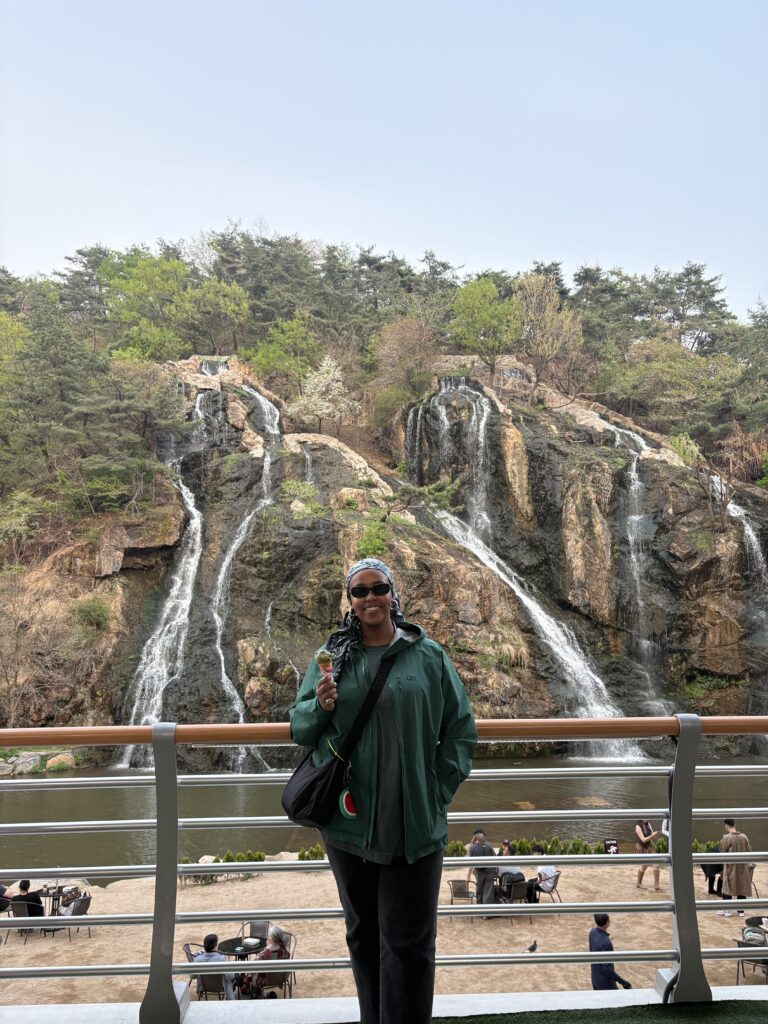
Saida recently returned home after an eight-month solo expedition through nine different countries, including Kenya, Oman, and South Korea. She spent that time documenting her trip online, challenging one-dimensional perceptions of Muslim women while pushing back against the sore underrepresentation of Muslims in travel media. “I’m grateful that in the last five years things have changed, and there are more Black women, especially Muslim women, sharing their experiences and going against the stereotypes that we have to remain home or that we can’t travel alone.”
“I’ve come across hundreds of videos of Muslim women or women who wear the hijab who are backpacking and hiking and doing it all, and I think just by sharing that experience, it shuts down so many stereotypes.”
Beyond challenging stereotypes about who gets to travel, women are also challenging expectations about what their lives should look like. Amina, an Egyptian-American member of the Mixtries group, first discovered her love for solo travel after a trip originally planned with an ex fell through. “It’s always because of an ex, right?” Amina laughs. Now a globetrotting mountaineer who climbed the tallest volcano in North America earlier this summer, and plans to climb the tallest peak in the Western Hemisphere in December, Amina is candid about some of the generational expectations she’s defying, having chosen a lifestyle that involves more international trips (at least 15, she’s lost count) than babies (0), and a deeper commitment to her strength training regimen than to a long-term partner.
“I’m almost 30. My life looks very different than my mom’s did when she was my age. She had three kids. There [were] very specific expectations of what my life would look like. It was like this laid out path and I have definitely deviated from that.”
Amina faces a different set of expectations when she’s far from home. Despite an increasing number of women seeking bucket-list treks and gear-clad mountain peak adventures, everyday interactions expose the macho, white, Western culture that continues to dominate the outdoors. She knows this intimately, having often found herself in outdoors settings where women’s physical capabilities are easily underestimated. “I climbed Mount Rainier this summer – there were probably 30 people total [where] we were camping and I was the only woman. My backpack weighed almost half my body weight, and all these guys were struggling with their lighter backpacks.’’
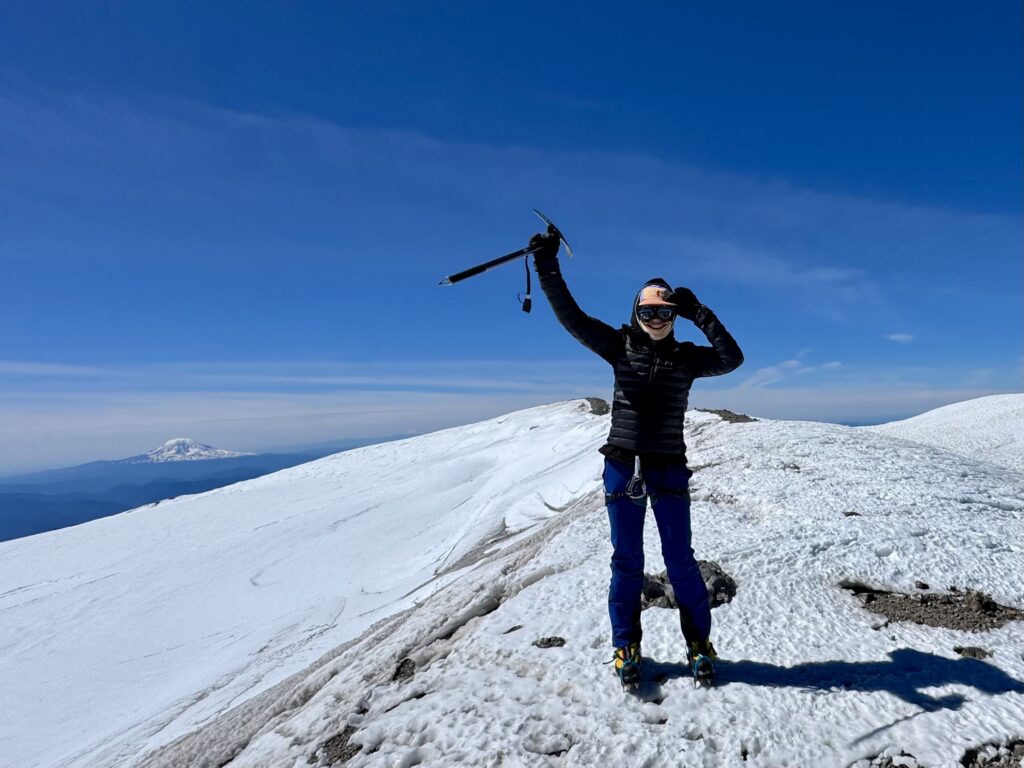
Mountaineering has its objective hazards, like falling rocks and avalanches, but as Amina points out, a bigger danger emerges on the slopes of a steep mountain. “Ego is so dangerous in general. I also work in a male-dominated field, so it’s something I really think about – on these mountains and on a smaller scale…another consideration as a woman.”
“For my own growth and also for my own healing”
When I announced to my friends all those years ago that I was embarking on a solitary weeks-long trip to Indonesia, a common response I got was, “Okay, Eat Pray Love”. Despite the lack of divorcee status, some things from the comparison did ring true to my 25-year-old self; contemplating quitting my job; the delusion that a new skill (in my case, surfing) would come easily to me, and a strong desire to be obstinately alone. That trip cemented the belief that, for me, travel is a wellness essential.
Saida and Amina tenderly touched on similar and intangible rewards these voyages can unearth, beyond the destination itself. For both women, travel has created opportunities to reimagine belonging, and see themselves reflected in the spaces they occupy, a breaking open of new possibilities.
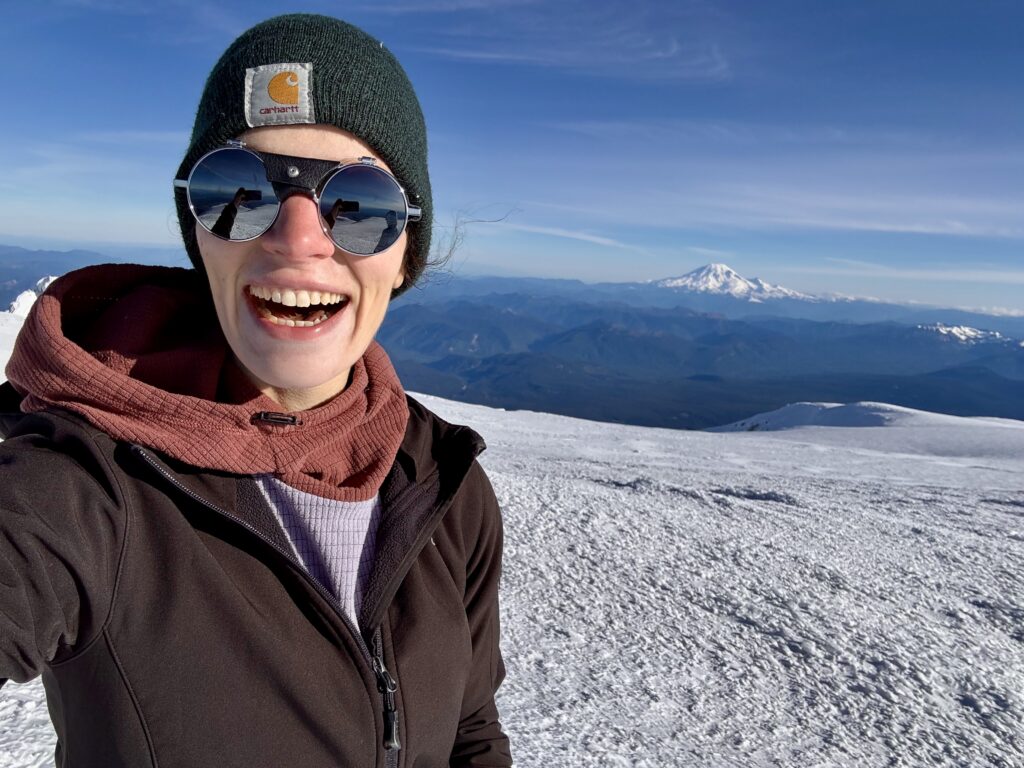
“So many Arab women are climbing the world’s tallest mountains, and they’re just amazing. Even just hearing my friends tell their kids, like, ‘Hey, Amina’s on a 20,000 foot mountain.’ I never had any example [like this] growing up. I think about how there’s still mountains that women haven’t climbed. Five years ago, I never thought, ‘I’m going to climb big mountains’, but there are ways you can be in this safe, positive environment. I think we just need more of that, and that’s why I travel because I love that type of thing.”
For Saida, who had never been to a predominantly Muslim country, or even a predominantly Black African country, her journey across 3 continents felt like a birthright of sorts. “I knew this was really essential for my own growth and also for my own healing…being around people that look like me and also practice the same faith.”
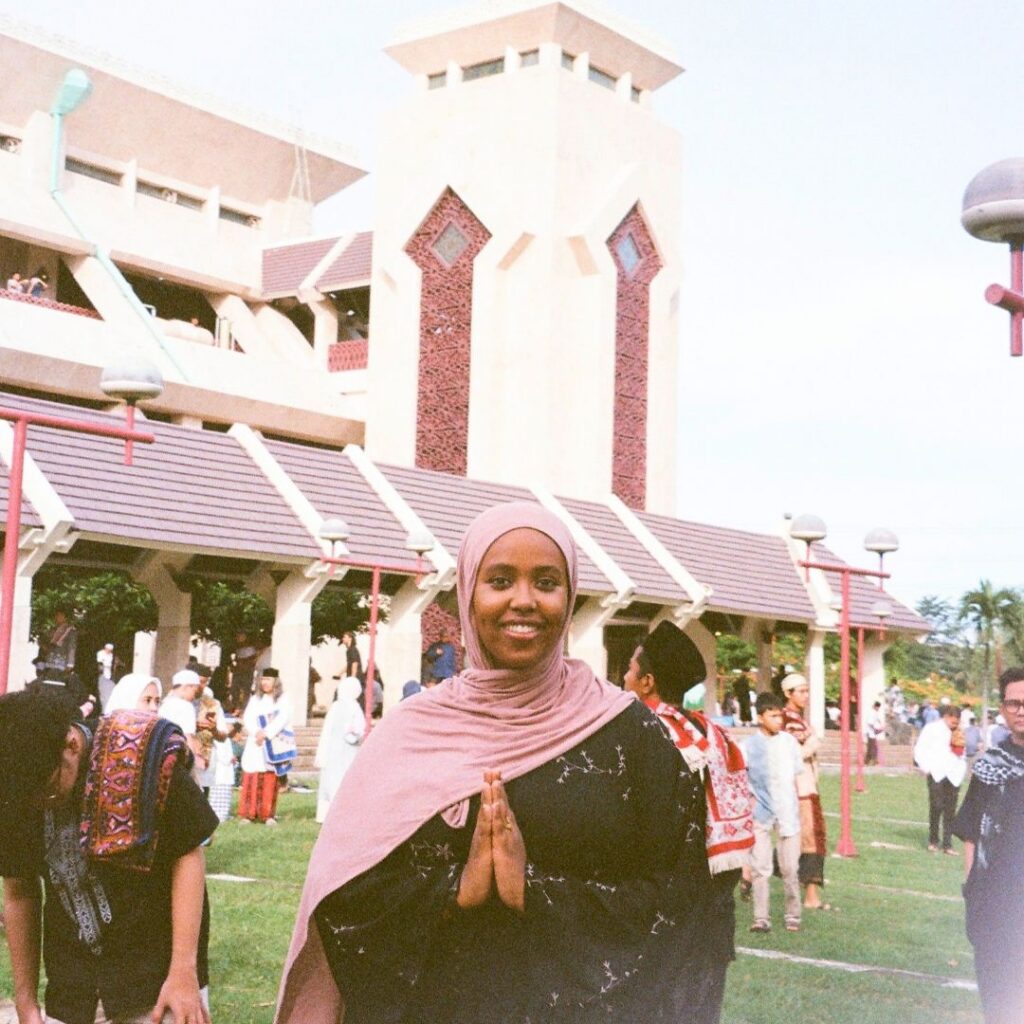
Saida also highlights solitary travel as a unique opportunity to heal the whole person – an unexpected transformation that can only be catalyzed by venturing into unfamiliar settings.
“The transformation almost felt like day and night. You just start to rely on yourself more strongly. You become more spatially aware. You become more confident, reflects Saida.
“Solo travel gives you this unstructured opportunity to just think and reflect and heal and grow. Solo traveling makes you brave. It gives you that energy to finally start whatever it is that you’ve been meaning to start – whether it’s a personal goal a professional goal, or a wellness goal.”
While the risks are there, the risks are also at home. Women of color are not planning their solo travels around simply trying to avoid bad experiences. They are traveling to learn new languages, sit with their uncomfortable thoughts, overcome self-doubt, connect with their roots, eat amazing foods, and yes, climb those tallest mountains, both metaphorically – and literally, as in Amina’s case.
“Feeling like you are taking ownership of who you are in these spaces. I’m here. I have worked my ass off to get here. I’m not questioning my abilities. If someone [takes] issue with that, I’ll probably beat them to the top of the mountain anyway.”
Written by Farah Khan
Farah Khan is a writer, communications professional, and reproductive justice advocate with a background in public health. When she’s not writing, she’s practicing her turns on the dance floor, curating her eclectic secondhand wardrobe, reading yet another memoir, and having riveting conversations about reality TV as a crash course in sociology.
All pictures belong to their rightful owners.


