









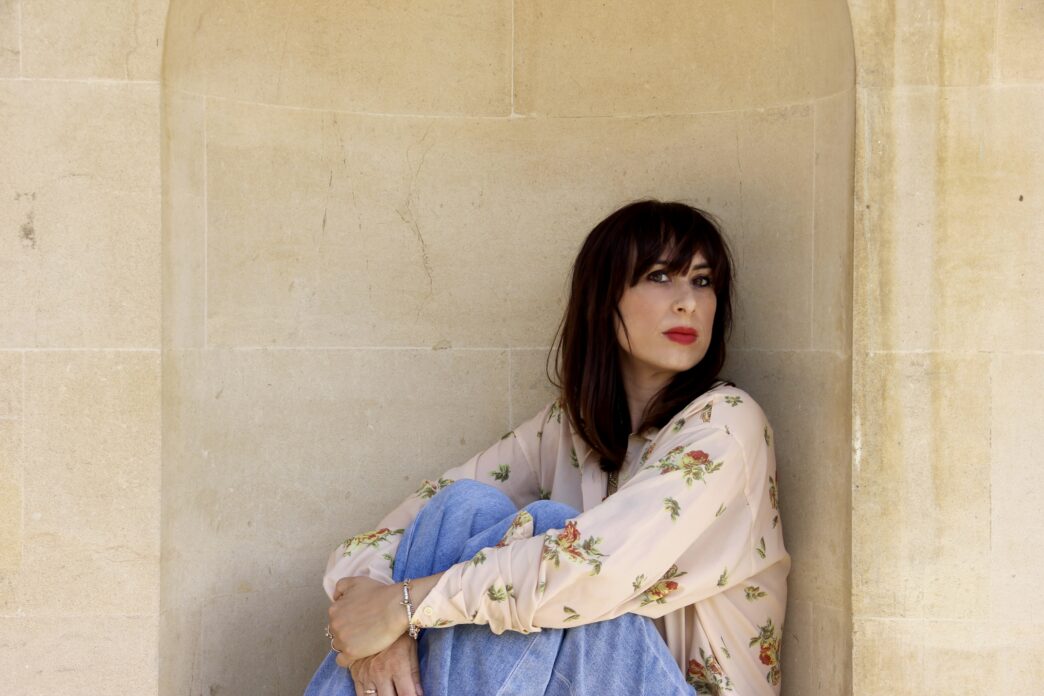
‘The Ferrante effect’ put Italian women writers on the radar, but what happens to those who moved outside the Bel Paese? Their identity is constantly renegotiated, and so it’s difficult to define (and to market). We’ve spoken to four of them on their status of ‘in-betweenness’
Never before have Italian women writers experienced such a wave of popularity as in recent years. Thanks to what the New York Times has dubbed ‘The Ferrante Effect’, stories written by female Italian authors are in high demand in the international market, a hunger which Ferrante’s translator, Ann Goldstein, has continued to satisfy, bringing to the English-speaking public the works of Alba de Céspedes, Donatella di Pierantonio and Elsa Morante.
On the Italian literary scene, however, other trends have emerged in recent years, such as the so-called ‘romanzo expat’ (expat novel). Within this particular trend, there’s a cluster formed by Italian female writers based in the UK. Their writing, as well as their personal experience, can be a useful tool to reflect on what it means to have a fragmented identity as a woman and as a writer, in a world which, thanks to the rise in popularity of far-right movements and the weakening of communitarian ideals, is getting progressively suspicious and closed-off. 

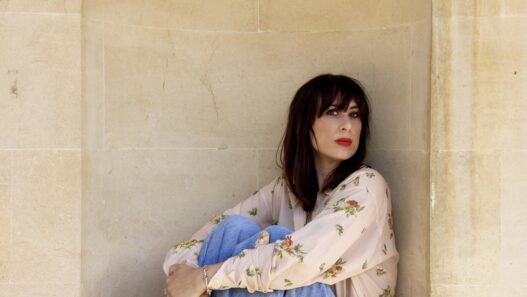
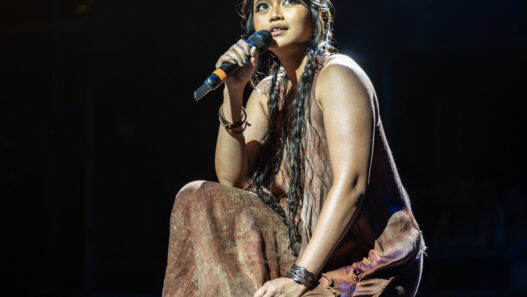
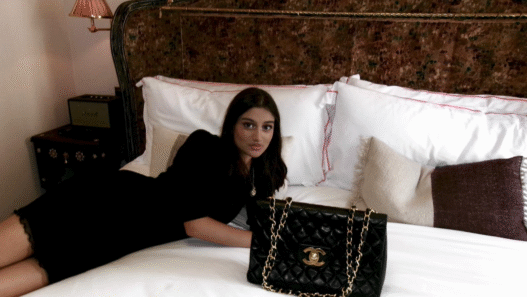
Keen to learn more about this form of writing, I interviewed four authors who currently live, or have lived, in London: Carolina Bandinelli, Associate Professor in Media and Creative Industries at the University of Warwick; Olga Campofreda, researcher and curator, leading Miu Miu Literary Club (founded and directed by Miuccia Prada) since 2024; Giorgia Tolfo, collections researcher (The National Archives UK) and co-founder of FILL (Festival of Italian Literature in London); and Emanuela Anechoum – born in Italy to an Italian mother and a Moroccan father – who worked in the publishing industry in London, before returning to Italy. All four have written novels taking inspiration from their experience as expats.
Carolina Bandinelli’s La più brava (‘The best’) follows one day in the life of Emma (the author alter-ego), as she prepares a reunion dinner with her friends and in doing so she recounts defining moments in her life, from childhood in Italy to her new life in London.
Campofreda’s novel Ragazze perbene (‘Respectable girls’) – whose English edition, titled Dutiful daughters and translated by Jennifer Panek, will be published in March 2027 by Moth Books – is the story of a Southern Italian girl living in London, who comes back to her provincial town for the wedding of her beautiful cousin. Here she has to face the prejudices and hypocrisy of the bourgeois society from which she escaped, and the sudden disappearance of the bride-to-be.
At the center of Giorgia Tolfo’s debut novel Wild Swimming is an all-encompassing relationship between the protagonist and J., a Canadian woman she met on a dating app; at the same time, she has to face difficult decisions that will root her life in London.
Finally, in her debut novel, Tangerinn, Emanuela Anechoum explores themes of roots and identity through the journey of a thirty-year-old woman living in London who must return to her Italian town after her father’s death. In doing so, she has to confront not only her own expat present, but also her father’s immigrant past.
Being in conversation with these authors allowed us to explore some of these key themes, and more.
The ‘identity’ of an ‘expat’
Let’s start with this definition: expat-novel. Do you recognise yourselves and your experience in the term ‘expat’?
Carolina Bandinelli: Well, I don’t really have a strong opinion about using this word or not. Sometimes it’s used to describe those living in a country with a lower level of wealth compared to their country of origin. This is clearly not the case for us, since the UK is a stronger economy compared to Italy. At the same time, the term migrant, or immigrant, especially in the contemporary discourse, has come to mean the opposite, and it doesn’t apply to our experience.
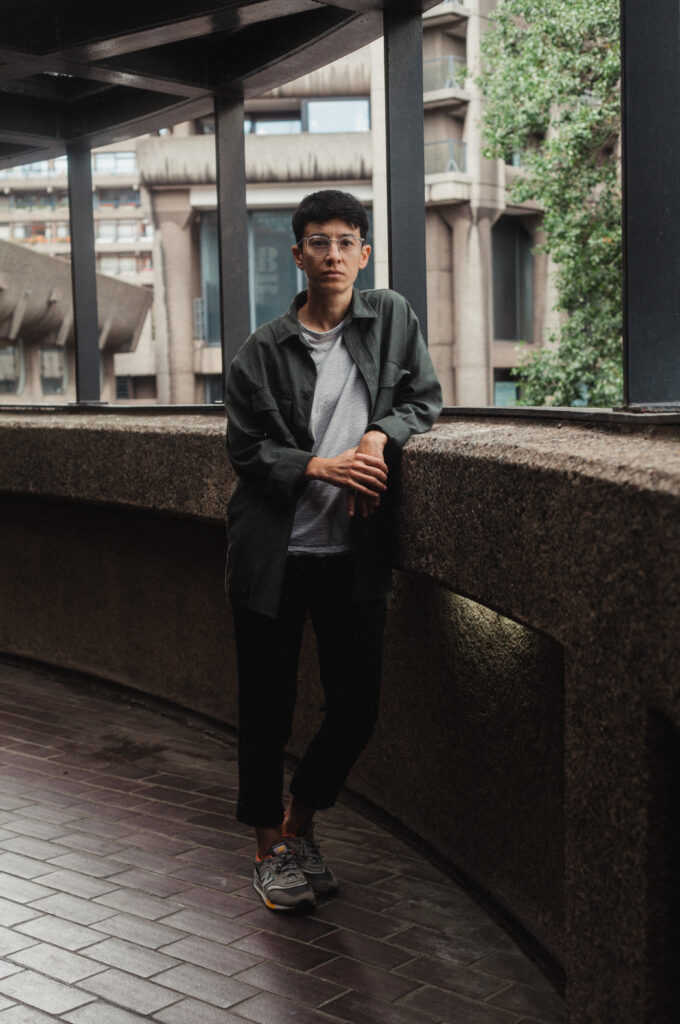
Giorgia Tolfo: How much time do we have? (laughs) I really hate the term ‘expat’. Because the first association I make is linked to the idea of an economic capital. As much as I can try to deconstruct it, the reality is that I am, at the end of it, an expat. But I don’t love it, I feel it erases all the complexities of living abroad as a foreigner. We have a privilege, of course. One we must acknowledge. But sometimes it’s hard to do so. I live in a constant state of negotiation and uncertainty, from a social and cultural point of view. This feeling of detachment is a wound that lives with you, always. I’m home everywhere, but I don’t belong completely here; neither do I belong completely to Italy. There’s a feeling of constant eradication and rooting, always in progress.
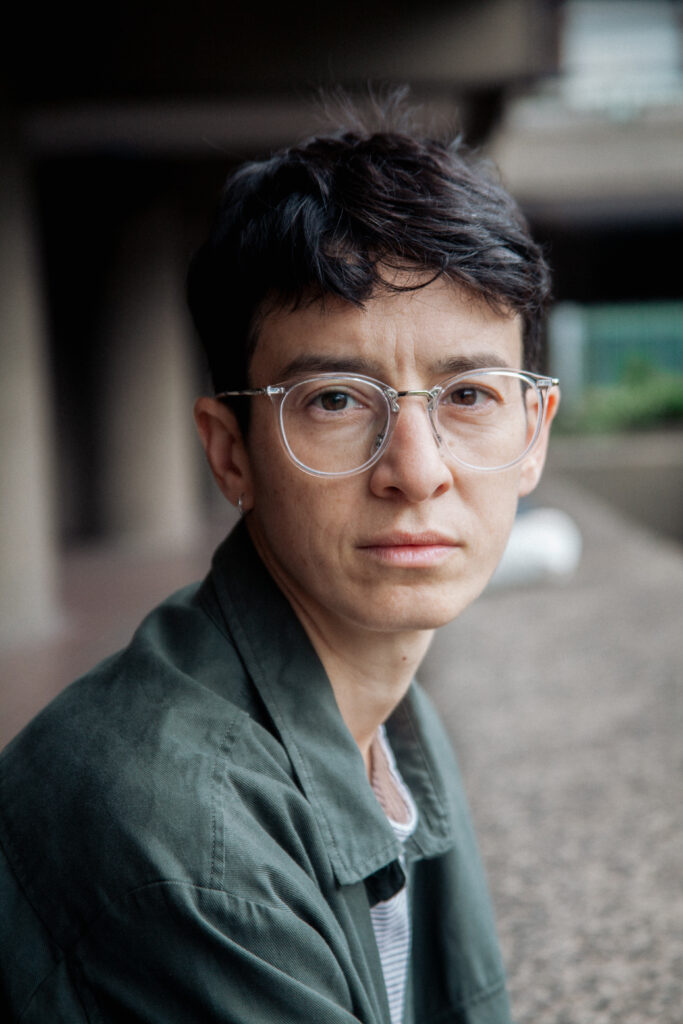
Olga Campofreda: For me the privilege comes before [even moving to the UK]. It was the possibility to study in Italy, to grow my academic career so I was able to apply for a PhD abroad. Even just daring to imagine a career in academia. Most of all, I had the privilege of being able to contemplate failure. Because I knew that if it didn’t work out and I had to come back home, my parents would have welcomed me; they would have encouraged me to take the time to reset, understand what I wanted, and move forward. But I think we need to develop our own language, to convey our own themes; themes that are not limited to being ‘expat’. We must emancipate ourselves from the duty of representing a whole social category.
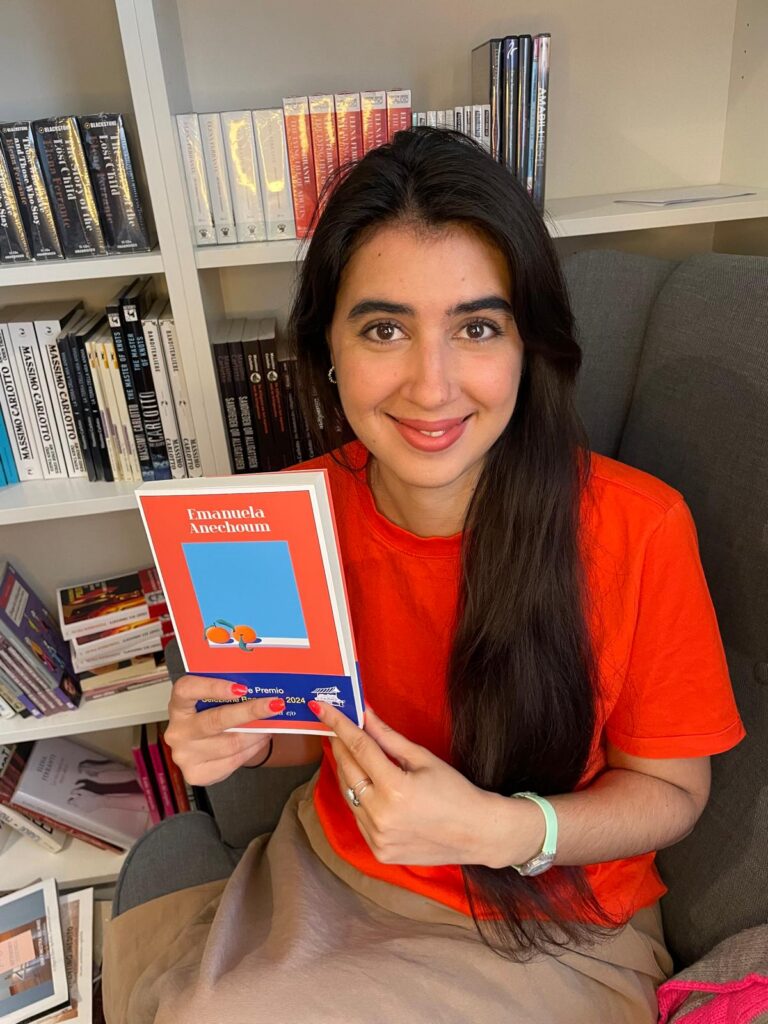
Emaneula Anechoum: I’ve experienced this distinction firsthand in my family: I have never been considered a full-fledged immigrant, while my father (Moroccan, without a college degree, poor) has never been called an expat. I don’t know if the use of the word ‘expat’ stems from a sense of self-criticism or self-awareness from those who define themselves as such – [fellow author] Vincenzo Latronico, in a conversation we had recently in London, told me that he has never felt he ‘deserved’ to call himself an immigrant because he has never had to make the sacrifices or experienced the traumas that the word usually implies – but I’m not sure this distinction is a good thing. It’s important to highlight the disparity in privilege between the two experiences, but ‘immigrant’ is increasingly a word used negatively in politics. I fear this only widens the divide between the two categories.
‘Writing is instinctual, and when I write from the heart, it’s Italian.’
Although you live in the UK, you all decided to write your novels in Italian. Was it a deliberate choice or an instinctual one?
GT: For me, English is the language I use to convey information. Of course, I still try to maintain, in my English writing, a degree of authorship. But at the end of it, it’s a language of communication, not a language of emotional expression. Hypothetically, if one day I am to write some sort of non-fiction essay, I would probably consider doing so in English. But when it comes to something more intimate, I can’t. Writing is instinctual, and when I write from the heart, it’s Italian. When I have to feel the rhythm, the emotion, the sentence, it’s Italian.
CB: I think of writing as following a voice, and for me that voice is Italian. Well, to be honest, my most authentic voice now is not completely Italian, but an Italian filled with anglicisms. But the language of literature for me is still Italian. My knowledge of the Italian language is intimate. It’s the language I grew up with, the language of love, the language of home, the language of the mother. And every word has a deep echo, both personal and collective. Every word is deeply connoted because I can place it within the context of Italian culture, and also because I can place it within my own memory. Every word has a carnal resonance for me. There are words that disgust me, words I viscerally love. There are words I find sexy, words I find basic. I don’t have this type of relationship with English.
Any regrets about that choice? English books have wider reach than Italian ones and Italian writers have been appreciated in the international market lately, for example Vincenzo Latronico’s Perfection was shortlisted for the 2025 Booker Prize.
OC: It’s true, there’s much love for Italian writers, and Italy in general. Maybe that’s why it’s harder to emerge as expat writers. We’re not really portraying Italy, but an Italian woman abroad. That’s an experience an English reader can’t easily relate to, because they’ll never be an expat in their own country. Latronico’s novel focused on being an expat not in an English-speaking country, but in Berlin, a place which is somewhat ‘exotic’ for them too. There’s a bunch of English and Americans living in Berlin, so they could relate. Latronico doesn’t have that touch of Italianness that people look for in Italian women’s writing. He intercepts the zeitgeist. He’s a brilliant mind who has understood something of contemporary life, and with this understanding he managed to rip a hole in a membrane which was unthinkable to pass through before.
GT: From an outside perspective it may seem we are in an advantageous position, one that can intercept two markets, but the truth is we find ourselves with a double disadvantage. First of all because the Italian publishing world is smaller and based on in-person events, connections, networking… We’ve been in Italy to promote our novels, but we have to plan in advance and many of these opportunities are very organic, and living abroad we don’t always intercept them. Secondly, since Brexit, Italian books are less readily available in the UK due to increased import taxes, and so these books, which recount a very specific experience in London, can’t be read by people who could recognize themselves in these stories.
Rediscovering identity at home
Emanuela, unlike the others, you returned to Italy, though not to your home region. Was there a desire to rediscover the person you were before you left?
EA: I certainly didn’t intend to go back and look for the person I used to be—that was an extremely insecure version of myself that, after my years in London, I hoped I’d left behind. But I was looking for deeper connections with others, a social and political engagement that I couldn’t have in England, and perhaps I also wanted to prove to myself that I could face my fears and my vulnerabilities in an environment that I had previously considered hostile, but which was really just a projection of how I felt. I didn’t choose to return to be something, just as I didn’t choose to go to London to become something else—at least, that’s what I told myself at the time, but now I know it’s an oversimplification. The truth is that I went there because I was offered the job I’d dreamed of, and I came back because I was offered an even better job. And also, I wanted to be able to order a plate of pasta at any restaurant without checking my bank account three times, worried that I wouldn’t be able to afford dessert.
Another distinctive element of your experience, also reflected in your novel, is your layered cosmopolitan identity, since your father emigrated before you (from Morocco to Italy). Do you think this legacy has changed the way you’ve been perceived abroad and the way you yourself have experienced your own journey?
EA: I’m not sure: in London, being mixed-race wasn’t considered strange or special. For me, however, this feeling was new and extremely important, because in Italy I felt different, and that often caused me pain. It was precisely the normalization of multiculturalism and multiethnicity—which has been an everyday reality in London for centuries—that gave me a sense of comfort, whereas in Italy, even though I didn’t face the forms of systemic racism suffered by racialized people, people of the Islamic faith, Roma people, etc., I was still categorized as different.
Finding A Voice Overseas
Did living in the UK give you a different perspective on gender and womanhood?
OC: It was from the differences between the female experience in London and in my hometown in Caserta that stemmed the idea for my novel, Dutiful daughters. I was visiting my family during covid and so, after many years, it was an immersion in everyday life and I began noticing many things I couldn’t comprehend, compromises my female friends had to make, certain dynamics within family life. A great burden women had to bear alone. In the meantime I was reading Annie Ernaux, A Frozen Woman, and Alba de Céspedes, Her Side of the Story, and little by little I realized that these issues, linked to emotional burden and gender roles, were as true in the 1950s as they were in 2020 Caserta. It was the comparison with my daily life in London that brought me to this realization. It’s also in the way gender roles are upheld. Italians are very theatrical people, we are performance people; and gender roles are, at the end of it, performance.
GT: Being queer, I notice a great difference first of all in the language; Italian is a very binary language, whereas English is much more adaptable to fluid identities. I think this binarism is also reflected in the expression of gender, which in Italy is very rigid… But for me it’s hard to give an ‘objective’ perspective, because many themes linked to the female experience – maternity, power dynamics in opposite-sex relationships – do not directly concern me. I also live in London, a very progressive city, and work in a heavily female and queer environment, so my experience differs greatly from that of women who work in a very male-dominated industry, such as finance and architecture. They experience these dynamics even here, in London.
EA: It seems to me that everywhere—in England as well as in Italy—I’ve walked home at night looking over my shoulder, I’ve been afraid of men’s stares on the subway, and felt treated paternalistically by a man who tried to explain things to me that I already knew. Certainly in London, people are more mindful of proper conduct—they don’t dare to go against certain codes of behavior. In Italy, men are less concerned about appearing indecent. But that’s just a superficial difference. Perhaps the most noticeable difference is the concept of machismo, and, to some extent, how the family unit functions: in Italy, families rely much more on the cult—but also on the unbridled exploitation—of the mother figure. In England, this happens less—but other toxic aspects of English masculinity (alcohol dependence, to name one) negatively affect women’s lives, safety, and well-being. It’s too complex a topic, and I don’t want to generalize—I can say that there’s certainly greater attention in the UK to how things should appear, but it can be a double-edged sword if that awareness remains superficial.
CB: I do feel there’s a shift in Italy, something is changing within the public discourse. There’s a new wave of feminism, in all its expressions. As we can see, this renewed interest has also brought extreme reactions: the growing following of far-right movements and parties. Some consider these reactions a sign of victory of progressive ideals… I’m not so sure about it, but I do perceive a strengthening of the female discourse in Italy, with a multiplicity of voices, a new, different, consciousness. English society, or at least the one I’m part of, has started this process way before, and so – albeit there still remain cultural and economic disparities linked to gender, race and class – there’s a shared sensibility towards gender issues that has much stronger roots.
Lastly, I wanted to ask you how much Brexit impacted your life, since all of you moved here way before that.
GT: Brexit was a cultural shock. We felt part of a world where you could move freely. And one morning you wake up, and everything appears to be the same, but it isn’t the same. You don’t feel welcome anymore. We created FILL (Festival of Italian Literature in London) as a response to that, then covid came and we had to end that amazing experience and the only Italian bookshop in London closed. I hope another one will open again, because it’s tough writing in your language and seeing your books from afar, watching the life they have. In them we talk about an experience here, in London. And who am I talking to? Italians who live here and, if they want to read my book, have to go back to Italy to buy it? It’s a paradox. It’s as if these experiences I’m talking about exist suspended in an in-betweenness.
OC: Those early years there was a beautiful sense of adventure, it was unrepeatable. I realize now they were light years because the world seemed to be lighter. There were problems, sure, but we didn’t feel them in our daily life. I do still think of Europe as I did in those days: as a place for young people to move freely, find connection. But I have to face the reality; we live in a much more suspicious and closed-off world. And the closure of Ornella Tarantola’s Italian Bookshop is, in a sense, the sign of Brexit victory.
CB: We found ourselves in a changed world. We are children of the ‘global village’ utopia, which, with its complexities and controversies, championed the idea that borders would progressively be dismantled; we could choose our dream work, so we could be happy. Gen Z has a completely different perception, because in the last 20 years these promises, this social contract, have failed them completely. London, in certain regards, still retains these cosmopolitan ideas. I don’t feel English at all, but I feel I’m a Londoner. I like to be a foreigner amongst foreigners. I’m living in an interstitial space, a liminal one. In constant movement between Italian and English, Italy and the UK. And it’s a space in which I feel home.
Written by Alice Gerosa
Alice Gerosa is a Milan-based writer and editor. She collaborates with various magazines, writing about cinema, literature and culture. She recently founded amateur., an editorial project dedicated to dance in all its forms.
All pictures were provided as a courtesy from the interviewees and belong to their rightful owners.


