





It was a busy Saturday at the Washington DC-based clinic. Normally, at least two volunteer abortion doulas would be on hand, tending to and supporting patients before, during, and immediately after their abortion procedures. That day, raven Freeborn was the only abortion doula available. “I was a weekend doula…at the same time, I was also the Director of the Domestic and Sexual Violence, Human Trafficking and Stalking emergency shelter for that entire county. On a Saturday, it would be normal to see something like 12 patients coming in for care,” they recalled.
Briskly keeping pace, coordinating touchpoints with each patient, and running from one operation room to the next, Freeborn checked in on patients resting in the lounge – delivering cookies, blankets, and reassurance. Stepping back in a while later, Freeborn witnessed a stunning moment of cascading care that has since served as a marker of their clear-eyed persistence as they continue to advocate for reproductive justice – then, in the DMV (District of Columbia, Maryland, and Virginia) – and now, in their home state of Texas, as the Executive Director of Avow Texas.
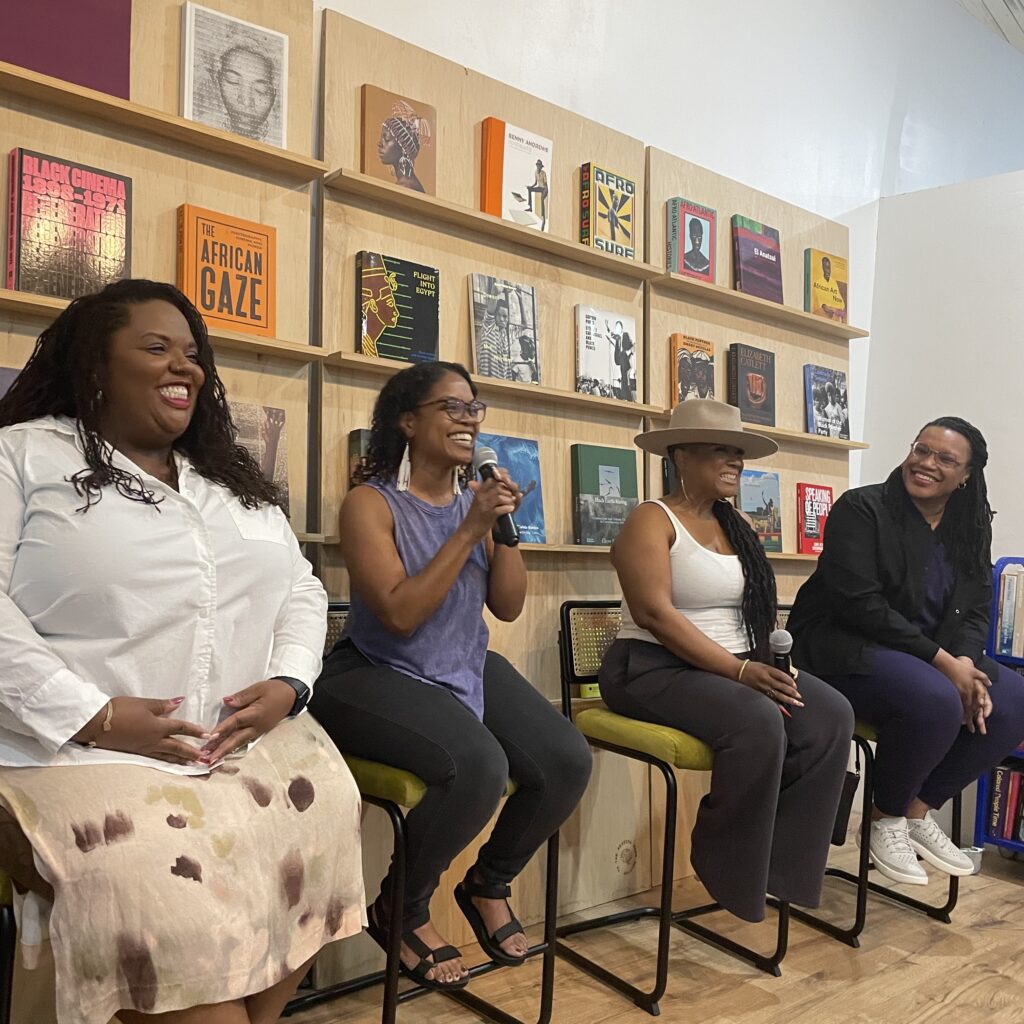
“In that moment, there were three patients: a young person who is leaving undergrad, on their way to law school, there’s a patient with hyperemesis gravidarum [a severe, debilitating pregnancy complication marked by persistent, extreme nausea and vomiting], and there is someone who didn’t see themselves receiving abortion – could maybe be anti-abortion.”
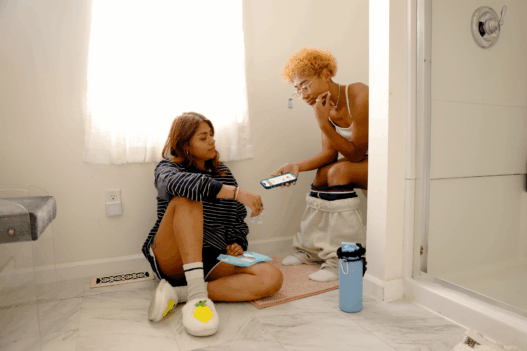
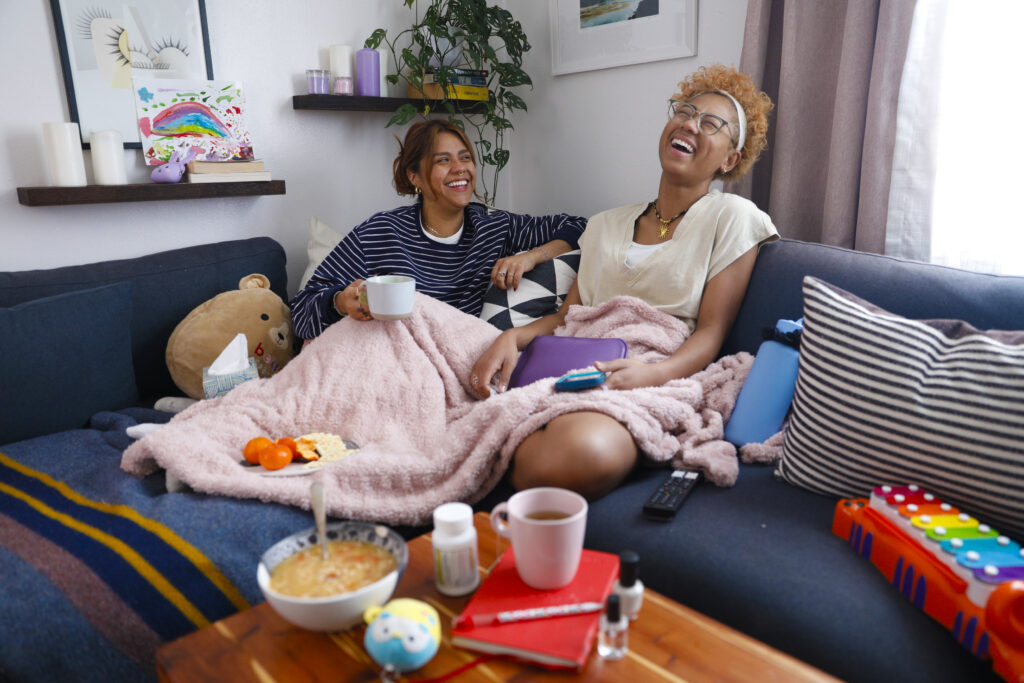
Moments like this are not uncommon, revealing how abortion care settings routinely gather people with vastly different paths, beliefs, and circumstances in one space, fused by a unique and deeply personal experience. The patients ended up in the lounge at the same time.
As Freeborn came in to check on them, they glimpsed the patients’ exchanges, connecting and comforting each other – in essence, doula-ing each other. “These three people proved to me that if you remove the carceral state, if you remove the restrictions, if you remove the stigma, and you remove the assumption that abortion is traumatic, people will show up and care for each other.“
How abortion doulas are bridging care beyond a hostile system
The work of doulas occurs across a spectrum of major life events, from birth and postpartum, to gender-affirming transition, death, and of course, abortion care, and has existed for as long as people have been able to get pregnant. The mainstream definition of a doula may include non-medical caregivers who provide physical, emotional, and logistical support, and all doulas are tasked with uniquely combining intimate care with advocacy. “The etymology of the word doula, and in the fairest translation of it, comes down to someone who accompanies…so, an abortion doula is someone who’s accompanying that person, who’s witnessing them in their care”, explains Freeborn.
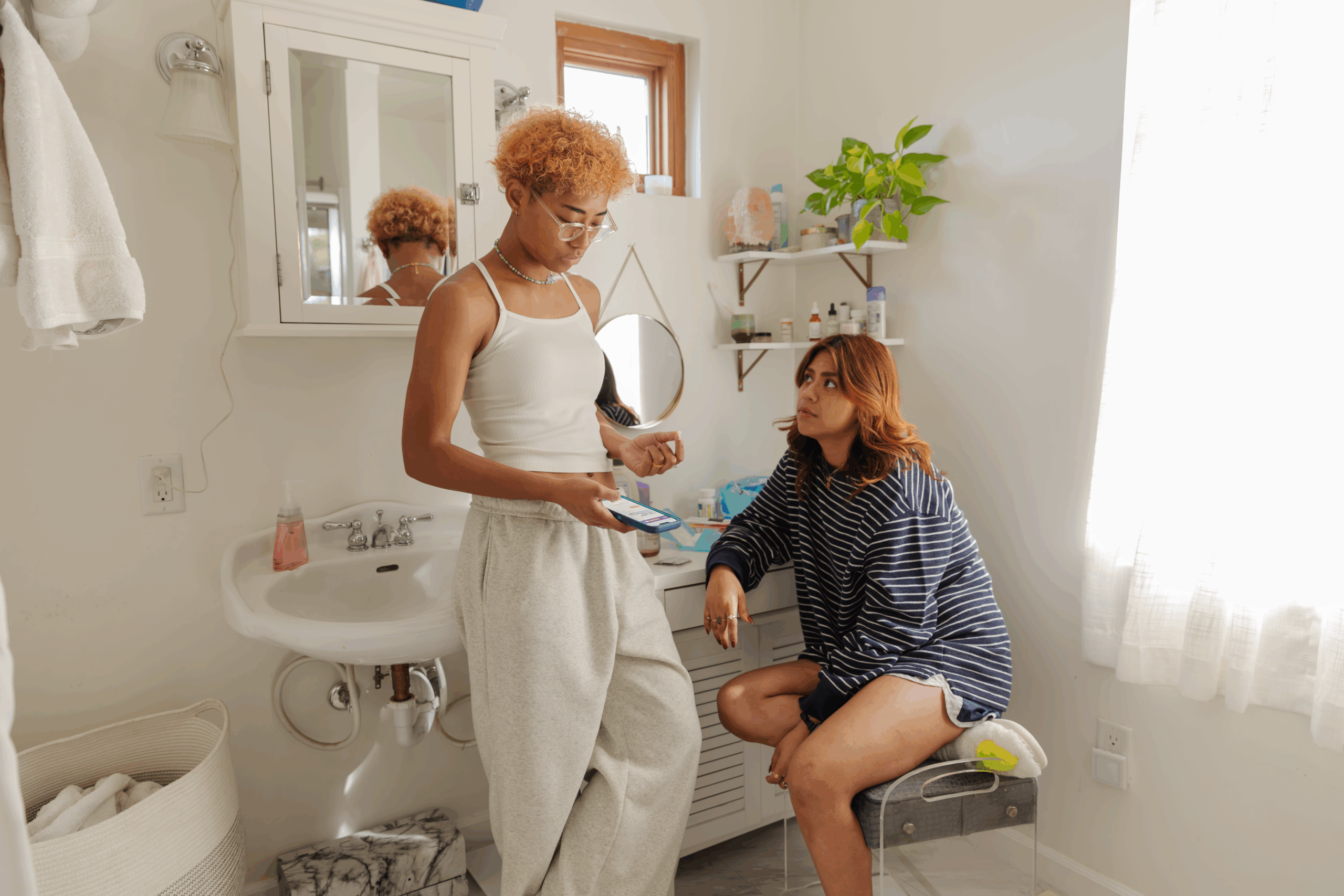
In addition to ensuring a patient’s immediate needs are covered: heating pads, water, snacks, pain medication during a self-managed abortion, for example, abortion doulas can be an extra set of eyes and ears for someone facing inequality within and distrust of the healthcare system. This is especially true for historically marginalized communities facing compounding structural injustices and barriers to care, including discrimination, medical coercion, and increased fear of criminalization and surveillance, as Freeborn reiterates.
“Sometimes the abortion doula is helping that person to bear the sharp edges of our medical systems – and everything you have to face when you go home. Abortion doulas can be part of that before and after plan as well.”
They also serve as part of the larger web of community-driven practical support, tethering together funding for travel and lodging (oftentimes to cover costs related to out-of-state abortion care), resource and information sharing, risk mitigation, childcare assistance, and real-time, remote texting support.
During our interview, Freeborn described providing text-based support to someone receiving abortion care. “They [were] having a three day procedure. My tech support with her was around, what does safety feel like in this moment? What does support feel like in this moment, and how do we get you to the next [moment]? You’re bridging care from moment to moment.”
More often than not, as in Freeborn’s case, abortion doulas are volunteers, called to fill the gaps pulled wider by inhumane and punitive restrictions, and creating compassionate, stigma-free, and trauma-informed spaces.
In a post-Roe era, abortion doulas and their invisible network of co-conspirators are especially needed in a place like Texas. “Doulas are accompanying someone and witnessing their humanity in the presence of a carceral punitive state. I’m from Texas…it’s a restricted, banned abortion state”, says Freeborn. “So an abortion doula is someone who’s accompanying that person who’s witnessing them in their care. And I really like to say that ‘I’m affirming all sides of you’.”
The escalating attack on medication abortion
This role has always been important. Black birthworkers throughout US history carried generations of knowledge, care, and healing while their communities were denied safe, quality, and dignified healthcare. This legacy continues to thread through today’s devastating state-manufactured maternal mortality crisis overwhelmingly falling on Black women, who are 3-4 times more likely to die during childbirth than people of other races. Nowhere is this crisis more sharply felt than in Texas, one of the most hostile states to reproductive rights and bodily autonomy.
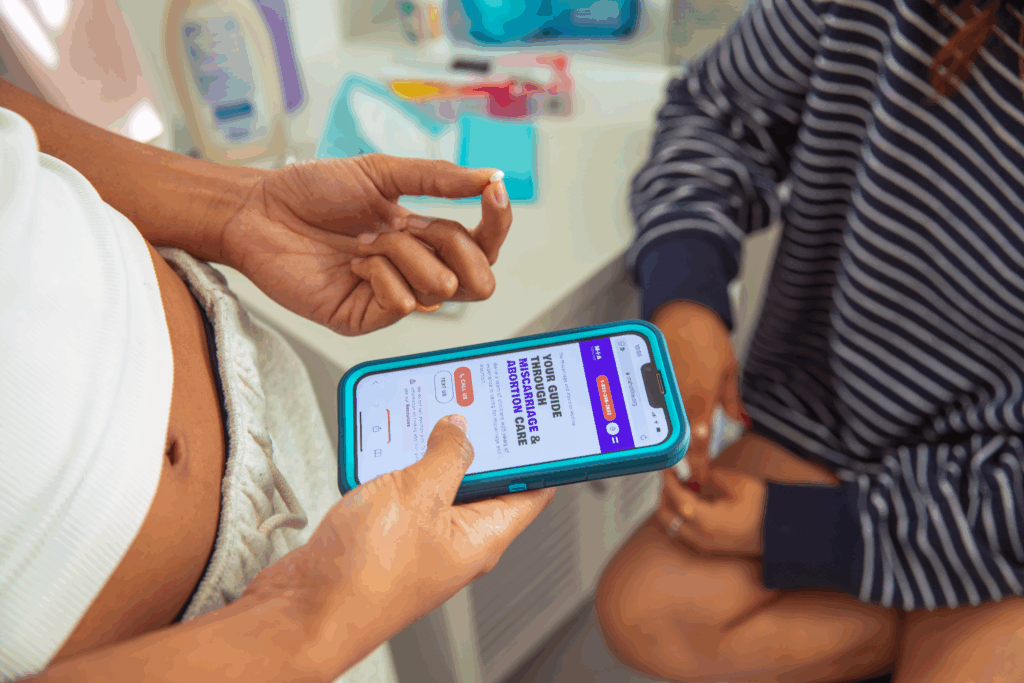
This past December, Texas passed a new law incentivizing private citizens to surveil and report each other if they suspected them of aiding an abortion, and allowing anyone to sue for at least $100,000 against those who provide abortion pills in or to Texas (including those who manufacture, distribute, or mail it). It’s clear anti-abortion extremists are aware that, despite their radical and sweeping restrictions on access, more people in ban and restrictive states are able to obtain abortions via abortion pills – thanks to expanded access to telehealth – proving that abortion bans cannot erase the need for essential care, nor stop people from seeking it.
The pernicious, ideology-driven tactics by anti-abortion extremists in restrictive states, such as Texas and Alabama, reflect the growing war waging against medication abortion across the country. Mifepristone, used in the vast majority of medication abortions in the US, including self-managed abortion, is backed by decades of science affirming its safety and efficacy. Despite this, the US Food and Drug Administration, the federal agency tasked with testing and approving prescription drugs, is preparing for a review on the safety of mifepristone, with multiple anti-abortion officials hellbent on using junk science to end telehealth provision of the drug. As Freeborn explains, the impact of proliferating barriers would be catastrophic, “It’ll create more opportunity for fetal personhood. It’ll create more opportunity for criminalization, for folks to be jailed, to be fined. It could increase the likelihood of surveillance and monitoring.”
“Dreaming and scheming” for the future
While it may seem like Texas often leads the charge against bodily autonomy, Texans have sustained a resilient and enduring movement for reproductive justice and human rights.
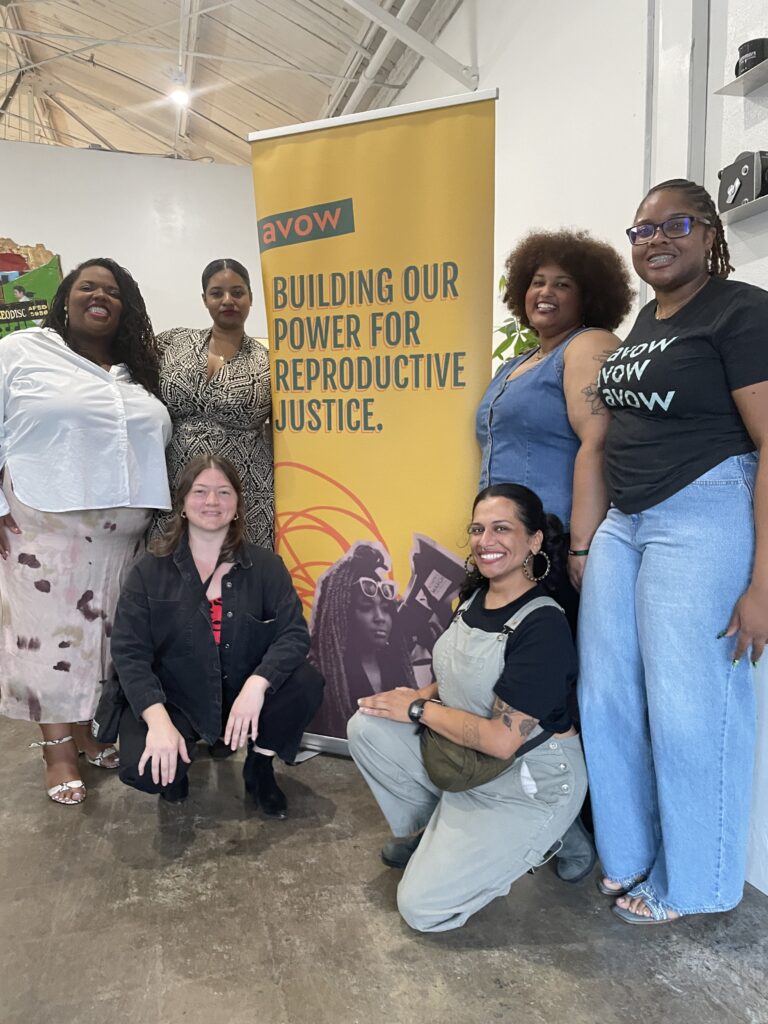
Freeborn points out that current attacks on abortion access actually affirm and reflect the effectiveness of the movement, demonstrating that the systems of care pro-abortion advocates have built are powerful enough to be feared. “Our opponents understand that we have designed systems of care. They understand that we have decentralized those systems to ensure that abortion seekers and havers are protected and so are providers. They see what we are doing, and they understand that in order to limit and continue to make abortion inaccessible, they must go after the larger system.”
Since the Dobbs decision took away the constitutional right to abortion, many have begun to grapple with what reproductive justice advocates – especially those in Black, Indigenous, queer, trans and rural communities – have long known to be true: that Roe was the bare minimum. While the impressive web of practical support that has since surged into motion is worthy of recognition and provides key lessons in power-building, it’s also a web under tension, stretched by the very conditions that made it necessary. Freeborn is quick to point out the risk of simply reproducing these systems, instead of working toward a truly equitable healthcare infrastructure.
“We want to sometimes redesign the state, and one of the soap boxes I will stand on is that we cannot mutual aid ourselves out of this crisis. The state has manufactured this crisis, which means that they have the capacity to solve it.”
In Freeborn’s work with Avow Texas, a reproductive justice organization that works to secure unrestricted abortion access for Texans through relationship building, community organizing, and political education, they are doing just that – bridging the gap between grassroots spaces and systemic power structures in service of a bold, pro-abortion future. Referring to them as “community pollinators”, Freeborn describes inviting folks to amplify the broader impact of abortion bans on other essential healthcare (such as access to birth control, mammograms, and pap smears). They do this by sharing reliable, relevant information that can spread throughout and activate communities. This education includes democracy literacy, sexual and reproductive health education, and mapping where power operates locally to understand how it shapes access to goods and services. “I want abortion doulas and abortion clinics on every block. So that’s the world we’re dreaming and scheming and redesigning to create.”
Evidence of a web holding firm—and the call-to-action it offers
When asked what’s giving them hope for the future, Freeborn, a decades-long organizer, is drawing inspiration and fortitude from recent instances of successful organizing and gains in gender justice, along with the latest evidence of the web of care holding firm.
A report released by the Guttmacher Institute this month shows that, despite bans and restrictions, out-of-state travel for abortion care continued to decline, while abortion care via telehealth to states with total bans increased. In addition to emphasizing the necessity of expanded shield laws and privacy protections for both patients and providers, the report also reflects the remarkable strides of this decentralized web of support in getting people the care they need, even under intensifying legal risks.
Revisiting the origins of the word doula – companion, comrade, someone who instills trust – it’s hard not to feel a swell of hope, and tenacity, witnessing the resistance of the movement in the years following Dobbs. Even as the walls of anti-abortion extremism threaten to close in, reproductive justice champions are working to build beyond restoring what once was.
Abortion doulas, hotline workers, logistics providers, and the friends and neighbors who offer rides or a calming presence – all those who sustain abortion funds and practical support, and those who boldly and joyfully share their abortion stories – offer a blueprint for a more just, stigma-free and equitable system, where every person can live a safe, healthy, and fulfilling life.
This endeavor, Freeborn emphasizes, signifies a shared – and urgent – responsibility: to watch for our neighbors, and to stay attentive to restrictive states where shifts often ripple across the country. “Keep your eye on Texas,” says Freeborn. “Because the things that start here never finish here. They end up somewhere else, but also your neighbors need you…it’s a report like this that shows us the way to increase the pieces of our web.”
Written by Farah Khan
Farah Khan is a writer, freelance journalist, and communications professional with a decade of experience working in reproductive justice. When she’s not writing, she’s practicing her turns on the dance floor, curating her eclectic secondhand wardrobe, reading yet another memoir, and having riveting conversations about reality TV as a crash course in sociology.


