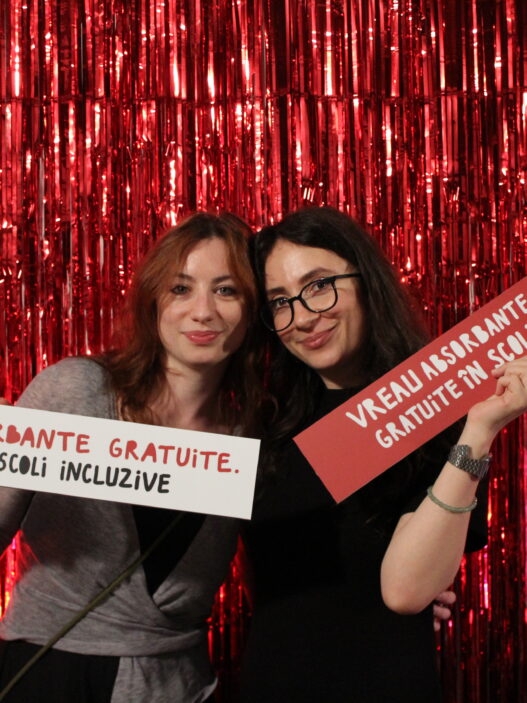









Tina Tomšič, the network coordinator for what has become one of the biggest feminist movements in Europe, sounds tired. Not the kind of tiredness that comes from a bad night’s sleep, but the deep, bone-level exhaustion that follows years of organising, negotiating, persuading, and pushing against institutions that move at the speed of a snail. Still, when she talks about My Voice My Choice, her voice lifts, as the movement just celebrated a crucial victory in the European Parliament.
It all started three years ago, with a simple but difficult idea: the desire to protect reproductive rights across Europe. A group of activists from Slovenia saw that women in Poland were dying in hospitals after being denied abortions. In Malta, abortion remained illegal. In Italy, conscientious objection made access nearly impossible. Croatian women were crossing borders to Slovenia for care. And in the US, Roe v. Wade had just been overturned — proof that even constitutional protections could vanish overnight.
Slovenia, where abortion is written into the constitution, felt safe. But safety, Tomšič explains, is fragile. “It was taken away from them [American women] overnight,” she says. “That was the trigger for us to start thinking about a European campaign but we had no idea how to do it.”
They quickly discovered the European Citizens Initiative, which is a way for regular people to take an active part in policy-making in the EU. They were going to use this mechanism to demand that the EU pass legislation that would create a financial mechanism that would help people access abortion care when their own countries failed them.
Although they had experience collecting signatures in Slovenia – having coordinated national referendums before – they needed this to be at the EU level and so partnered with international lawyers to help shape the initiative.
They submitted the text to the European Commission and on 8 March, 2024 they launched the campaign publicly and started collecting signatures. Not only was the campaign launched on international women’s day, the 8th of March Institute is also the name of the organisation Tomšič works with in Slovenia.
The core team at the time was about 15 people, which then grew to around 50 people. And although volunteers came and went, and an international network was established the work never stopped.
“We just worked tirelessly. We didn’t stop, we just worked. I think that’s the only secret that is behind any successful campaign,” she said.
And of course, there were bumps along the way.
“At first, we thought that it would be easy to get a million signatures only by working with civil society organisations. We quickly realised that’s not going to work so we changed our strategy,” she explained.
They built a volunteer platform. Set up WhatsApp groups. Sent people onto the streets with clipboards. Held calls. Coordinated actions country by country. And started working with influencers.
“We also decided that we would not only communicate about reproductive rights but start communicating about different global issues as well. That’s when our social media started to grow a lot,” she said. “When Trump won, we just started posting and in a week we got 100,000 signatures.”
Funding has been another uphill battle. The campaign relies mostly on donations and support from civil society organisations. At one point, they lost all their major funders, because after a month and a half they only had just over 500.000 signatures and were not close to the one million needed to submit an initiative to the European Commission. Their funders didn’t think the group would be successful. They kept going anyway.
Abortion training on papayas
Tomšič notes that in many countries abortion rights are well managed, but there are some outliers that are creating huge problems.
“There are a lot of countries where legally you might be okay but access is restricted due to social objections,” she added.
“We have this picture perfect [image] in mind when it comes to reproductive rights in Europe, that everything is okay, but then we just started looking into it and communicating a lot about it, that things are actually not so good. In Austria and Germany, abortion is still written in the criminal code, which means that on paper it’s not legal.”
“That means that in Germany and Austria the doctors who are learning to become gynaecologists are learning how to do abortions on papayas because of this legal restriction.”
Organisations like Medical Students for Choice Berlin and Doctors for Choice Germany have come up with these papaya workshops to address the lack of formal training within the standard curriculum.
Tomšič also highlighted the financial burden on women from countries like Bulgaria, Romania and Czech Republic, where abortion is legal but is not covered by the national health insurance.
The campaign relied on honest communication on all these issues. They spoke in multiple languages. They built momentum online and offline.
By April 2025, they had 1.2 million signatures.
Then they headed to Brussels.
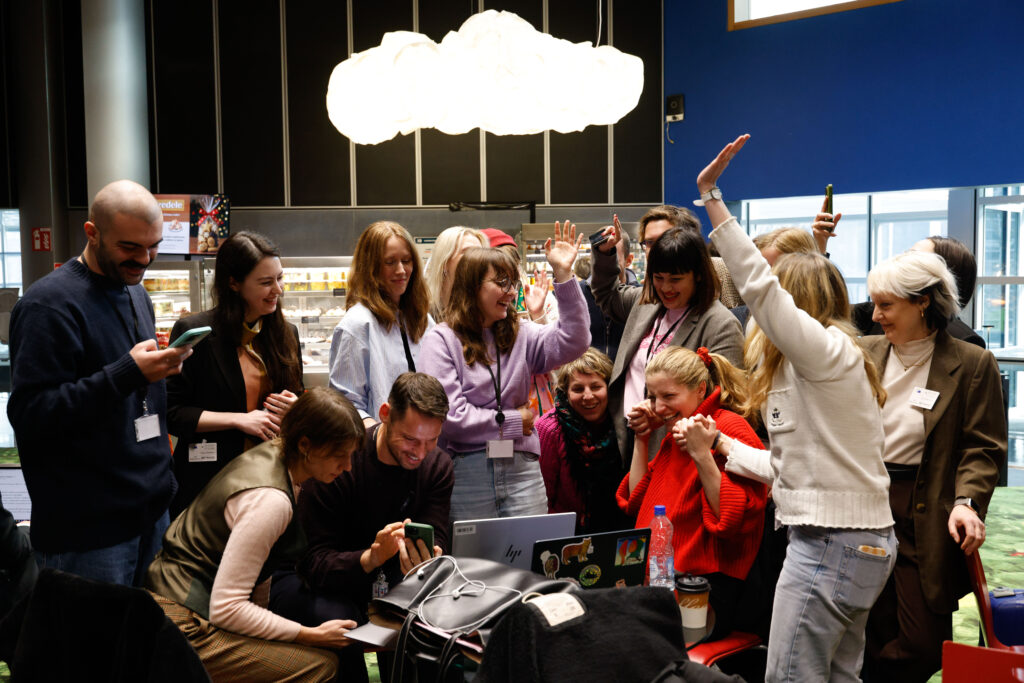
What followed was months of lobbying, uncertainty, and political theatre. The campaign’s resolution passed in the FEMM (gender equality and women’s rights) committee, but right wing groups blocked it from the November plenary vote.
In the run up to the December vote, right-wing MEPs proposed a counter-resolution that attacked reproductive rights outright. Votes became unpredictable, as deals were made behind closed doors.
“We had more than 200 meetings in the Parliament with all of the members,” Tomšič says. And for the last two days it was unclear if they would make it.
But they did. With support from allies inside the European People’s Party, a centre-right group they had spent months building relationships with, the resolution passed.
When asked about how they managed to build bridges with those who might hold different views on many other topics, Tomšič said: “We approached them in a similar manner as all other MEPs, they didn’t see the issue as something “problematic” as a lot of them are very supportive of abortion rights.”
It wasn’t the final victory. But it was a major one.
Challenges persist
Now, the European Commission decision has been scheduled for 26 February, when it will respond to the Citizens’ Initiative and say whether it will implement the demands of My Voice, My Choice.
In the meantime, Tomšič says the campaign will be pushing for political backing from heads of state and commissioners. Spain’s Pedro Sánchez, France’s Emmanuel Macron, and Slovenia’s leadership have already expressed support, but more is needed.
“We are extremely happy that this part is over because it was very hard. And we know that with this, it will be much easier to get a positive answer from the Commission.”
With 358 votes in favour, 202 against and 7 abstentions, My Voice, May Choice passed in Strasbourg, in December. And after a much needed break, the team is ready for the battle in the European Commission back in the city they had their first victory
But Tomšič says: “As the Commission’s decision is approaching, we’re faced with a lot of challenges because we can’t secure meetings with Commissioners. But MEPs who have been supporting us are having conversations with them about the initiative and are urging them to respond positively to the initiative.”
If you want to support My Voice, My Choice you can still join the community. They are also running a campaign on social media, urging everyone to tag Ursula von der Leyen, demanding her to adopt the proposals of My Voice, My Choice.
Written by Selin Bucak.
Selin Bucak is a freelance journalist based in London, covering a variety of topics from finance and economics to human rights issues and Turkish politics. She has more than a decade of experience working as a journalist in Turkey, the UK and France. She is also the author of The Last Day Before Exile: Stories of Resistance, Displacement and Finding Home.
Photographs by Črt Piksi.