







There are plenty of women’s stories, even from recent history, whose notoriety go unnoticed as they fail to get the recognition they deserve. The community that grew around a women-led protest against nuclear missiles close to an English suburban town in the 1980s – and the subsequent actions that followed – was for me one such collection of stories that had managed to totally pass me by.
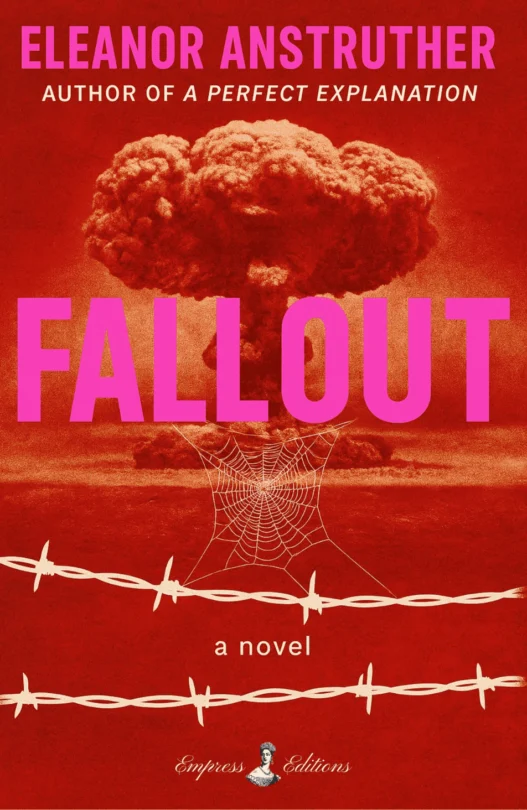
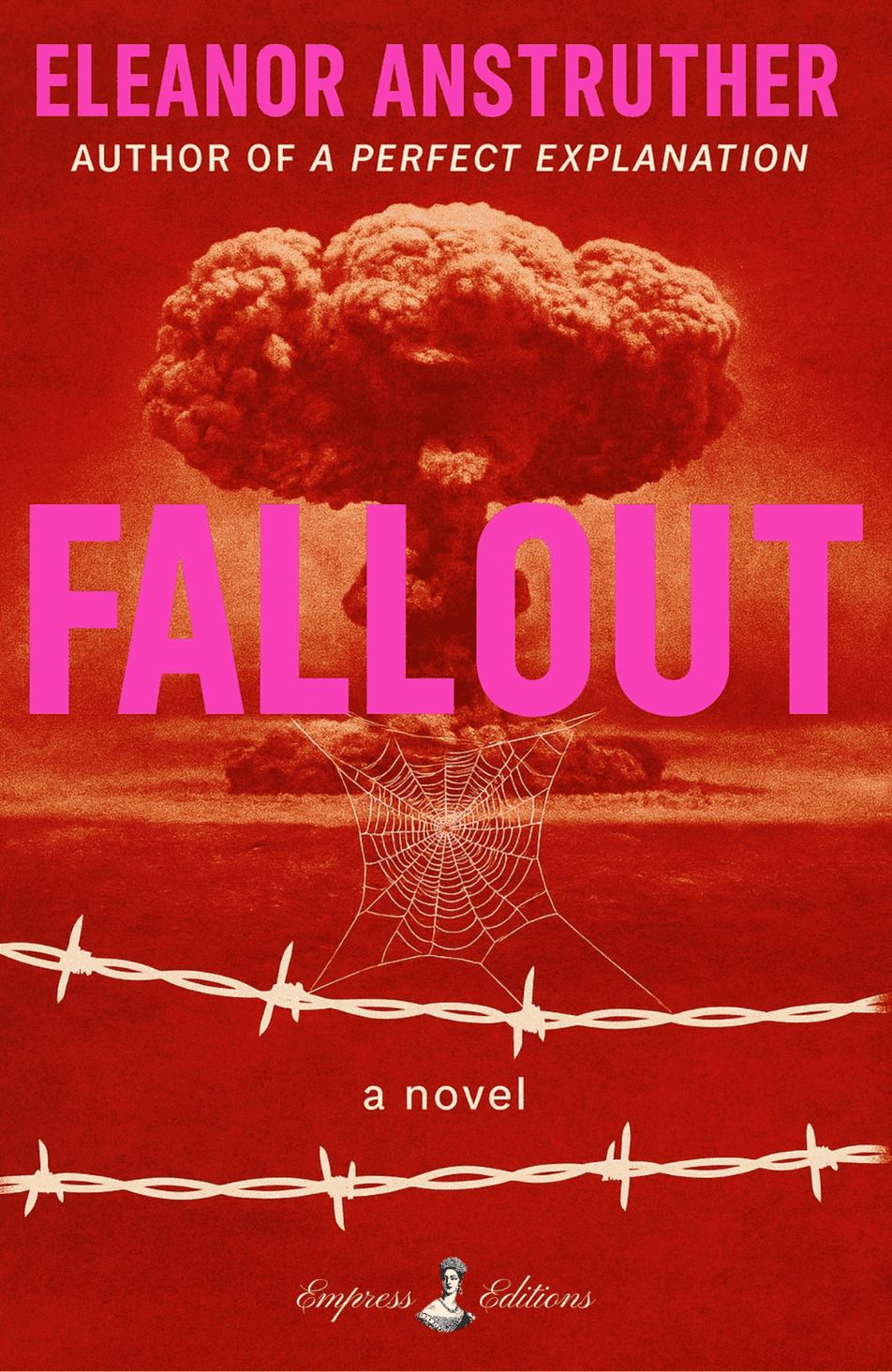
That was, until I read Eleanor Anstruther’s latest novel, Fallout, and got caught up in the fictional tale of fifteen-year-old runaway Bridget, who leaves behind the monotony of what she has known to have her heart and mind opened in a thousand ways by the revolutionary women she befriends at the Greenham Common Women’s Peace Camp.
Fallout, published by Empress Editions on April 21st, is an ode to those women who communicated, organised and built a movement without anyone being in charge. Sisters were doing it for themselves, with a camaraderie that worked by respecting individual freedoms. Joined by a common goal to protest the UK government’s decision to allow US nuclear missiles to be stored at the RAF Greenham Common site in 1983, this gathering of women quickly became a bedrock for so much more.
History in the making
Stumbling upon the Peace Camp is all quite a revelation for a teenager who’s grown up in a traditional nuclear family where mum Janet serves lunch at school then comes home for the second shift, while dad Ray keeps to his own schedule, reads the paper, watches TV, and does little to help out with their youngest, Paul, aside from fill his head with stories of what might happen should a nuclear bomb hit.
As Bridget gets educated on feminism, socialism, classism, racism, sexism and other such structural inequalities her naivety has previously protected her from, she throws herself into this new world order, which nudges Janet into some awakenings of her own. As she starts to question the calm and quiet wife role she has long prided herself on, new horizons beckon to explore her sexuality like never before. Meanwhile, Ray keeps up his premise of dutiful head of household, stockpiling tins and toilet paper in case they need to bunker in for a few months should World War Three kick off. We learn there is more to him than meets the eye, though, when one night Bridget sees him coming home late wearing a face full of makeup, and the reality of what that means comes to unfold far more dramatically than either could anticipate.
There’s a lot going on domestically for this family unit, all against a background of evolving geopolitical tensions, and a female Prime Minister ordering the police to do whatever they please to quell bubbling commotion at Greenham Common. As Bridget grows ever more comfortable with life at the Camp, forgoing hot showers, clean clothes, and brushed teeth, at times I grew more uncomfortable at the grittiness of this experience. As I read of the dirt under finger nails, the piercings performed around a makeshift fire with a vodka-sterilised needle, the crawling into pitch black woods in an attempt to escape a late night police raid, I felt the rawness of what it was to be living in this ongoing protest, and how important the cause must have been to those women who were happy for this to become a way of life.
Indeed, “Before Greenham, Bridget hadn’t known there were different kinds of women. She’d only known girls and teenagers and wives and mothers and grandmothers and they were all the same only older each time. These women with their short hair and boots and arms around each other who looked at Bridget like, Yeah? when she’d first arrived, the expression on her face must have been that rude, they lived their life how they wanted, they didn’t ask permission of anyone. They were like a species that had no interest in explaining how they’d got there.”
But as time goes on, cracks start to show in this female-run safe haven. Black women become more vocal about how white feminism has missed the mark. Middle class women are not happy to see shared money spent on cannabis but maintain that wine is perfectly fine, much to the annoyance of those who prefer flexibility in their vices. Once united by a single cause, factions start to splinter with groups championing Wages for Housework or environmental issues, among others, seeking more opportunities to shout more loudly. Other women feel this would dilute the cause and its potential impact. So unfolds, both in the book and in real life, a larger questioning of how a feminist protest movement could and should be run.
Divergences aside, the women of Greenham undoubtedly had a monumental influence on the removal of cruise missiles, and full dismantling of the RAF base by 1991. A victory for this peace collective, and perhaps for the bystanders of the Cold War more broadly.
The book follows the authors as they reach out to Switchboard’s “elders”, the voices behind the handwritten notes. They were the people who helped shape the service’s vital role in queer British history, and held the hands of those in need at a time when their identities and desires were marginalised, and who simply sought to live their lives to the fullest. Their stories offer not only a window into the challenges and triumphs of queer life in Britain, but also a testament to the resilience, compassion, and community that continue to shape LGBTQIA+ history today.
A new era for activism
As Fallout draws to a close, such a victory has not yet come to pass, but many of our clan of characters are feeling victorious in their own right. Bridget’s politicisation has given her a new sense of purpose in life, and as she turns 16, the world appears to be hers for the taking. Janet and Ray have been through a reckoning and back, finding a new way to move forward together in unconventional ways – no matter what the neighbours might say. Paul seems to be taking it all in his stride, though I’d be curious to meet him as a grown man, having been raised through this time of change in his household and beyond.
Anstruther plays with timelines well throughout, offering flashbacks that give us a glimpse of what may be to come while always rooting us in the present with Bridget’s latest adventures with friends at the Camp, friends who are representing forceful rejections of all the norms she once never thought to question. Activism as a way of living is woven into these tales, offering inspiration as much as storytelling to sink into. In a short epilogue at the end of the book, Anstruther – who describes herself as a feminist, an anarchist, and a gnostic – highlights this as a life-saving protest. One that paved the way for more movements to gain strength, belief in the ability to ignite change, and encouragement to women – and men – everywhere to stand up for what we believe in.
A quarter of a century after the Greenham Common land was returned to the people as designated common parkland, now is a good as time as any to dive into the stories of the women who made that happen, and remind ourselves, through Bridget’s eyes, how exciting it feels to learn of our autonomy and take hold of it with both hands.
Written by Lauren Powell.
Lauren is a Welsh writer based in London, UK, and publishes regularly via her Substack, The Navigation, as well as writing for other independent outlets. Alongside working as a product manager in EdTech, she undertakes creative freelance projects including event management, solopreneur strategy support, and editorial work. When away from her desk she is usually reading, brunching, or at a yoga class.