









At Fashion Week, women observe from the front row, from backstage, from the runway, in awe at the dazzling spectacle before them. The garments are masterful – the work of a living genius unfolding before their eyes. The lights dim as the show draws to its close, and the genius appears to take his bows. Across the fashion capitals, and from homes around the world, women once again watch as men take the reins of women’s fashion. Yet behind the glamour, a familiar imbalance remains: at some of the industry’s most influential houses, women are still noticeably underrepresented in creative leadership.
The world of haute couture has long been considered a woman’s playground, with sewing and dressmaking historically viewed as female pursuits, but the powerful creative decisions remain overwhelmingly in male hands. Dior, Chanel, Louis Vuitton, Gucci, Versace, Celine and Yves Saint Laurent are amongst the major luxury houses helmed by male creative directors. And now, with London and New York Fashion Week debuts from Christopher Kane at Mulberry and Henry Zankov at Diane Von Furstenberg, respectively, the heyday of the visionary male creative director is far from over. Women continue to dominate fashion’s workforce and consumer base, so why do men continue to dominate its most powerful creative decisions?
The Numbers Reveal a Divide
Studies by the International Labour Organisation found that women constitute between 60% and 80% of the fashion workforce, and drive an estimated 80% of global fashion spending. According to 1 Granary, Central Saint Martins’ student-led fashion publication, approximately 74% of students enrolled on fashion programmes at global design schools are women. But, the British Fashion Council’s most recent DEI report found only 24% of power roles (CEO, CFO, Chairperson, Creative Director) are occupied by women, with women in only 12% of creative director roles. In fact, the number of women leading luxury fashion houses has fallen by 22% in the last decade. 
Luxury parent company Kering, for example, which owns the likes of Gucci, Saint Laurent and Balenciaga, has five male creative directors out of a total of six fashion houses.
The problem then does not appear to be a lack of women entering the fashion industry, nor a lack of talent. The problem is what happens to women on their climb to the top.
How are Fashion’s Top Positions Recruited?
Such decisions lie with top executives and owners of a fashion house – often the CEO and board members – who handpick a designer who aligns with the business and its goals. Women are notably absent from the CEO role. Currently, there are no women sitting behind the CEO desk at the top thirteen global luxury companies, which leaves the decision fundamentally un-female.
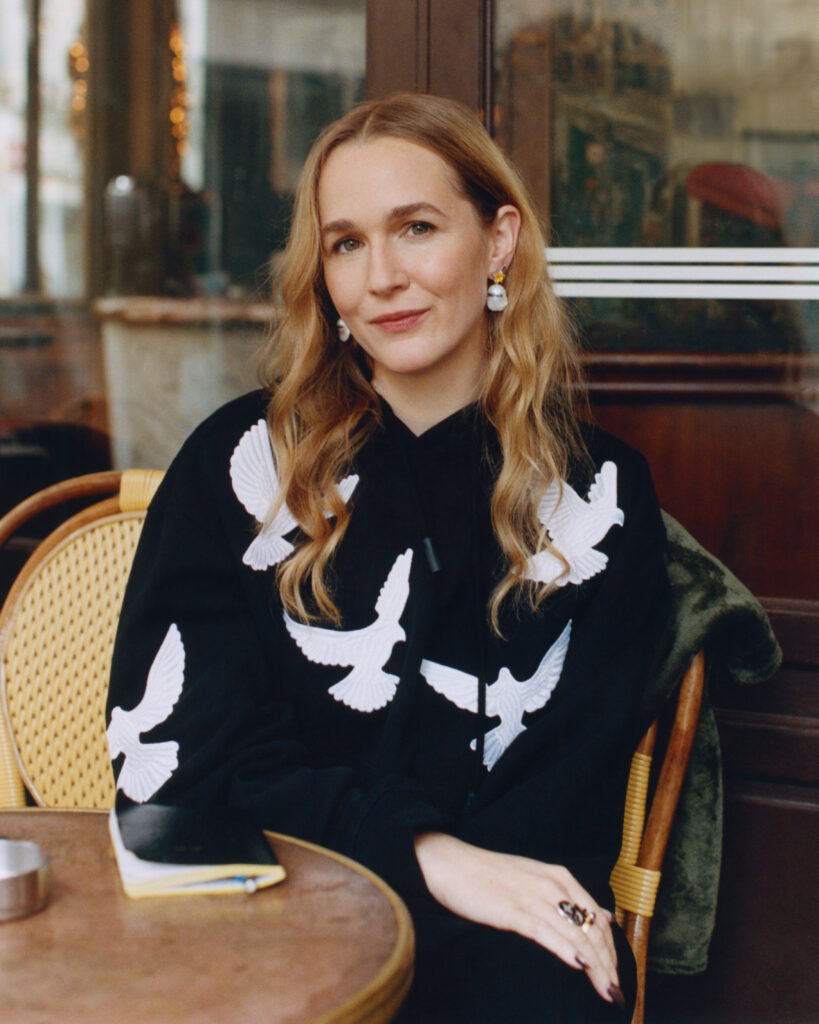
Alice Bouleau, founder of The Arrow, a Creative Talents Representation Agency, with years of experience placing creative talent with leading luxury fashion houses, explains in a written statement that “Beyond background and experience, a house is looking for a leader: someone decisive, assertive, confident and charismatic enough to rally a whole studio, company and audience behind a vision. And that is where the scales start to tip.”
“We still teach little boys to take risks, climb trees, be loud, dare and fight for their ideas, while little girls are taught to be polite, kind, discreet and sensitive. We end up with women who second-guess themselves and men who are comfortable taking their chances. Add the bias of decision makers hiring people who share their traits, the ones they somehow “click” with, and you end up with boys hiring boys.”
The bias has resulted in the same pool of established designers on a constant carousel, switching from house to house. The Great Creative Director Reshuffle of 2025 saw the same bunch of creatives bowing in and out of houses like Dior, Chanel, Celine, Givenchy, Tom Ford, Hermès, Fendi and Loewe. This continued very recently with Olivier Rousteing departing Balmain for Rabanne.
Rather than taking a chance on fresh female talent, conglomerate fashion brands hire from their competitors, “copy-pasting what they believe was a successful recipe elsewhere,” as Bouleau puts it – often the same, predominantly male candidates. And in doing so, the cycle is doomed to repeat: men are handpicked for top positions, they gather experience, conglomerates search for that experience and headhunt them, another experienced man is picked as his successor, and repeat.

The access problem isn’t however one exclusive to fashion –“I’ve met many talented women throughout my career who have all the credentials, experience and leadership qualities required for the top role, but they haven’t had access to the same networks or sponsorship opportunities as their male peers,” writes Nicky Acuña Ocaña, President for the Americas, UK and Europe at Ambition, in a statement shared with me. “The reality is that many senior appointments are still influenced by relationships and informal networks. If women are excluded from those networks, whether intentionally or unintentionally, they can find themselves overlooked despite being more than capable.”
Such male-emphasised rhetoric has nurtured the misconception that men are superior leaders. The myth of the Great Male Genius has long been an archetype from Aristotle and Einstein, to Sherlock Holmes and Elon Musk. Maleness comes as the common denominator between talent and power.
In fashion, the Genius has taken shape with Alexander McQueen, John Galliano, and Karl Lagerfeld, all of whom have been lauded as visionary creatives and fearless leaders. Their successes created a precedent for male leaders and justified the male choice over the female. In reality, women are simply not given the opportunity, and without the likes of Coco Chanel, Elsa Schiaparelli, and Céline Vipiana, these men wouldn’t have a fashion house to be made leaders of.
Where Exactly Do Women Disappear?
“One of the biggest drop-off points is the transition from middle management into senior leadership. This is often the stage where women are balancing growing professional responsibilities alongside personal responsibilities, whether that’s raising children, caring for family members, or simply trying to juggle competing demands,” explains Acuña Ocaña.
Acuña Ocaña doesn’t believe this is an ambition issue, either.
“I’ve met countless ambitious, capable women who want leadership roles. The challenge is that the path to those roles is often more complicated and requires them to overcome barriers that their male counterparts simply don’t encounter to the same extent.”
Amelie Marchant, an upcoming designer who will debut at Ireland Fashion Week next month, is of a similar perspective. She believes that becoming a creative director of a major fashion house is “a less likely opportunity for me than it is for my male peers.”
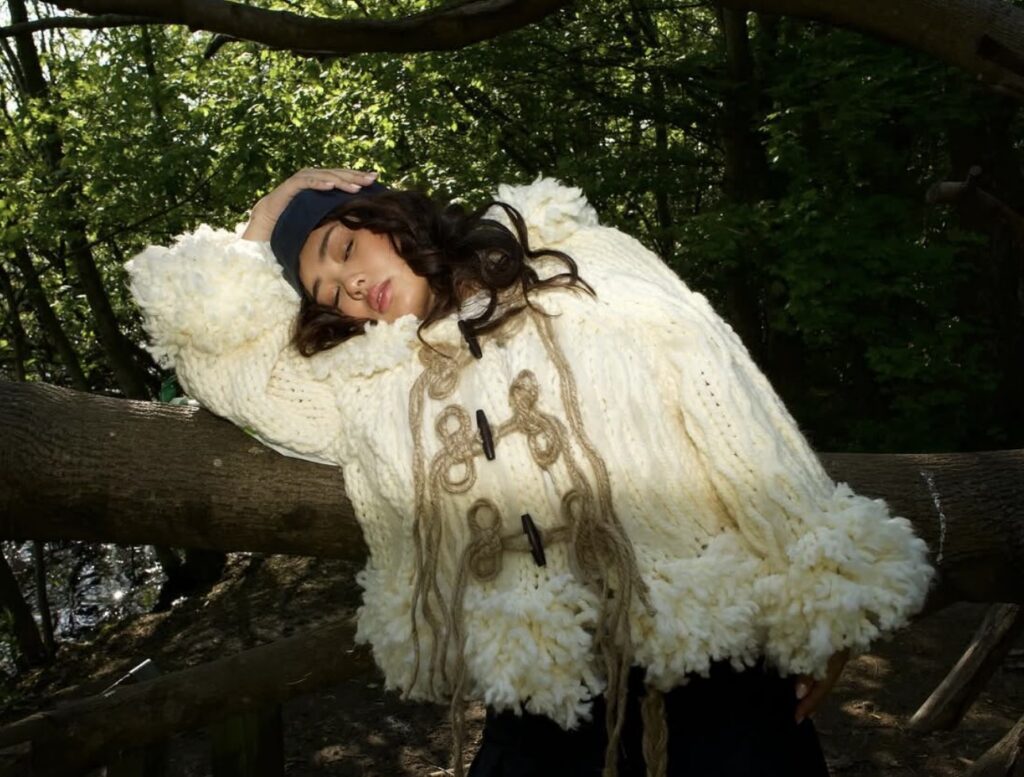
“The difference is that there comes a point where men stop having to prove themselves and women never get that privilege. We’re constantly having to prove our place in the industry, constantly having to shout for our voices to be heard. Even at the top, even running the business, there are still people questioning our decisions and doubting our choices. It’s a weight that men simply don’t carry, and it’s one of the most exhausting parts of being a woman not just in the fashion industry but something women have to deal with throughout life.”
Marchant opines that the reception of a designer’s vision differs depending on their gender. “A man can make a suggestion, and it lands as a confident vision. A woman makes the same suggestion, and it is treated as something to be considered,” Marchant tells me. “The difference in language is contradictory. It’s the way confidence in a woman gets read as difficult or ambitious, while the same confidence in a man gets read as leadership.”
Gender: Culprit or Coincidence?
But is gender really the issue? Or is it just that these men happen to be the most talented in their fields? The “merit vs. gender” debate has long been one of contention. While some studies have argued merit-based workplace cultures can inadvertently disadvantage women, others have found transparent meritocratic practices can be the best path to guaranteeing equity and fairness. The UK’s Equality Act 2010, for example, entrenches that hiring decisions must be based on merit, with specific rules on “positive action” in place to support disadvantaged and underrepresented groups.
The fashion tide has shown signs of shifting too. Women remain at the helm of some of luxury’s strongest brands – Chloe, Armani, Fendi, Givenchy, Bottega Veneta. In 2025, Rachel Scott became the first black woman to be appointed creative director of an American luxury fashion house, taking over at Proenza Schouler. Likewise, Hermès has remained female-forward, with Grace Wales Bonner appointed menswear creative director, succeeding Véronique Nichanian, while Nadège Vanhée leads womenswear, though it’s hard to ignore that Hermès’ general artistic director remains male with Pierre-Alexis Dumas. Other recent successes like Julie Kegels’ win of the prestigious LVMH Prize and celebrated names at Fashion Week like Iris van Herpen, Simone Rocha and Rei Kawakubo may indicate a new dawn rising, where the future of fashion is female.
Though a disconcerting pattern remains consistent: when a woman does manage to reach that elusive position, it is not before long that criticism eclipses her and she is replaced with a man. We’ve seen this all too recently with Sarah Burton’s departure from Alexander McQueenand subsequent replacement by Seán McGirr, Jonathan Anderson’s succession of Maria Grazia Chiuri at Dior, Matthieu Blazy replacing Virginie Viard at Chanel. Viard’s tenure was even described by Bruno Pavlovsky, President of Fashion at Chanel, as “an intermission”.
Bouleau notes that women in power roles face harsher judgment on management style. “I often joke that The Devil Wears Prada would never have been written if Miranda had been a man: a demanding, authoritative male director is a non-story. We expect women to be nurturing, so when a woman leads with the same authority as a man, she gets labelled mean.”
By reducing the authority of powerful women to expendable intervals and convenient placeholders, the fashion industry continues to be complicit in workplace inequality.
What needs to change?
One suggestion proposed by Acuña Ocaña was more intentional succession planning. “Too often I hear organisations say they can’t find senior women when the reality is they haven’t invested enough in developing, retaining and sponsoring female talent earlier in the pipeline.”
It’s all about perception, and reframing the language we associate with a strong leader, as Acuña Ocaña explains, “Leadership is not about who spends the longest hours in the office or who shouts the loudest. It’s about influence, empathy, resilience, commerciality and the ability to bring people with you.”
Marchant agrees. She believes it is not only the fashion industry that must change, but society as a whole.
“The system being deep-rooted doesn’t mean it’s permanent. It can be rebuilt and reshaped, and we see that with the powerful women that broke through the system and every young woman who refuses to shrink, refuses to accept that the top roles aren’t for her, is all part of the reshaping too.”
Regardless of the fashion industry’s inhospitable environment, it’s designers like Marchant, who choose optimism, that are paving the way for other creative women to resist being treated as anything but a leader.
Written by Cece Blythe.
Cece Blythe is an Irish freelance writer specialising in fashion and culture. Her writing examines the people, politics and cultural events shaping the worlds of fashion and contemporary life.


