









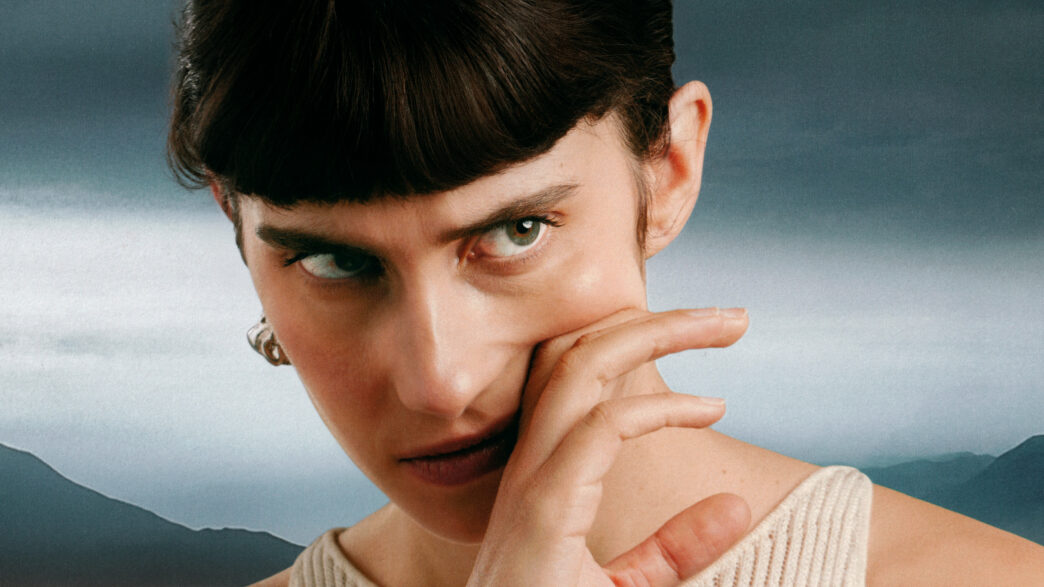
Luxie and I go way back. We met in a somewhat unconventional way: when Lazy Women was getting started and organised its first-ever fundraising party in Paris in 2023, our social media manager at the time (who bare in mind had zero connections to French music) did an insane deep dive into Paris’s up-and-coming independent female artists and came across her on Instagram.
With a few thousand followers but a strong pop-star presence, dreamy electronic vibes, melodic vocals, and a cool-yet-non-conforming style, Luxie felt like a “lazy woman” from the very start. We were so grateful that she agreed to play for us back then, without any compensation: just two independent creators helping each other out.
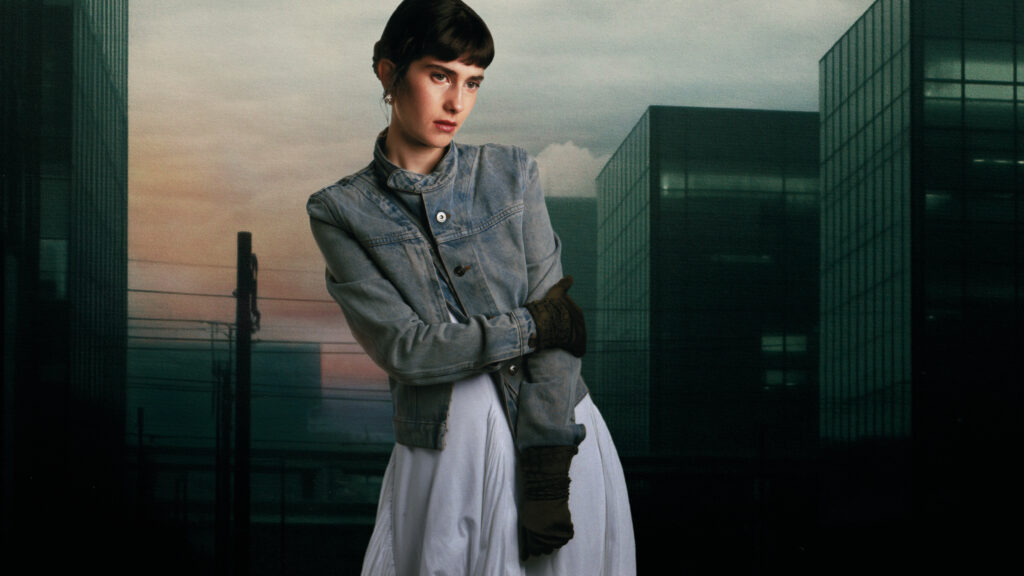
Three years later, our paths crossed again. Luxie was opening for Otha at Badaboum, and I spontaneously messaged her to see if she’d be up for an interview. Over the years, her style has matured, but she’s stayed true to herself. She’s been playing to bigger crowds and opening for international artists, and earlier this year, she played her first-ever headline show in Paris at La Boule Noire. It was heartwarming to see how much she’s grown and how she’s becoming increasingly well-known. We also found plenty of parallels between her path and ours as independent creatives building something of our own.
For anyone discovering you for the first time, how would you introduce yourself?
I’m an artist and producer. I mostly make music in my bedroom, where I produce electronic music and express my feelings through it. I’d describe it as pop, but with electronic and ethereal sounds.
I like creating my own little universe through music, where sounds and feelings are just as important as words. It’s a way for me to express things I might not necessarily know how to say otherwise.
If you had to describe your music in three words, what would they be?
Introspective, dreamy, and alternative.
What usually comes first when you’re making a song? What does your process look like?
I usually start with four chords because they give the song its structure and its overall feeling. Then I keep adding layers, drums, notes, and different sounds until the track starts to take shape.
I also like recording my voice very spontaneously. Sometimes I just use the microphone on my phone or computer. I sing when a feeling comes to me, without thinking too much about it. Then I cut up my voice, experiment with it, and piece everything together. I love playing around with my voice and transforming it, almost using it as another instrument in the production.
Is there a topic you find yourself coming back to in your music?
I always come back to solitude, but not in a bad way. For me, being alone is also a chance to reconnect with yourself. Music is the space where I can do that, where I can spend time with myself and my feelings. I think that’s why solitude keeps finding its way into my songs.
Who are you listening to or taking inspiration from at the moment?
I’ve been listening a lot to Sophia Stel, Eurohead, and Otha. They’re the artists I’ve had on repeat lately!
You sing mostly in English, but you’re a French artist. What does singing in English give you that French doesn’t?
When I sing in French, I sometimes get stuck on the words instead of focusing on the music. In English, it’s the opposite. Even if I say something I don’t necessarily want people to hear, I feel like I can say everything I want. It gives me a kind of freedom.
I think a lot of us tend to be overthinkers, and I can be that way too. But when I sing in English, I don’t need perfection. I don’t get caught up in every word, so I can focus on the feeling instead of worrying about exactly what I’m saying.
You performed at one of our events back in 2023, and we’ve been following you ever since. What’s changed for you since then, both as an artist and as a person?
I know myself better now. I have a clearer idea of what I want my music to sound like and what kind of scene I want to be part of.
I think knowing yourself is important when you make music. The more you understand what you like and what you want to express, the more you can develop your own identity. I feel like I have a much clearer sense of myself now than I did back then.
Your latest EP, weightless, has a very ethereal, introspective feel to it. Was there a particular feeling or period of your life behind it?
The world of weightless comes quite naturally to me. It’s how I feel and imagine music, through all these visuals I have in my head. I think I naturally approach music through feelings and images, and that’s how the atmosphere of the EP came together.
But weightless also came after a difficult breakup and a period of feeling very lonely in the music industry. Those experiences were part of it, too. Making the EP became a way to express what I was going through and give those feelings a world of their own.
There’s a lot of vulnerability and self-questioning in your music. Do you find that songwriting helps you figure things out, or do you usually know what you want to say before you start writing?
Most of the time, I don’t think too much. I sing, and it feels like my subconscious is speaking for me. Sometimes I discover things about myself through the music that I didn’t even realise were there.
I don’t always start with a clear idea of what I want to say. Sometimes I just follow a feeling and only understand afterwards where it came from. I think that’s one of the interesting things about making music: you can end up expressing something you didn’t even know you were carrying, before you’ve found the words for it.
Interview by Zsofi Borsi.
Photo credits: Jean de Blignières


