







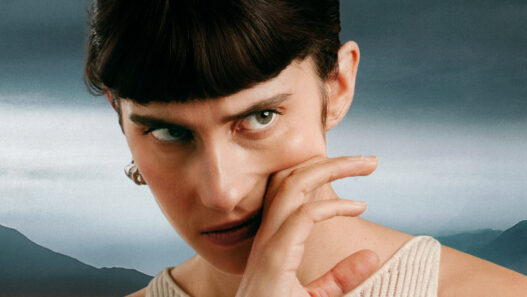
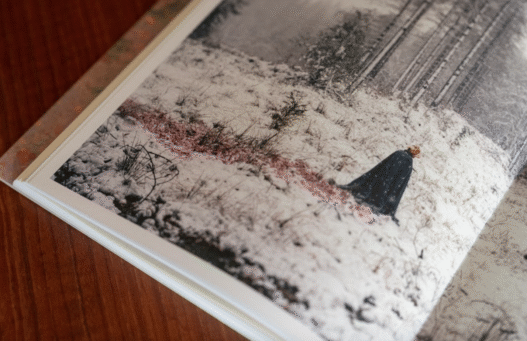
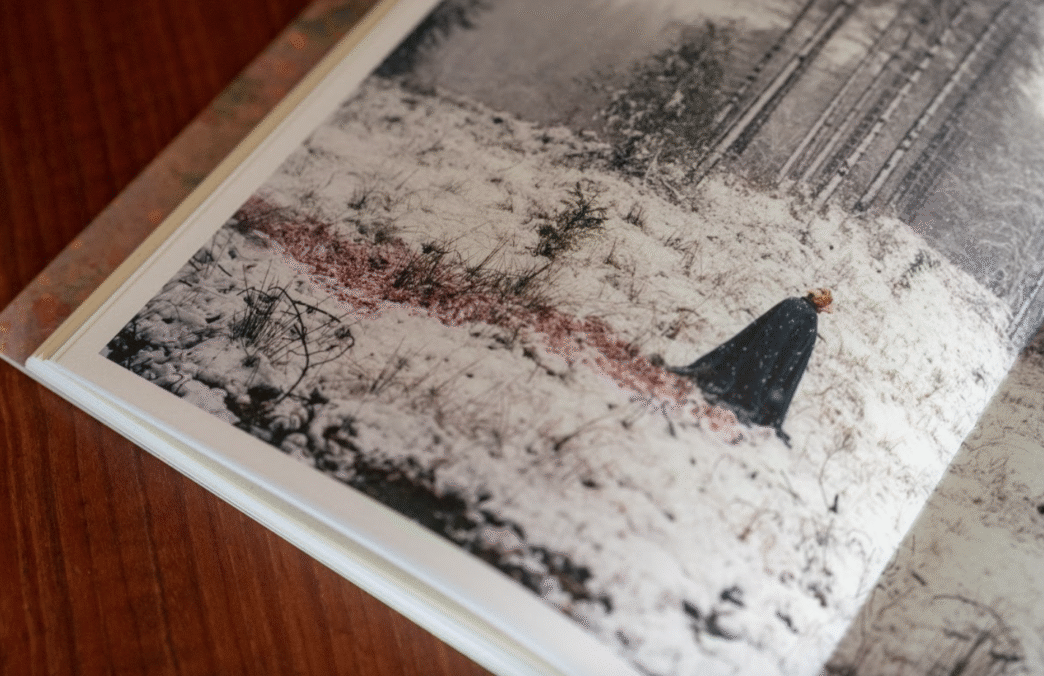
Every October, as Halloween approaches, store windows fill with a remarkably familiar figure: the green-skinned hag with a pointed hat, warts, and a broomstick. We have grown up viewing the “witch” as a creature of folklore, placed right next to fairytales, monsters, and mythical beasts. Yet beneath this commercialised caricature lies a far darker, human truth. Witches were not fairytale monsters: they were real, ordinary women of flesh and blood who fell victim to systematic judicial and religious violence.
In the 17th century, the Basque Country saw some of Europe’s worst witch-hunts. Thousands of women were targeted, interrogated, and subjected to brutal torture by the Inquisition. Under extreme pressure, they confessed to absurdities—flying on the backs of animals, holding akelarres (nocturnal gatherings or sabbaths) at night, and making pacts with the devil.
But because history is recorded by the victors, the only surviving documents of these atrocities were written by the inquisitors themselves. The women’s true voices were silenced forever, buried under centuries of patriarchal propaganda.

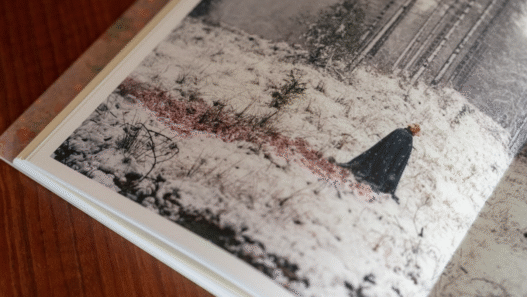
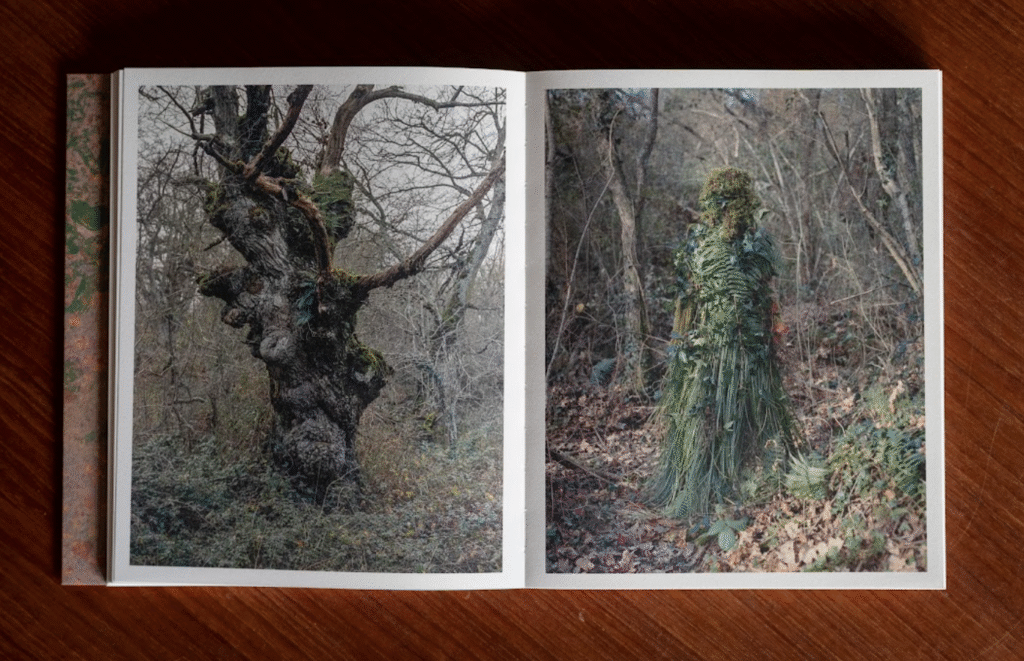
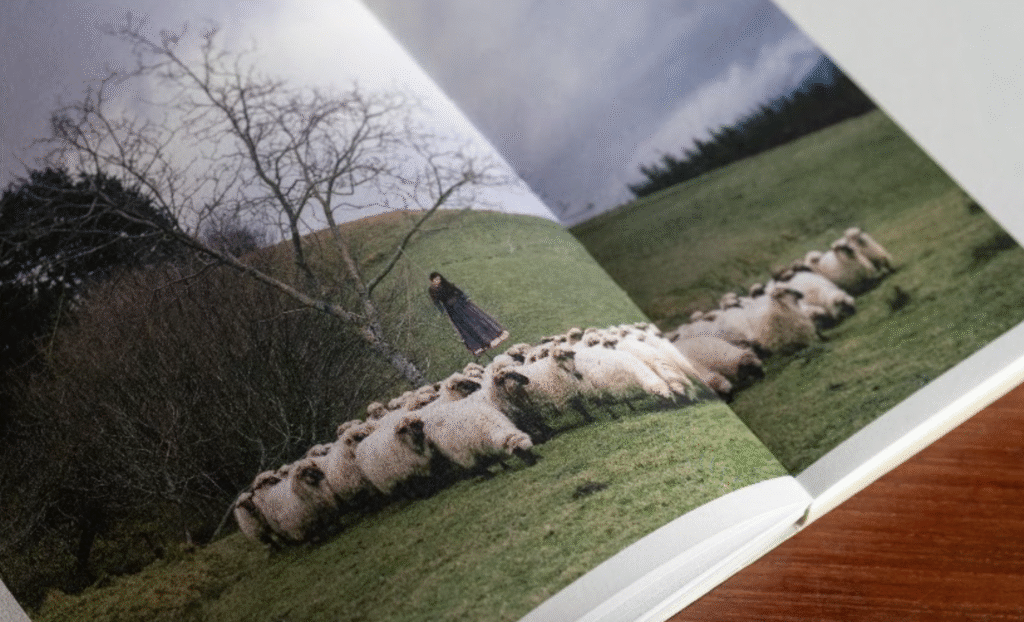
It is precisely this historical distortion that photographer Bego Antón aims to dismantle in her photobook, Haiek Danak Sorginak (All Of Them Witches). Over ten long years of archival research and creative work, Antón has created a visual counter-archive. Instead of attempting to show the real historical violence, she builds a dreamlike world that explores a simple question: what if the imaginary worlds extracted under torture had actually been real? Using local Basque landscapes and women from her own family, she uses fantasy and surreal imagery to expose the absurdity of the accusations.
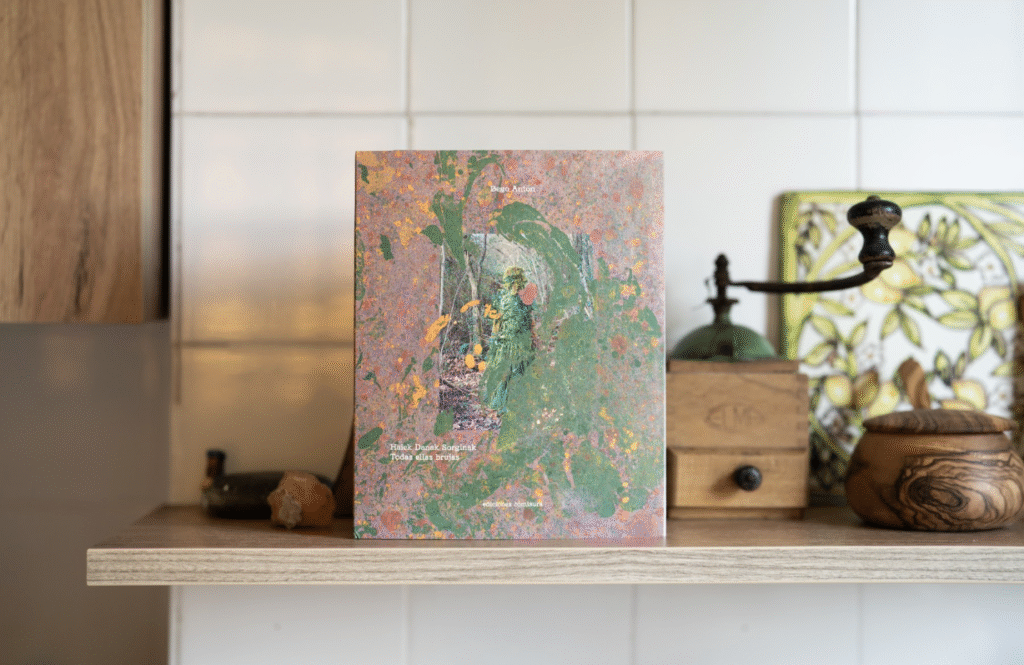
Co-published in English and Basque by Overlapse, the book weaves together Antón’s dreamlike photography, historical engravings, and texts by feminist scholars, creating a powerful space for historical reparation. We talked with Bego Antón to discuss the myth of the Basque witch, the ethics of staging historical trauma, and why reclaiming this narrative remains vital for women’s rights today.
How did this project come about, and what motivated you to tell this story?
I’m from the Basque Country, so we grew up surrounded by all this magic and mythology right from childhood. As I got older, I started questioning everything and thought that perhaps the imagery we have about witches isn’t very accurate or realistic. The project came from a deeply personal need to demystify the figure of the witch and, above all, to understand what had actually happened and who these witches really were. It all started out of curiosity, and initially, what I did was research, because all my projects involve a huge amount of research. So I began reading about what historically happened during that era in the Basque Country to understand why they were called witches and who they actually were.
When did you realise ‘witches’ weren’t mythical creatures, but real women persecuted by the law and church?
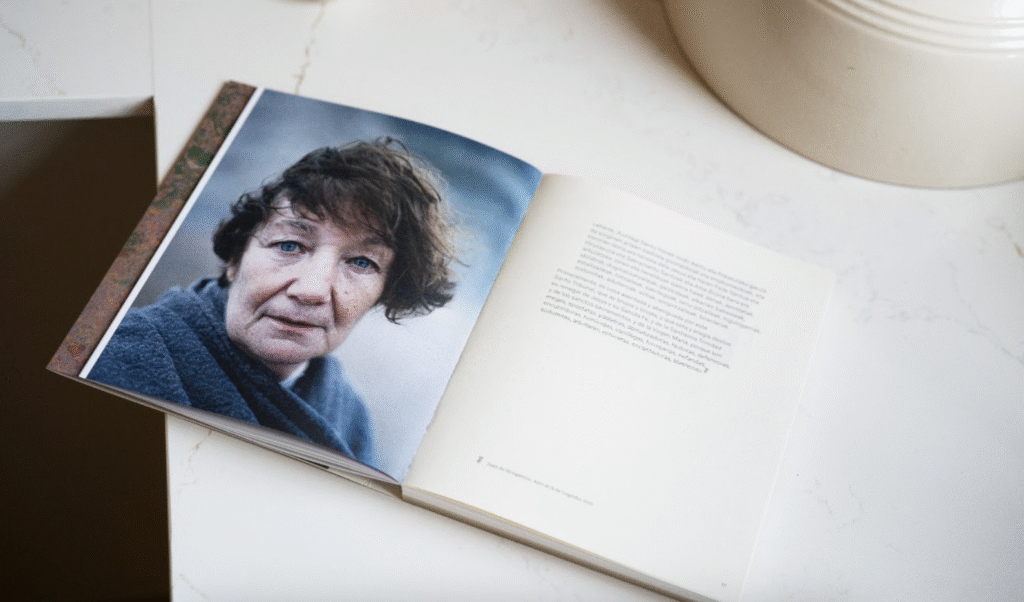
To be honest, I think it’s something we all actually know. We know it isn’t part of mythology—that it’s sitting somewhere in the back of our minds—but we don’t stop to think about it. And that’s why we always portray them in the exact same way, with that image we have stuck in our heads: the old, ugly witch dressed in black… Which comes from popular culture and children’s films. Deep down, I think we know, but we don’t fully understand what actually happened.
It was when I started reading books by anthropologists and historians that I began to understand, as soon as I came across specific stories.
Another thing that happens with the topic of witchcraft is that when we think of witches, our thoughts are very vague, and I believe that’s also because we don’t have their first and last names. So, we fail to humanise these women. However, as I began reading, I started discovering women like Graciana de Barrenetxea or Margarita Jauri, who were real women of flesh and blood with very specific stories.
That was when I realised this wasn’t just a broad, general concept of a woman, but rather very specific and distinct stories, each quite different from the next.
We only have confessions taken under torture. How do you tell these women’s stories when the only source comes from their persecutors?
What I have done, in reality, is the outcome of what was generated. The project responds to the question: If what the witches described had actually been real, what would it have looked like? Well, what it would have looked like is the project I am showing. But in truth, it doesn’t belong to the real world; it is all on an imaginative plane because, to begin with, witches never existed. There is a very beautiful phrase that Amaia Nausía—a Basque historian–includes in her text in the book, which is that “witches never existed; what existed were women persecuted for being witches.”
So, unfortunately, what I have built is an entirely imaginary world. If we had to create a real portrait of all that, I imagine it would have meant photographing these women in their daily lives, in their homes, doing their work, alongside the torture and the inquisitorial side of it. But there wouldn’t have been a single trace of magic in any of it, because obviously these women never flew on animals, never metamorphosed into other beings, and there were never any akelarres or anything else that was described.
They never gave birth to toads, nor suckled them, nor held banquets. In reality, there was no magic at all—there was only violence.
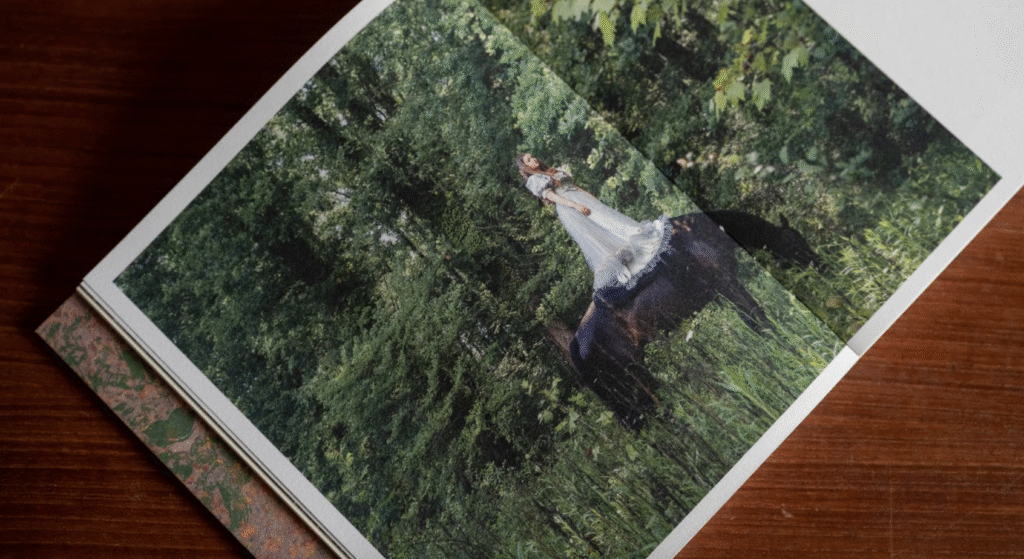
The portrait I would have made, I suppose, had it been possible, would have been much harsher. My intention is to explain what happened by using fantasy, which is what I always do in my work. I believe these are also contemporary issues because, in the end, this still affects the situation of women today, and they are current issues treated from a more dreamlike perspective. I think all types of photography are probably necessary, but I don’t see myself as capable of speaking about violence from a violent place. I always try to find that side that is more connected to the fantastic.
The portrait I would have made, I suppose, had it been possible, would have been much harsher. My intention is to explain what happened by using fantasy, which is what I always do in my work. I believe these are also contemporary issues because, in the end, this still affects the situation of women today, and they are current issues treated from a more dreamlike perspective. I think all types of photography are probably necessary, but I don’t see myself as capable of speaking about violence from a violent place. I always try to find that side that is more connected to the fantastic.
For the photos, you worked with women from your own family and local women from the Basque Country. What did it mean for them to lend their bodies and faces to those allegations from centuries ago?
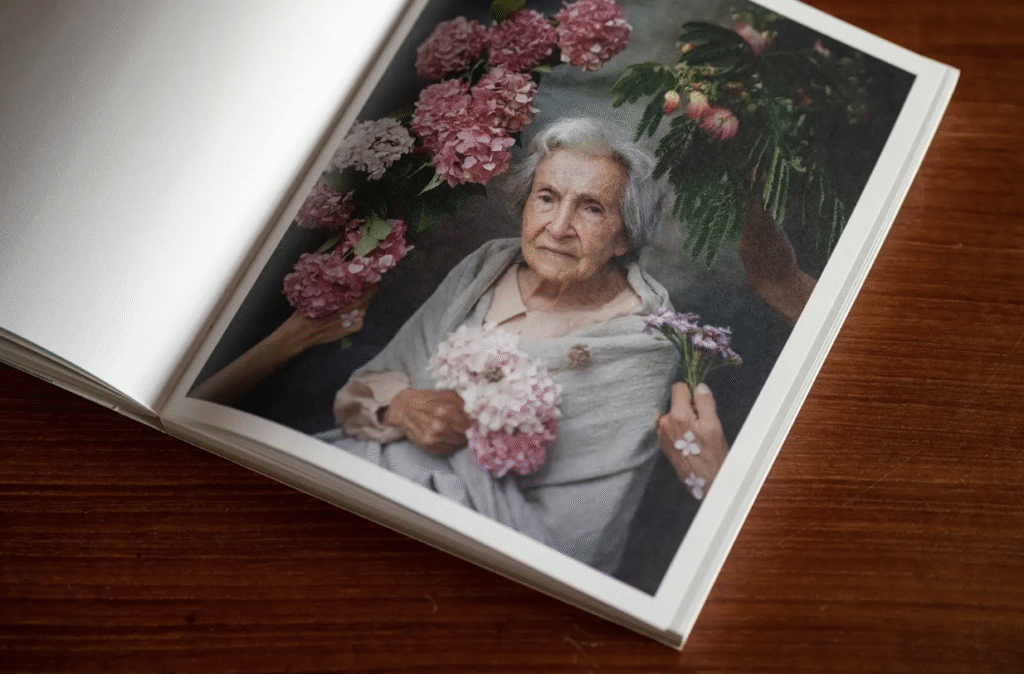
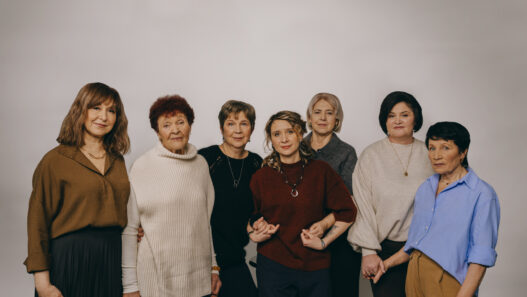
Well, I think that’s a question you would have to ask them, because otherwise, I’m answering on their behalf. But what I can say is that they are my own women: the women who are part of my family or women from my closest circle, my best friends. For me, it was important because I ended up creating a much more personal project, as I’m talking about the history of the women who came before me through the women of my own family. For me, that creates a super strong bond with them—both with the women of the past and those of today. As for what they think, I’d have to ask them, because I suppose each of them has their own thoughts.
This project has taken you over ten years of archival research and field work. How did this slow pace influence the way the images matured and your own perspective as a photographer?
Well, the slow pace wasn’t really by choice—it was interrupted by the pandemic and two maternities, which is why it took so long. But it allowed everything to sit and settle. I naturally work quite slowly anyway: I go back and forth rather than following a strict process. I’ll read a source, get inspired, and shoot some photos. Then I’ll come across another source or revisit an earlier one, which gets me thinking about new images.
Taking my time also helped me see what the project actually needed. How I started was completely different from how I finished. Initially, I wanted it to be a nomadic project, involving local women from all the affected villages. But I quickly realised that was far too ambitious, which led me to focus on the women in my own life instead.
My photographic style shifted significantly over time as well. Working so slowly allowed me to evolve creatively until I knew exactly what I wanted to capture. In fact, I reached a point where I decided to stop—not just because ten years had passed and I’d told the story I needed to tell, but because I noticed I was repeating myself. Every time I planned a new shot, I caught myself looking for the same fabric patterns or using the same framing. That was my cue that I’d covered what I needed to cover.
The photobook combines your images with old engravings and essays by researchers (including a descendant of Salem victims). How did you approach this dialogue between history and your visual perspective?
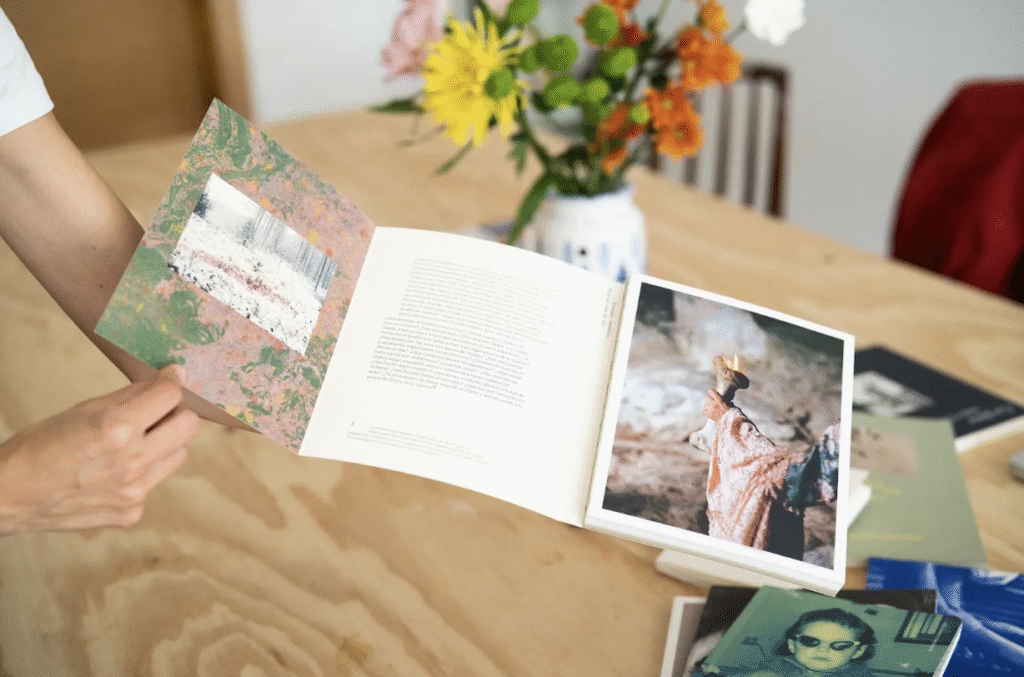
My project is an artistic one, so it’s a deeply personal interpretation. At the end of the day, my own experience and imagination are woven right through it. But because this is such a serious subject, I also wanted to approach it with rigor—both feminist and historical rigor. That’s why there’s a text by Alice Markham-Cantor, a descendant of Martha Carrier, one of the women executed in Salem, who writes from a feminist perspective; and another by Amaia Nausía, a Basque historian who specialises in how women lived during that period.
I didn’t want men to tell this story yet again; I wanted the perspective to be entirely female. The confessions that inspired these images are as close as we can possibly get to these women, as they capture what they said, translated and transcribed by the inquisitors.
That is my closest point of connection to them, and that’s what fills the central booklets in the book.
As for the torture, I used period engravings because all this imagery was extracted through torture and threats. I didn’t want to photograph torture scenes—I did consider it, even photographing the instruments they used—but since it was already documented in period engravings, it was already visually recorded. So, I appropriated various historical engravings from across Europe that depict the torture and abuse inflicted on these women, and included those directly in the book.
Today, witch-hunts are not just a thing of the past, but a terrifying reality still faced by thousands of women in places like Ghana or India. How does your project aim to connect this historical memory with the violence women continue to experience today?
I think doing that is actually quite complicated, because this is very much a European reading of the issue. The communities currently being persecuted for witchcraft aren’t going to have access to this book, so it would be naive of me to claim it will change their reality. It probably won’t change anything there, but I do think it’s important for us, at least from our position here, to build awareness and reflect on how these events shaped the condition of women today.
And, hopefully, to ensure history doesn’t repeat itself—even though, as I say, these small communities in parts of Africa are facing situations right now where I don’t know what the solution is. But it certainly speaks volumes that they are in the exact same position we were in all those centuries ago. Ultimately, these cultural and religious clashes still take their toll today, and they affect women most of all. In fact, there’s a village in Africa—I can’t recall the exact location right now—where many women accused of witchcraft by their families or neighbours are sent to live together in a small isolated community. It’s mind-boggling. How is that still possible today? For us, it’s easy to wonder why this is still happening in certain parts of the world.
Beyond that, the modern condition of women has been directly shaped by those persecutions. That period planted the seeds for attitudes towards women that persist to this day. Of course, the torture and abuse aren’t identical today, and the suffering takes different forms, but it remains a type of violence adapted to our modern world.
We’re publishing this interview in October, a month when the figure of the witch is heavily commercialised. After spending a decade immersed in this project, what would you say to someone who still sees the word ‘witch’ as just a costume or a fairytale character?
I don’t think dressing up as a witch is a bad thing at all—in fact, I think it’s great. What I do believe, though, is that we should aim for a realistic costume, and I actually discuss this in the book.
A friend recently sent me a photo of a young girl dressed as a witch, but she was wearing a period-style medieval dress, tied with ropes around her waist, with cardboard flames drawn at her feet. Now, that is an accurate witch costume.
What isn’t an appropriate witch costume is the standard one you find in any costume shop: the woman dressed in black with a pointy conical hat and a green wart on her nose. That is a completely false depiction of a witch, and using it only perpetuates the stereotype. In fact, I’ve tormented my own children with this topic, and we talk about it all the time. It’s not just Halloween costumes either; it’s right across children’s literature. There is a staggering number of illustrated children’s books where witches are still portrayed that way. At first, I thought, well, I just won’t buy them. But now I take a different approach—I bought a couple of them so I can use them to explain to my children why that isn’t an accurate or fair portrayal of women.
Written by Irene Martínez Martínez
Irene Martínez Martínez is a Spanish journalist with a background covering topics from social affairs to economic trends for outlets such as elDiario.es and Reuters, alongside press management in the publishing and cultural sectors. Specialising in reporting through a gender and feminist lens, her work explores social inequality, women’s rights, health, and memory politics. She holds a joint honours degree in Journalism and Film, TV, and Media Studies, has lived in Spain, the UK, and Poland, and is currently based in Luxembourg.
All pictures belong to their rightful owners.


