






Hardware barely scratches the surface of the military arsenal Russia deploys today. What no one talks about is how the Russian Armed Forces systemically use torture and sexual violence as a weapon against Ukrainians.
In February 2026, a documentary called Traces screened at the Berlinale Panorama and won the Audience Award. This September, it was selected as Ukraine’s official Oscar submission. The film follows six Ukrainian women — a farmer, a former teacher, two entrepreneurs, a civil servant, a former economist — who survived sexual violence and torture under Russian occupation. The director, Alisa Kovalenko, is also a survivor. Also a former frontline soldier. Also the first woman in Ukraine to publicly testify about experiencing conflict-related sexual violence (CRSV) in captivity.

Alisa has spent a decade building the infrastructure to make this crime impossible to ignore: through testimony, through documentation, and now through cinema. This is her account of what that takes, what is yet to be done, and what the world still doesn’t understand.
Total silence
“Starting with the Russian aggression in 2014, there was total silence. No one talked about it. On one hand, the women who survived didn’t want to talk about it, but on the other, no one was really interested in hearing their testimonies either,” says Alisa Kovalenko. “So once I started testifying, I realized that I was the first woman to speak about this publicly.”
Back in 2014, Alisa was near Kramatorsk filming Ukrainian defenders. She was detained by Russian-backed forces for four days. She was raped. For almost two years, she told nobody. But when she finally broke the silence and testified publicly at the Ukrainian Helsinki Human Rights Union, the expected domino effect did not happen.
“CRSV is one of the most silenced and stigmatized war crimes. This stigma is ingrained in the crime itself. Its goal is to break the person. That’s why it’s so hard to talk about it.”
As of 2026, Ukrainian authorities have documented 401 CRSV crimes committed by Russian soldiers against Ukrainian civilians, both men and women. However, thousands of instances remain undocumented.
The reason for this is mainly the stigma, which is especially prominent in smaller, more conservative towns. But it also has to do with distrust of the authorities, which in Ukraine, according to the Kyiv International Institute of Sociology, is over 50% for both the parliament and the cabinet of ministers, as well as the judicial system.
“The path of dealing with trauma is long and unique to everyone. And sometimes, when a woman is ready and wants to testify, no one wants to hear her. So, she already broke down one wall, but then ran into another. That’s why we need to work with institutions and promote a human-centric approach to survivors.”
From testifying alone to building an entire community
Alisa herself admits that it was hard for her to start talking about her experience. It was only when she joined the Teatr Pereselentsia (Theatre of Displaced People) that, with support from one of the theatre’s founders, she decided to open up. And out of this, the play called Captivity was born, which caught the attention of the media and the Ukrainian Helsinki Human Rights Union. The organization later approached Alisa, asking her to testify for their project documenting Russian war crimes.
And even though more women did not come forward like Alisa had hoped, after her testimony, Iryna Dovhan, a volunteer and activist who was publicly tortured by Russians in 2014 for her pro-Ukrainian position, reached out. This is how SEMA Ukraine started: a community-based NGO of Ukrainian women who have survived conflict-related sexual violence and torture related to the Russian armed aggression against Ukraine.

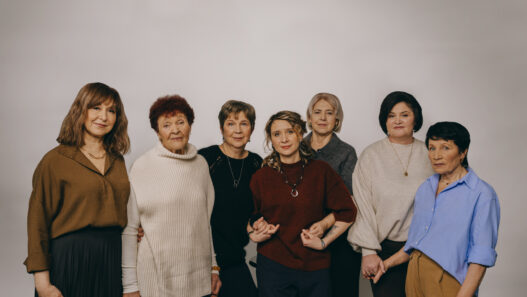
In 2019, they held their first meeting with 15 women, all of them survivors of Russian detention centers, torture, and CRSV. Now the organization consists of more than 80 women, who help each other through financial aid, necessary purchases such as phones, furnishing homes for women who lost everything, and rehabilitation arrangements.
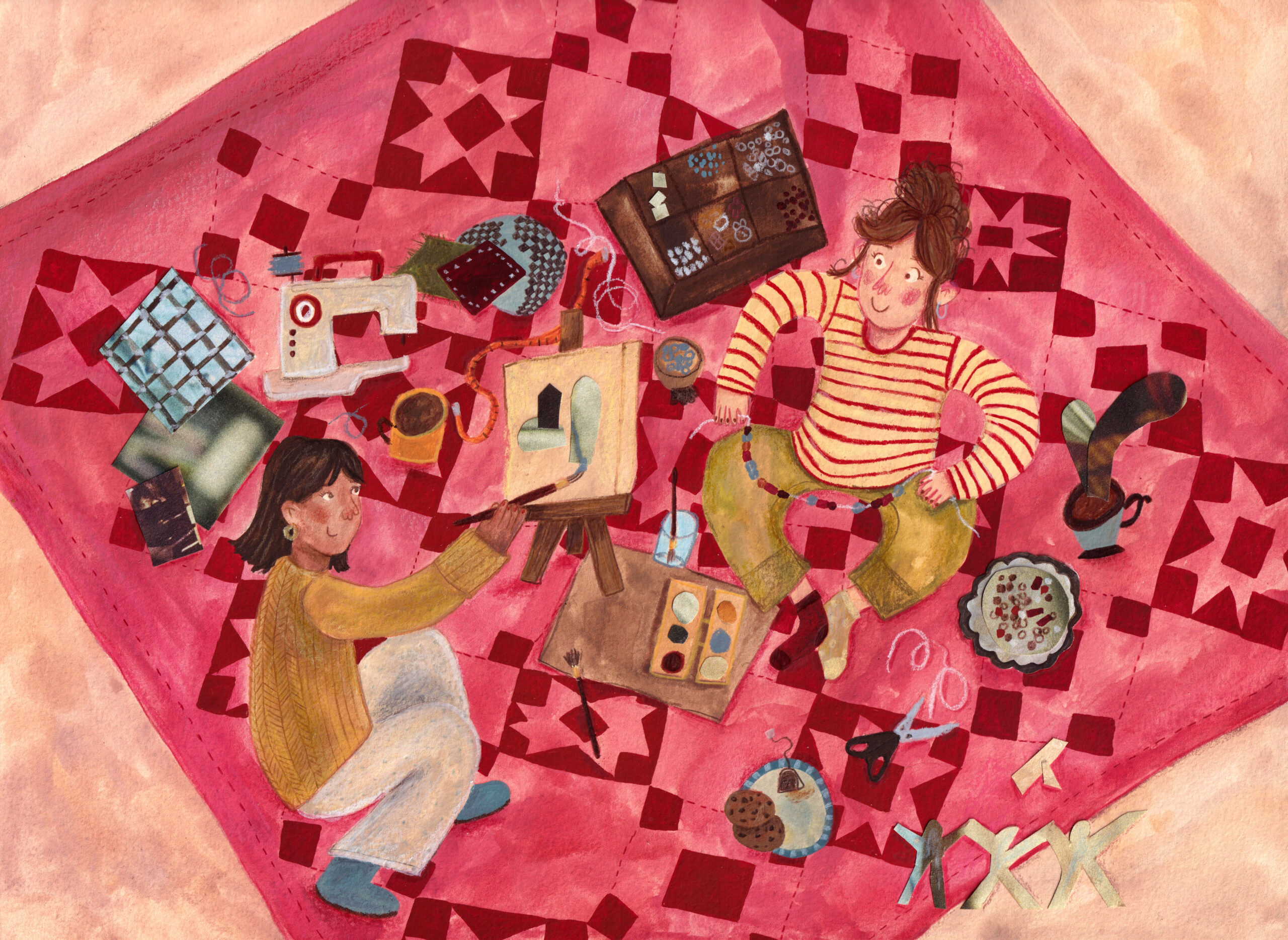
“We do patchwork. Our main value lies in supporting women survivors, SEMA members like ourselves. For 6 years, this has been mainly volunteer work. It’s about the mission.”
Alisa is modest. Their work has an impact beyond individual support. In May 2026, Russia was added to the UN Secretary-General’s List of Shame for conflict-related sexual violence. It’s a milestone that organisations like SEMA helped bring about through years of documentation and international advocacy.
Not random acts of violence, but a systemic means of war
The one message that Alisa aims to get across during our interview and in her work is that Russia’s use of sexual violence in this war is a systemic instrument. It is deployed as a tool of humiliation and psychological destruction during the interrogation of prisoners of war (POWs), including civilians, and used to break resistance in occupied territories.
“This is not about sex; it’s a weapon of war. It’s not about some individual cases, where some Russian dickhead Vanya raped some woman Olya. There are patterns that show that sexual violence is used systemically. It’s the scariest and most extreme crime aimed at robbing one’s dignity.”
CRSV doesn’t only mean rape. According to the UN definition, it can refer to sexual slavery, forced prostitution, forced pregnancy, forced abortion, enforced sterilization, forced marriage, trafficking in persons, or any other form of sexual violence that is directly or indirectly linked to an armed conflict.
Yet this isn’t always obvious, even to those who lived through it. SEMA ran awareness lectures in liberated communities in Khersonshchyna, Kharkivshchyna, and Zaporizhzhia, and found women who had experienced sexualised torture but didn’t know it. They thought “torture” meant physical beatings. They didn’t know there were many forms. Men are victims too, subjected to genital mutilation, resulting in many being left unable to have children.
The Bardina Law that is yet to work
Most of the survivors who manage to return to Ukraine struggle to find stable support mechanisms. In 2024, funded by France, Belgium, and the Global Survivors Fund, the pilot project on Urgent Interim Reparation for survivors of CRSV in Ukraine was successfully established, which found 1080 survivors eligible for 3000 euro compensation. This pilot later laid the foundation for Law 4067, the Bardina Law, signed in June 2025, which outlines the social status of CRSV survivors. Still, no reparations were paid under this law.
“It doesn’t work. The law has been signed, but the implementing regulations are still being developed, and there’s no money. We don’t have the budget to pay the compensation,” says Alisa with almost a hint of guilt. “That’s why right now we are running an advocacy initiative to use frozen Russian assets as the funding base.”
Still, the existence of this law is already a big step towards validating the experience of the survivors, recognizing their status, and destigmatizing the issue. Survivors themselves participated in inter-agency working groups during the law’s drafting process, and were consulted directly during the development of the reparations pilot that preceded it. Alisa was also in one of the focus groups.
“It’s a unique law; Ukraine is the first country to implement something like this. And it’s nice that the survivors were directly involved in developing it,” Alisa says. “But it’s important that this law doesn’t just stay a law on paper.”
“Strength that triumphs over evil” or how Traces portrays survivors
Traces, Alisa’s latest documentary, tells the stories of 6 women who survived CRSV during Russia’s war on Ukraine, portraying collective trauma. It is built around Iryna Dovhan, SEMA’s founder and herself a survivor, travelling through liberated Khersonshchyna to collect testimonies.
“We had a SEMA board meeting and basically voted for making the film. It was a collective decision, made by the community, not me personally. So, I didn’t have a choice; I just had to make this film,” explains Alisa.
Financing the film took a year of working on a “micro-budget”, a grant that didn’t come through, and eventually a Polish co-production. The fears of the production team were real: would anyone watch? Is it too heavy, too dark? The mission is what drove Alisa. “If these crimes are not documented, it means they didn’t happen, and those Russian soldiers didn’t commit them. We needed to lay this foundation for justice.”

Alisa uses audio testimonies to tell the story. What the camera records instead are traces — minefields, burned fields, destroyed houses, the landscape that remains when people have been taken from it.
She recalls how one of the male viewers said that he expected footage of the real sexual violence. “Iryna and I were shocked. And I thought, how many people do you think would come to see women being raped on screen?” Unfortunately, neither Alisa nor I are quite sure of the answer.
“I didn’t want the film to completely absorb the viewer into this darkness. I wanted it to give hope and show human dignity,” says Alisa. “I was happy that many people said that the film was actually about strength that triumphs over this evil.”
Reality check for European audiences
Traces screened across Europe’s major festivals, including Berlinale, to full rooms and standing ovations. It has since been selected as Ukraine’s submission for the 99th Academy Awards in the Best International Feature Film category, and is headed for a US tour. Alisa mentions the upcoming festivals, screenings at the European Parliament, and panel discussions with ambassadors and diplomats.

Having traveled across Europe to show the film, Alisa noticed that CRSV is a major blind spot for the West. Many European viewers told her that Traces served as an entry point to the topic of Russian war crimes for them.
“Europeans often ask why the Russians are so violent. And it’s surprising to hear this question after everything we’ve seen, for example, in Bucha,” says Alisa, referring to the Bucha massacre, the mass murder of Ukrainian civilians by the Russian Armed Forces in 2022.
“They are shocked. When they see Mefodiivna [one of the women survivors in the film], who is 75 and survived torture, when a russian soldier beat her up, broke her ribs, cut her stomach, and raped her, that’s when Europeans appear face-to-face with this evil. It is eye-opening for many of them.”
Human nature plays a part: it is difficult to care until it directly affects you. “This evil is abstract to foreigners. Abstract bad Russia does abstract bad things. But when you see a concrete personal story of a violent crime, it stops being an abstraction,” says Alisa. “You see this infinite dark evil that has nothing to do with rationality. A Russian soldier always has a choice to torture or not to torture”
The fight continues
What Alisa wants Traces to achieve is growing empathy. “I want to change the narrative and deepen this understanding of what these women have been through. We need to see them not as victims, but as survivors.” Ultimately, she hopes the film will encourage other survivors to speak out and start healing.
For those watching from Europe, Alisa is specific about what fighting alongside them looks like: donate to SEMA, organise screenings, advocate for the use of frozen Russian assets for reparations, oppose any amnesty clause in peace negotiations, support giving Ukraine more weapons. “We don’t need pity anymore. It doesn’t save anyone. We need active empathy: to help, to support, to stand alongside, to fight together.”
As for her own path, Alisa continues to follow her mission not only to seek justice for the CRSV survivors, but to protect her country. In 2014, she made a promise to herself. “I understood what would happen to Ukraine if this evil I had seen in the Donbas started to spread. So I promised myself: if there’s a full-scale war, I will go and fight.” Alisa joined a volunteer assault unit in 2022 and took part in the liberation of Kharkivshchyna. Later that year, she came back to finish the film she was working on at the time.
It is in her plans to return to the frontlines when the film’s active life is over. She admits feeling guilty for leaving service, for not being there when her “unkillable” commander died on the frontlines. “I haven’t finished grieving,” she says. “Because if you sink into that pain, you won’t have the strength left to fight. I think someday I’ll cry it all out. But for now, the fight continues.”
Written by Mariia Chubareva.
Mariia Chubareva is a Kyiv-based journalist covering war, civil society, culture, and human rights in Ukraine. She has reported for The Northern Times, The Groninger, TyKyiv, and Gwara Media, working across print, audio, and video formats.