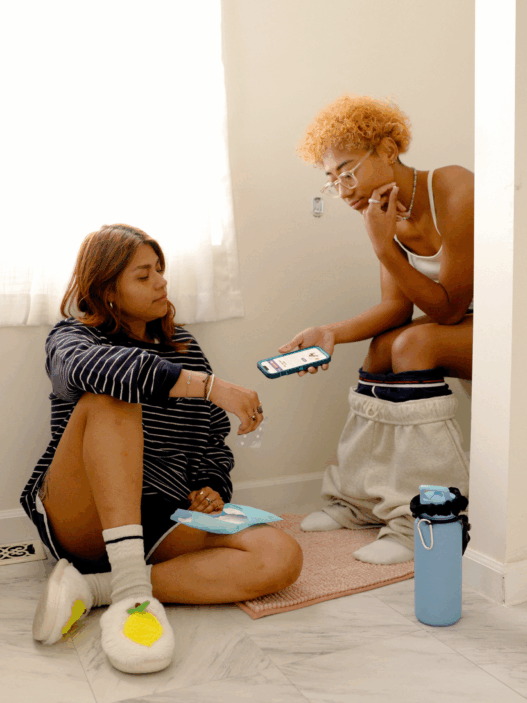









Inside the prison walls, where intimacy is forbidden, women invent their ways to get close to each other. At midnight, when the entire prison falls asleep, they meet in a toilet. Just a few minutes behind that door, when any witness could get you in such trouble that most people wouldn’t believe. Enough to remind you that your body is still yours.
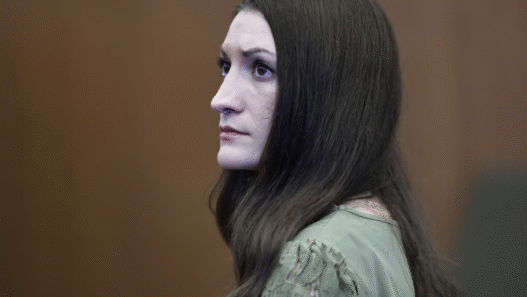
This is just one story from the lives of imprisoned queer women in Belarus. We get this glimpse into prison reality from 30-year-old Darya Afanasyeva, one of the thousands of Belarusians imprisoned for political reasons after the 2020 post-election protests. A femactivist and blogger, she served over two years in prison for having protested against the falsified presidential elections in Belarus.
The August 2020 presidential elections were marred by numerous violations and have been widely recognized as fraudulent by international observers, governments, and the EU. At that time, the Belarusian ruler Aliaksandr Lukashenka had been in power for 26 years with no serious challengers for many years. Yet the 2020 campaign was marked by the rise of Sviatlana Tsikhanouskaya, a former English teacher who became the common protest candidate in that election. According to independent data, she won the first round of the elections, yet Lukashenka was declared the official winner.
Belarusians responded with mass protests – at their peak, there were more than 200,000 Belarusians on the streets of the capital, Minsk. But the repression started to escalate, and the protests, in turn, started to lose their intensity. Activists, journalists, and ordinary citizens – hundreds and thousands of Belarusians turned into victims of state terror, which continues to this day.
This terror system is not confined to prison cells. It extends to giving fines to the people who read forbidden media, initiating criminal cases in absentia against the Belarusians who fled abroad, firing people for political activity, and many other forms of persecution.
As of August 2025, the number of Belarusians recognised as political prisoners has exceeded 4044 people. 2860 of them have been released from custody, including 593 females. Many more Belarusians were detained for a couple of days which is not enough to recognise them as political prisoners. The total number of people arrested since August 2020 exceeds 65 thousand people.
Most women jailed for political reasons and sentenced to actual prison terms eventually end up in Penal Colony No. 4, located in Homel, Belarus. Darya Afanasyeva was one of them.
“Whenever there is a chance, someone will try to report you”
Darya was detained on December 28, 2021. The police searched her house, struck her several times, and confiscated two flags: the Belarusian white-red-white flag, banned in modern Belarus as a protest symbol, and a rainbow flag.
As a mockery, officers wrote down in the official record that Darya was “not married to a woman”.
She only got her freedom back on March 30, 2024. She spent more than 2 years in prison due to the criminal charges brought under the so-called “people’s” article 342 – “Organization and preparation of actions that grossly violate public order, or active participation in them”. Simply put, she was imprisoned for taking part in the peaceful protests after the elections of August 2020.
After being sentenced to a real term, Darya was transferred to the Penal Colony No.4 in the summer of 2022. At the time of her arrival, she decided that she wouldn’t get involved in any relationship in the colony, knowing how dangerous it could be.
And it’s not an exaggeration – such relationships can cause serious trouble for both parties. Afanasyeva explains that inside the colony, queer women face homophobia not only from the prison administration but also from the other inmates.
“You are constantly watched, and whenever there is a chance, someone will try to report you to the administration to get some privileges. If you are, so to speak, caught being close with another inmate, you are most often separated into different colony units and working shifts so that you cannot see each other – making life as inconvenient as possible,” says Afanasyeva.
Belarusian Queer Inmates: An Invisible Culture
What if a queer woman has a partner on the outside? In that case, she has to face the fact that she won’t see her partner until the end of her sentence, explains Afanasyeva. Calls and meetings in the prison are allowed only with family members. Yet same-sex marriage is banned in the Belarusian constitution – its Article 32 defines marriage as a union exclusively between a man and a woman.
Homosexuality was decriminalised in Belarus in 1994, yet queer people still lack legal protection against discrimination, which they continue to face in the country. They are also vulnerable to violence. For example, in 2019, Belarusian filmmaker Nikolai Kuprich was beaten on one of the Minsk streets by a passerby who assumed he and his friends were queer.
A queer woman in Belarus can’t get permission to meet or even talk with her incarcerated partner. According to Darya, if a woman is jailed for political reasons, she is almost always forbidden to receive letters from non-relatives, so this kind of communication is not an option either.
The only way to contact the inmate is to send a message through the inmate’s family members. Yet this can cause an involuntary coming out for the prisoner and her partner.
“Many queer people in Belarus still hide their relationships, including from their families. But if one partner ends up in prison, the other inevitably has to bear the burden of admitting to the imprisoned partner’s parents that their relationship is more than a friendship, to maintain some form of contact”, Afanasyeva elaborates.
Natalya Dulina (60) worked for many years as an associate professor of Italian at the Minsk State Linguistic University. She spent more than two years in prison for giving an interview about the Belarusian national identity to an independent Belarusian media outlet, Euroradio. The authorities label such media as “extremist formations.” Like Afanasyeva, she had to serve her term in Penal Colony No. 4.
As a scholar, Dulina believes that the queer world of Belarusian prisons should be thoroughly studied. According to her, it’s easy to recognise a queer inmate by her appearance. Such women usually have a short haircut and a particular way of wearing a hat – not everyone does it, because it’s technically a violation, and they often get reprimanded for it.
“But the younger inmates do it anyway, like when parents tell you to wear a hat and you take it off as soon as you are outside. Here, they roll up the brim to uncover their ears, which makes them look even more masculine,” describes Dulina.
Frame Your Sister for the Right to Love
Dulina reminds that any LGBTQ+ relations are strictly forbidden by the internal rules of the colony, so engaging in such relations is treated as a violation. So if the colony workers learn that an inmate gets involved in such a relationship, they gain a lot of power over her fate. And it can mean much more than just transferring her to the other unit – the woman may be forced to betray other inmates who share her plight to be allowed to keep her relationship.
Afanasyeva explains that security officers can give such an inmate the choice: either they give the violation to her or she betrays somebody else, and the violation goes to that person. That is when the principles are tested.
“What do you put first, your safety or your own values? Are you ready to sacrifice another person, even your loved one? They can put it bluntly: either you get the violation, or she does”, says Afanasyeva.
Such violations collect and can lead to worsening of the conditions for the inmates. For example, an inmate can be placed in SHIZO – a punishment cell with only bare essentials: just a bed strapped to the wall, a sink, a bench and a table, and a hole in the floor instead of a toilet. While in SHIZO, inmates are not allowed to go outside, make or receive phone calls, read books and even smoke – all they can do is clean the cell and pace from one corner of the cell to the other. A person can stay there for anywhere from a few days to several weeks.
Another type of punishment is confinement in a PKT cell, lasting from one month to six months. Unlike SHIZO, in PKT inmates are given bedding, allowed to go outside for short walks, read books and send and receive letters. In extreme cases an inmate can get the extension of their sentence for accumulating many violations.
“You must decide if you are willing to risk your freedom, your family, your parents, your possible future children, just to avoid betraying her. Are your relations really that strong? Besides, the officer can go to your girlfriend in the colony and say: You know what, she chose herself over you, and that is why you are getting the violation”, Afanasyeva explains.
One way to avoid such a fate is to agree to cooperate with the security officers. This cooperation can take the form of informing the administration about the actions of the other prisoners and carrying out certain tasks, says Dulina. For example, there may be a task to plant prohibited items on an inmate who was singled out by the administration for pressure so that the item can be “found” later during a search.
“The administration can’t always come into the unit and do it itself, so it is convenient to use others to do it. Or an inmate can be ordered to set someone up in a way that seems harmless, like giving a cigarette, but doing it in front of a camera or in a place where it’s easy to later claim: the camera caught it, there are witnesses – and soon enough the person is accused”, tells Dulina.
For example, a well-known Belarusian political activist, Marya Kalesnikava, was framed numerous times by an inmate who cooperated with the prison administration. Marya spent many months in solitary confinement, like SHIZO and PKT.
Yet, all the strict rules and terror cannot completely erase the tenderness in the colony. Afanasyeva says that relationships there are built on the smallest gestures – making a cup of coffee for her, swapping duties, or simply asking how a day went.
She reminds us that it’s all done in conditions when any manifestation of support, not to mention love, can be strictly punished. And yet the women take risks:
“You risk catching the attention of an officer and receiving a violation. But it’s all done carefully, and it’s all deeply valued. Here, on the outside, if my partner makes me a coffee, I will just say thank you. But in there, it’s a true gift – after standing guard at the gate in the rain, in the cold, or in the heat”.
Written by Vera Belacarkouskaya.*
Vera Belacarkouskaya is a Belarusian reporter currently living in exile. Her reporting focuses on carceral systems, exile, and the psychological aftermath of repression.
*Published under a pseudonym to protect the identity of the journalist.
Photos from personal archives.