








Ever since I started working, there was a part of me that always wondered whether my male colleagues were earning more than I did for doing exactly the same job. I started my working life already ready to go into battle to be treated equally.
The thing is, I grew up in Turkey. Despite women earning significantly less than men there, the gender pay gap is not the main topic of discussion.
It’s far more basic than that: the participation of women in the labour markets. Or shall we say, the lack of participation of women in formal labour markets and the prevalence of women in informal work. 
So before looking at gender pay gaps, it’s important to understand some of the more basic, more structural issues that help create these inequalities, which we will explore in more detail below. Because yes, the gender pay gap figures give us a tangible number, namely the difference in the average hourly pay between men and women, but it doesn’t typically provide the right context, and ends up putting a lot of the onus on individuals and businesses. But what governments do also matter.
From patriarchy to discrimination: why women in Turkey are not working
Let’s start with Turkey. The percentage of women in formal work – where you’re in a legally recognised structure and have a contract – was 36.3% in 2024, compared with 71.4% for men. That’s the lowest among OECD countries. But why?
I think for me, growing up, the gender pay gap itself was very low down the priority list. Because the question was more around whether a woman works or stays at home, particularly if she has children. This is driven not just by the patriarchal norms that are prevalent across the country, even in what you would consider to be “modern” families, but more practical concerns, such as the lack of access to childcare, safety issues, discrimination at work and limited access to training and education.
So even when you want to, they don’t make it easy for you to work. The country’s president, Recep Tayyip Erdogan, has repeatedly complained about women who work and don’t have children, even going as far as to say that they are “half persons”, indicating that they are deficient in some way.
If you do have a child and want to go back to work it becomes really difficult because of a lack of early years’ childcare. We had a full-time nanny and grandparents around when I was growing up and both my parents worked, but that’s not a luxury many can afford. There aren’t any state-funded nurseries for children under the age of three. There are some private or municipality-backed nurseries, but most of them don’t accept children under the age of two. So if you don’t have family members or if you don’t have the money to hire a nanny, it’s very difficult to find childcare for those first two years. There is also the rhetoric that mothers shouldn’t send their children to nurseries before they turn three, but that’s a whole different topic. This all means that there is a large number of women who are just not working in Turkey.
So, if you simply don’t have women in workplaces, and you leave a lot of women out of the workforce while they raise young children, it will result in more men taking up senior roles, getting higher-paid jobs.
If you do manage to find childcare, find a job and start working, then you have to deal with discrimination in the workplace. And then you need to deal with the logistics of actually getting to and from work, with some women citing safety concerns if they have to go back home late using public transport.
Many end up working in the informal economy, with women making up the bulk of it. A lot of the domestic labour, including cleaning and childcare, which is done by women and immigrants, falls into this category. This means that women in these roles don’t have many protections or employment benefits and are typically paid lower wages.
So what’s the gender pay gap in Turkey? According to data from the Turkish Statistical Institute, which publishes information on the gap combining it with different factors, the salary gap is widest for those with higher education, at 17.4%, and it is lowest for those with primary school education or below, at 13.2%. Considering all the inequalities in the country, it’s not the worst in the world.
Gender pay gaps around the world
Gender pay gap levels vary significantly around the world and it is really difficult to get a complete picture on where things currently stand. That stems from either a lack of national data, or out of date information from organisations such as the World Bank or IMF.
But on average, in OECD countries, full-time working women earn 88 cents to every euro earned by men. So in 2023, this was 11.3%. The worst wage gap was in South Korea, with 29.3%, according to OECD statistics, and the best was in Luxembourg, with -0.9%, according to Eurostat data.
A big reason for the gender pay gap is that women are overrepresented in certain industries that pay less. On the flipside, higher-paying sectors often have fewer women working in them. This imbalance in representation plays a huge role in creating and maintaining the pay gap between men and women.

Globally, Oxfam estimates that women earn 24% less than men, and 700 million fewer women than men are in paid work. And the UN estimates that it will take another 257 years to close the global gender pay gap.
To be completely honest, I got lucky in the first proper job I had that I had a boss who was fair and made sure that my gender didn’t determine what I earned – he just looked at the quality of my work, and when needed advocated for my pay rises, even without me having to bring it up. But I also know women in the same company who’ve had problems. I also know women in other companies who’ve found out that they were getting paid less than their male counterparts, whether in base salaries or bonuses.
What can be done?
So what to do as individuals and countries to get women into work and close the gender pay gap?
Governments still have to carry much of the load. Iceland has managed to reduce its average gender pay gap to 9.3%. And look at Luxembourg, which seems to have effectively closed its gender pay gap, at -0.9% – that wasn’t all by individual action.
Employers in Luxembourg with 15 or more employees have to have an equal opportunities officer. In 2016, the government also introduced the principle of equal pay into its Labour Code, with unjustified pay disparities potentially resulting in financial penalties between 251 to 25,000. It also indexes salaries to the evolution of the cost of living and makes regular adjustments to the minimum social wage.
We do need to keep in mind that Luxembourg is not some completely equal and amazing place for working women. That headline figure covers women working full time – and many work part time. It’s the gap in the hourly earnings of men and women in full-time employment. There are still disparities in total annual earnings, impacted by factors like hours worked, the number of women in high-paying roles, and high-paying sectors.
And as individuals, we can advocate for further change and take some action to help address the disparities. Pay transparency is top of the list for this. If you talk about it, if you know about it, you can advocate for yourself and others. If you’re in a position to hire people, you can also influence how much employees are paid. You can have input into hiring practices and promotion decisions.
Negotiate your own salaries and encourage others to do so. Advocate for equal parental leave policies and flexible working options. Seek out opportunities for additional training, mentorship and career advancement. And most importantly, identify and address your own unconscious biases – we all have them.
Written by Selin Bucak.
Selin Bucak is a freelance journalist based in London, covering a variety of topics from finance and economics to human rights issues and Turkish politics. She has more than a decade of experience working as a journalist in Turkey, the UK and France. She is also the author of The Last Day Before Exile: Stories of Resistance, Displacement and Finding Home.
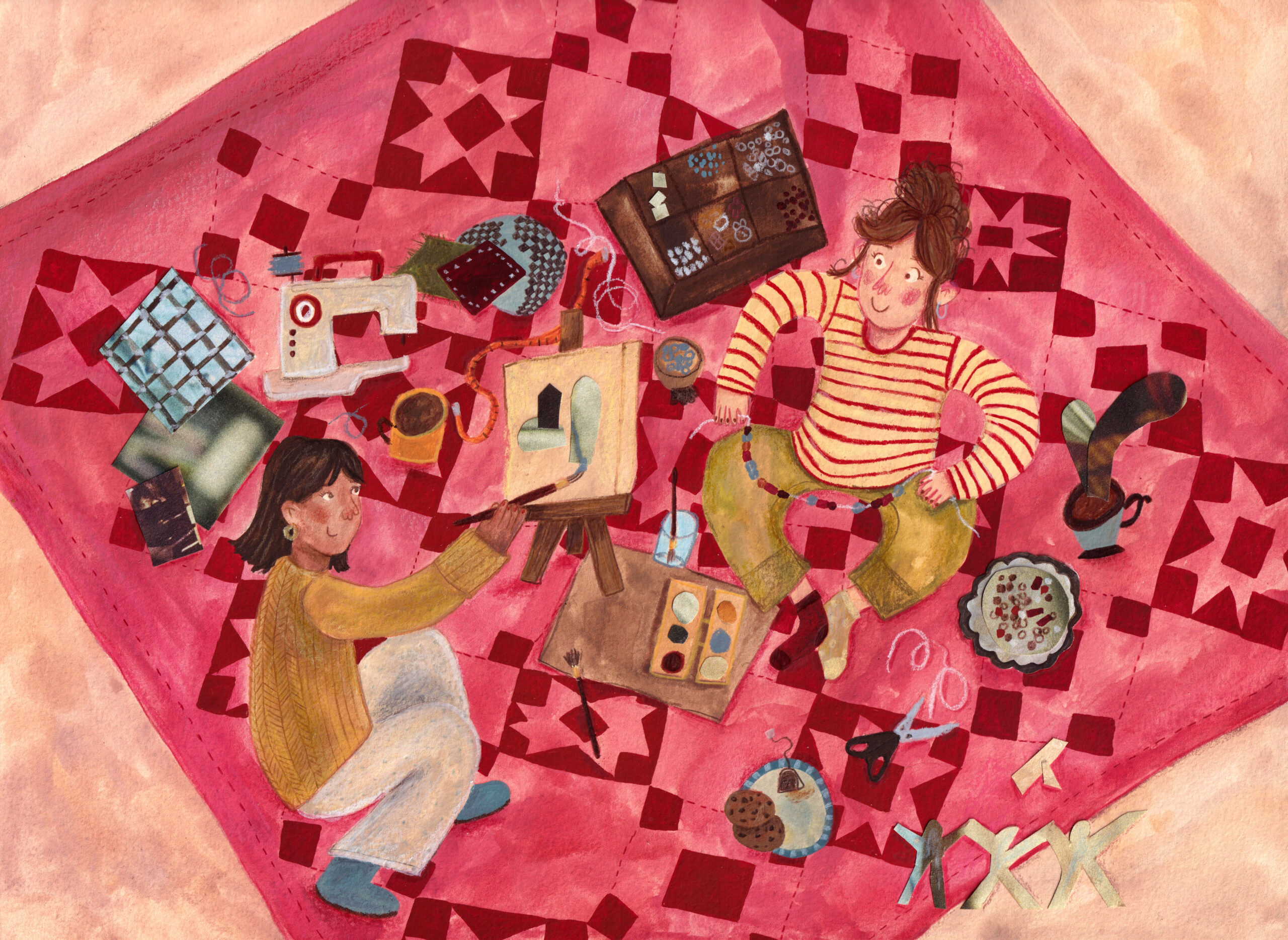
Illustrated by Gizem Öğüt.
Gizem is an illustrator and creative professional based in Istanbul. Her practice explores themes of feminism, LGBTQIA+ rights, and resistance to patriarchal systems through a socially engaged visual language. See more of her work here.