








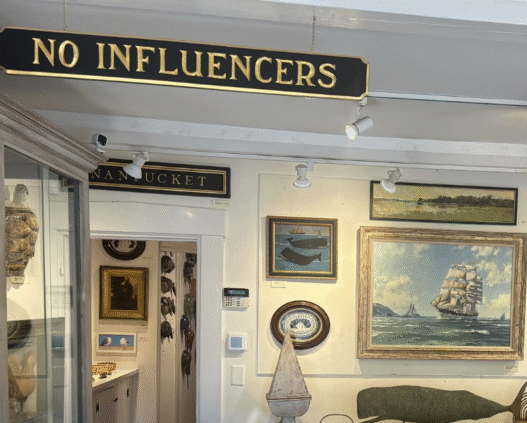
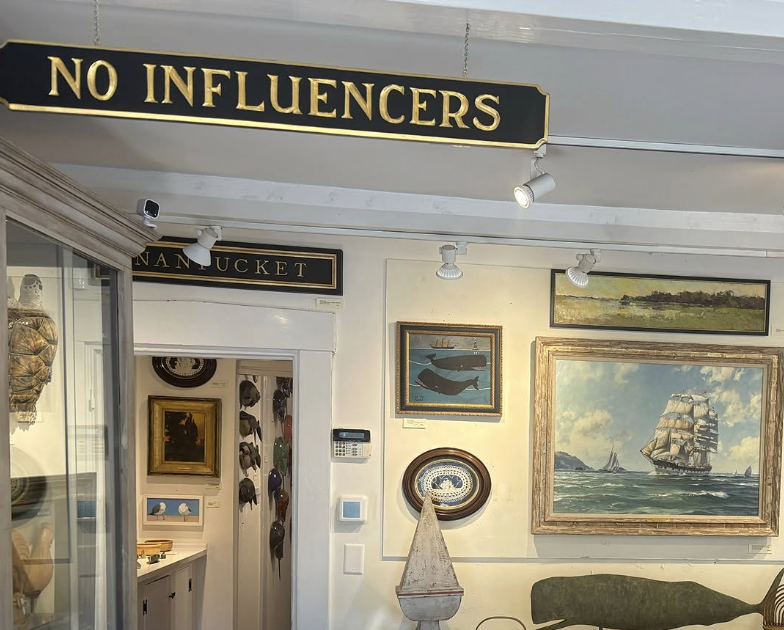
Is hating influencers a socially acceptable way to hate women? According to lifestyle and fashion influencer Levi Coralynn, it is. During a visit to Nantucket, Massachusetts, Coralynn noticed a shop with a sign outside reading “No Influencers”. While acknowledging that the sign was probably tongue-in-cheek, she concludes that this type of judgement towards influencers, which borders on hatred, has become a socially acceptable form of misogyny. She also notes that the influencer space is overwhelmingly made up of women, and has become a route for women, particularly those traditionally excluded from legacy media and cultural industries, to gain a following, influence and more importantly, material power. Naturally, the internet had a lot to say.
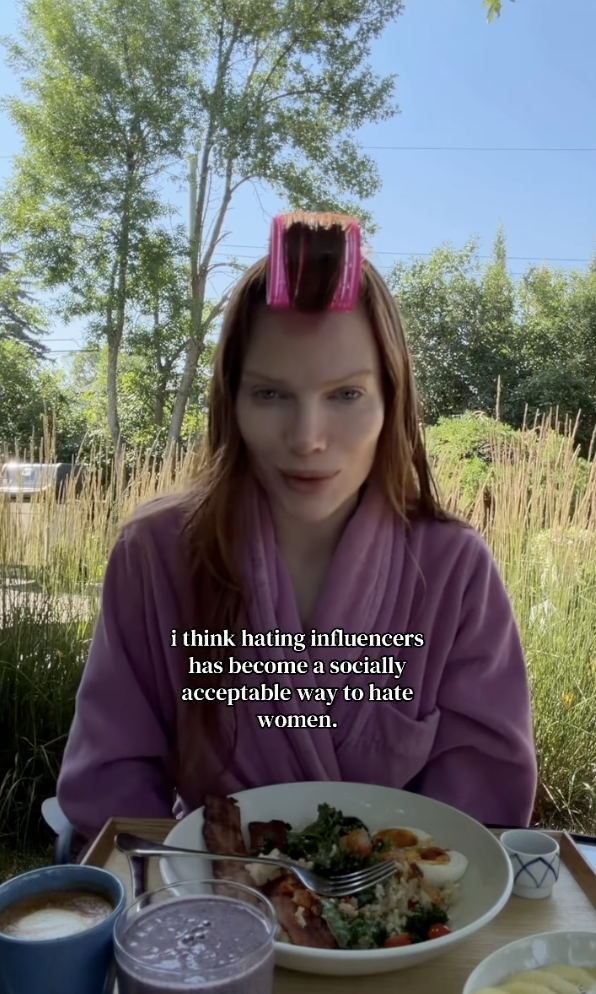
Reactions from influencers, media outlets, and activists have been mixed. Some have vehemently defended Coralynn, arguing that female influencers face a level of scrutiny rarely applied to men, who are more likely to be described as “creators” than “influencers”. But there has also been significant pushback to Coralynn’s post, with critics arguing her take applies a familiar choice-feminist logic in which critique of a woman’s actions is treated as misogyny, weaponising activist language by conflating criticism of one woman with systemic oppression.
This lands tone-deaf given the state of marginalised communities’ rights across the globe: a rolling back of abortion rights and gender-affirming care in the US, a turn against DEI policies globally, and anti-trans laws in the UK, to name a few.

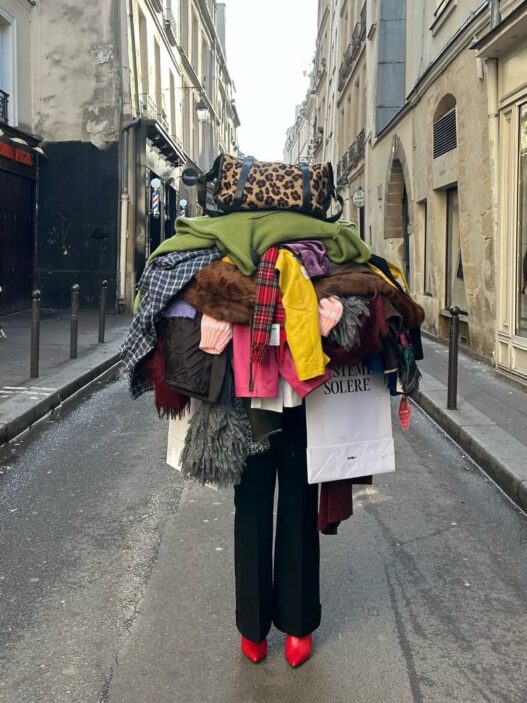
Criticism of Coralynn’s take comes at a time when there seems to be a real shift against influencers. This is unsurprising given that today’s wealth inequality has been compared to that of the Gilded Age, the late-19th-century US era of rapid industrialisation and extreme wealth concentration. Families struggle to keep a roof over their heads while influencers are door-dashing their third meal of the day. Ultimately, influencers are pushing an overconsumption economy, which is unethical and tactless in an era where wages drastically fall short of the cost of living for most people.
The familiar script of feminist defense
We see this form of choice feminism across popular culture. Taylor Swift, often at the centre of these debates, has faced criticism that is frequently shaped by gendered double standards and misogyny. But this take alone flattens a more complicated picture, reading like late-stage capitalism dressed up as feminist critique. According to Business Insider’s analysis of JetSpy flight data, Taylor Swift’s two private jets spent more than 166 hours in the air and completed 103 flights in 2023, including 86 during the first five months of the Eras Tour. In 2022, a Yard analysis estimated that Swift’s jet emitted 8,293 metric tonnes of CO₂. This is around 1,185 times the average person’s annual emissions, the highest of any celebrity in the study. Beyond the gendered nature of this criticism, her actions have real, material impacts on people and the planet.
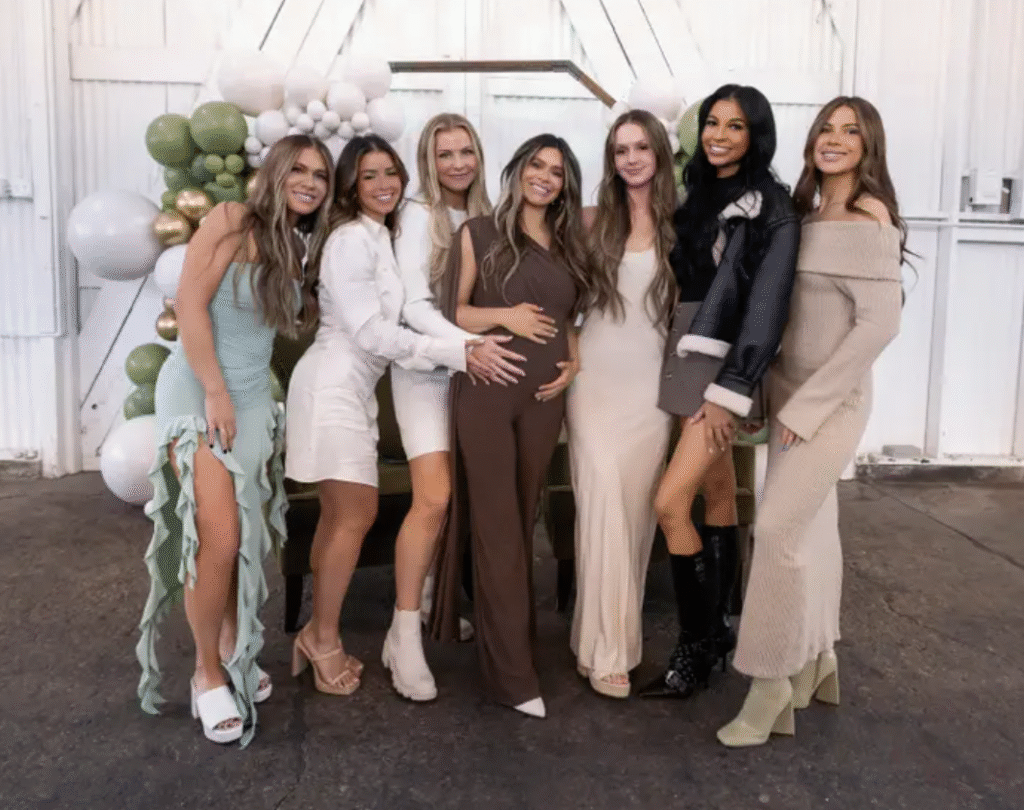
A similar pattern can be seen in The Secret Lives of Mormon Wives, the American reality TV series that follows a group of Utah-based Mormon TikTok influencers known collectively as #MomTok. Breaking from the patriarchal structures and norms of Mormonism, they are redefining what it means to be a Mormon woman today. Yet in The Atlantic, Sophie Gilbert argues that the show exposes the uneasy relationship between contemporary ideas of female empowerment and enduring expectations around beauty, motherhood, and domesticity. The women of #MomTok are successful influencers and entrepreneurs, yet their public personas remain rooted in a carefully curated vision of femininity shaped by traditional gender roles and exacting beauty standards.
Motherhood is celebrated, but only when paired with a polished, marketable ideal that obscures the physical realities of pregnancy, ageing, and care work. Rather than presenting a straightforward story of liberation, the series reveals how modern forms of female success are often still shaped by the same cultural pressures they appear to transcend.
The discourse around Coralynn’s take is a script we know well. STPS (@savetheplanetsociety), a climate and sustainability education platform, puts it well: misogyny attacks a woman for being a woman. Accountability examines what someone sells, who pays them, and who bears the cost. They make the astute link that the influencer isn’t the only woman involved in the transaction of sponsored content. She acts as a messenger for brands, encouraging other consumers, often women, to see, want, and buy. Research suggests that parasocial relationships with influencers increase both materialistic values and purchase intentions, while upward social comparison on social media is linked to greater envy, materialism, and compulsive buying behaviour.
The women missing from the picture
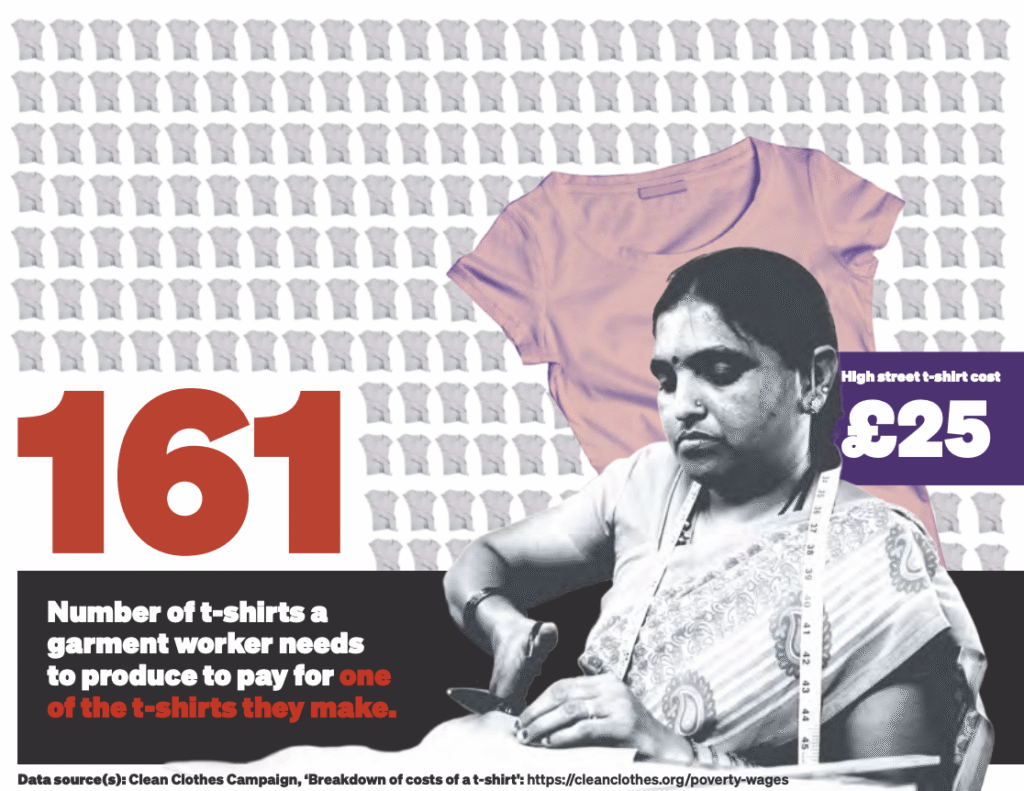
Beyond one woman’s online purchase, a more systemic question remains: who is paying the cost of overconsumption? This system is built on the backs of women in lower-wage garment-producing countries. Recent analysis cited by the Business & Human Rights Resource Centre found that 213 of 219 global fashion companies assessed failed to ensure supply chain workers were paid a living wage. Low pay is not a one-off or even minority failing, but a feature of the industry’s model.
In its report on fashion, workers and climate, War on Want cites Clean Clothes Campaign analysis showing that of a €29 T-shirt, the worker who made it received just €0.18, or 0.6% of the final price. A cycle of Western consumption continues with producer countries left to absorb the wider costs of labour exploitation, low wages and environmental pollution.
There are signs this may be beginning to change. France has recently enacted Law No. 2026-602, which from 1 January 2027 will ban advertising and influencer promotion of ultra-fast fashion, making it the first European country to legislate specifically against the sector. In doing so, it recognises overconsumption not as a matter of individual choice, but as the product of business models that fuel demand through low prices, rapid product turnover, and influencer marketing.
This is not a takedown of Coralynn. I believe her comments were made with women’s empowerment in mind, and she is right that female influencers face a level of criticism rarely directed at men. But it’s important to say the obvious thing here – criticism isn’t automatically misogynistic because the subject is a woman. Sometimes it’s simply accountability, and the two aren’t interchangeable. I’d argue that distinction is itself feminist.
Being able to hold women accountable because we take them and their power seriously, rather than shielding them from scrutiny, is a sign of a more equal system, not a betrayal of one.
Influencing has created real power and opportunity for women; that doesn’t negate its role in sustaining an exclusionary, unsustainable economy. What’s more interesting is holding both truths at once, allowing us to explore a way forward that centres women while holding power accountable.
Written by Anusha Shanmuganantha
Anusha Shanmuganantha is a London-based culture writer and climate strategy consultant, using storytelling to make climate action feel urgent and accessible. Her writing explores what the everyday reveals about our desires, fears, and values.