







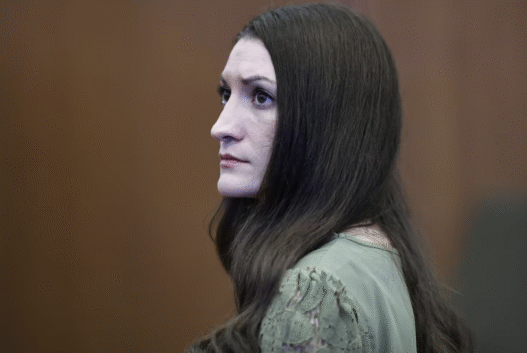
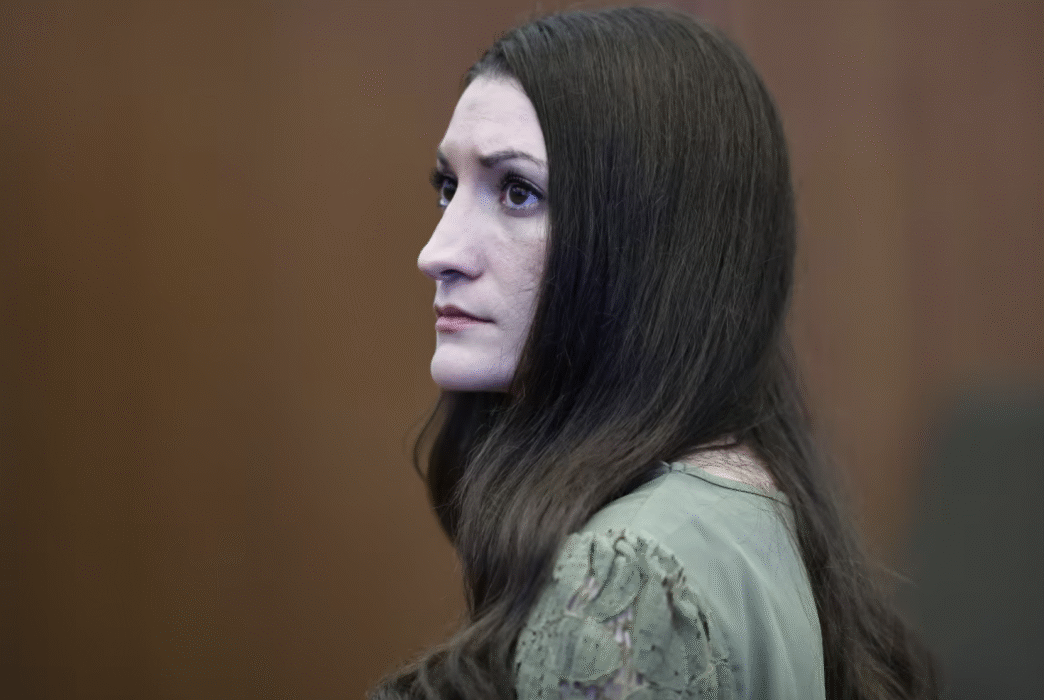
In recent weeks, postpartum psychosis has come into the public eye because of the US trial of Lindsay Clancy, a Massachusetts nurse accused of strangling her three children in 2023. After the incident, she attempted suicide by jumping out of her window, but survived and was left paralysed. While Clancy has pleaded ‘not guilty’ and admitted to killing her three children, what’s being judged is whether severe postpartum psychosis makes her criminally responsible.
In the months leading up to the incident, Clancy went through drastic changes in behaviour, coupled with severe anxiety. She actively sought help from a postpartum depression programme and even checked herself into a psychiatric hospital, warning her doctors that she was experiencing intrusive, aggressive thoughts towards her children. Yet, she was discharged shortly after, and just weeks later, the tragedy occurred.
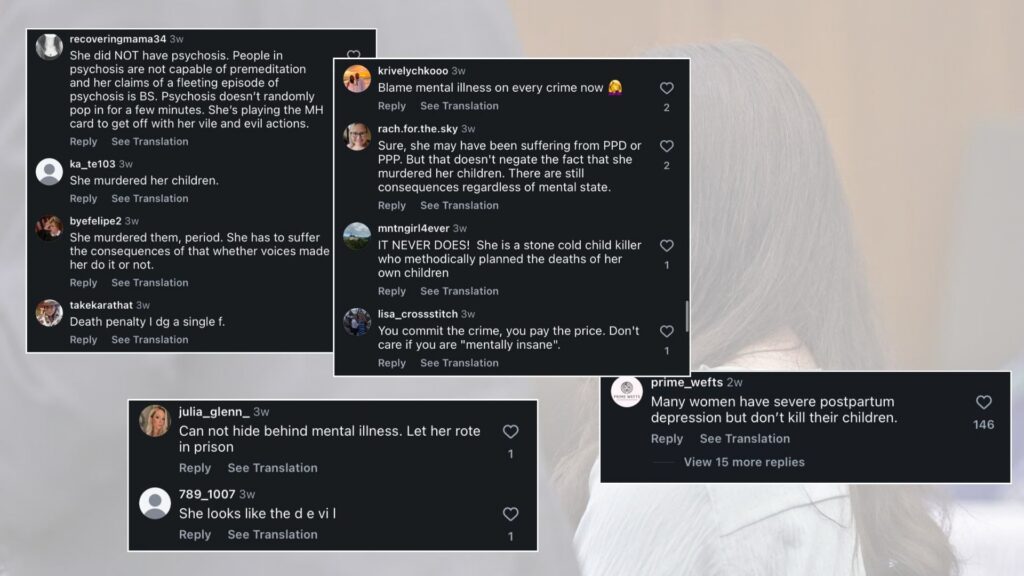
Just as her trial is developing, the internet has blown up with quick judgements and unfair allegations about the case, showing a clear lack of awareness around maternal mental health.
This media response shows a terrifying reality: when mothers face extreme mental health crises, society quickly turns from ignoring them to punishing them. Clancy’s case exposes the enormous flaws of healthcare systems globally in detecting and treating severe postpartum psychosis, as well as the lack of resources and the stigma surrounding mothers in crisis.
One or two in every 1,000 mothers experience severe mental illness, such as mania or psychosis, in the early months of motherhood. According to Dr Sally Wilson, National Training Coordinator of Action on Postpartum Psychosis (APP), a common misconception is viewing it as an extreme form of postnatal depression or normal struggles of motherhood. “Postpartum psychosis is a distinct and severe psychiatric illness and is considered a medical emergency. It can involve rapidly changing mood, mania, depressive symptoms, confusion, disorganised thinking, detachment from reality, delusions and hallucinations”, she explains. Because of this disorder, a woman can go from appearing well to requiring urgent psychiatric care within hours. It is also important to note that infanticide relating to postpartum psychosis is incredibly rare; however, due to the extensive media coverage surrounding such cases, there is often a misconception that it is more common than it actually is.
Western Europe’s Healthcare Systems: A Parallel Reality
As Clancy’s case shows, the United States is facing a severe maternal mental health crisis. Perinatal mental health disorders (such as depression, anxiety, and psychosis) affect one in five mothers, yet resources to help them are becoming increasingly scarce. In fact, over 80% of U.S. counties are considered maternal mental health resource shortage areas, also known as ‘dark zones,’ where there is zero specialised care available. But this crisis in maternal healthcare is not exclusive to the United States; countries in Western Europe (like France, Belgium, the UK or Spain) still have the unfinished business of listening to and properly taking care of mothers’ mental health. A 2024 ‘State of Motherhood’ report from the NGO Make Mothers Matter (MMM) pointed out how motherhood in Europe remains an insufficiently addressed topic in both policymaking and societal discourse. Half of European mothers suffer from mental health challenges, like depression, anxiety, burnout, or peripartum depression. Spanish mothers rank highest in anxiety (47%), while Belgian mothers report the highest rates of burnout (28%) and peripartum depression (27%). Mothers in the UK report the third-highest rate of depression (25%).
Just as MMM’s report exposed, the lack of awareness and proper attention means that early symptoms of postpartum psychosis (like severe insomnia, confusion, or paranoia) are frequently taken lightly, downplayed, or misdiagnosed as “normal” new-mother anxiety. This failure to correctly evaluate how severe a mother’s condition is leads to delayed diagnosis or dangerous misdiagnosis. As Dr. Wilson notes, “postpartum psychosis and its early symptoms can be easily overlooked or misdiagnosed, particularly when primary healthcare professionals are seeing women at a time when sleep deprivation, anxiety and emotional instability are common.” When these early warning signs are missed, the response of European healthcare systems varies dramatically, often leaving mothers in crisis without adequate psychiatric support.
Let’s start with the UK, often seen as a model because of its Mother and Baby Units (MBUs), a specialised psychiatric facility that allows new and expecting mothers to be admitted together with their infant to preserve their bond during postpartum recovery. However, data from APP shows that access is highly unequal, largely depending on where you live. A shortage of MBU beds in certain regions forces new mothers experiencing severe psychotic breaks into general psychiatric wards, separating them from their newborns during their recovery.
While the UK struggles with geographic inequality, Spain suffers from a fundamental shortage of specialised mental health resources: there are only around 5 to 6 public clinical psychologists per 100,000 residents. Because of this, mothers experiencing early symptoms of postpartum psychosis are mostly managed by general practitioners. “Limited specialist training in perinatal mental health can add to this difficulty”, Dr Wilson states. “Recognising these changes as potential signs of a rapidly developing illness is crucial in ensuring women receive urgent specialist help before full-blown psychosis develops.”
Due to long waiting lists for therapy and a lack of specialist training, doctors frequently end up over-prescribing antidepressants or sedatives without a proper follow-up for patients. In the case of severe postpartum psychosis, this over-medication is especially dangerous: the pill only masks the underlying psychiatric emergency without treating it properly, giving families a false sense of security while the mother’s mental health is still deteriorating.
France was a pioneer in early perinatal psychiatry, but its current access to dedicated care has also fallen behind. Similar to the UK, the availability of MBUs in France remains quite limited, with only around 20 in the whole country, mostly concentrated around major cities like Paris. For mothers living outside these areas, a severe episode of postpartum psychosis usually leads to emergency hospitalisation in standard psychiatric units, separating the mother from her baby and making the trauma even worse.
The situation in Belgium also shows how this crisis is not only geographical, but a structural European failure. Belgium’s maternal mental health sits at the bottom of public health priorities despite the high rates of distress reported by MMM. The country has a critical deficit in inpatient perinatal infrastructure, counting only two to three operational Mother and Baby Units nationwide. When a Belgian mother experiences a severe psychiatric crisis, the typical response of the healthcare system is to isolate her in general psychiatric wards, treating her condition as an individual breakdown rather than offering specialised care. Belgian and French work culture centered on productivity and offering inadequate maternity leave also put maternal recovery at stake during these episodes.
“There is no single European standard guaranteeing access to specialist Mother and Baby Units, and the availability of dedicated perinatal psychiatric services differs substantially between healthcare systems”, explains Dr Wilson. This is something that urgently needs to be addressed.
Judged, Not Treated: How the Courts Fail Mothers
Just as the medical system fails so often to support women, institutional and judicial systems don’t lag behind. When postpartum psychosis leads to tragic events, the judicial system confronts the myth of the “perfect mother”. Some Western European countries’ justice systems fail to analyse the psychiatric breakdown from a medical perspective, applying a purely punitive approach.
In France, Courts downplay the illness as a mere “disorder”, where social pressure to punish the “bad mother” leads to severe prison sentences, preventing dismissal on medical grounds. Belgium, on the other hand, does recognise criminal irresponsibility due to mental illness, but because of a lack of beds in psychiatric hospitals, many mothers meet the same fate, isolated in the psychiatric wings of regular prisons.
The Spanish Penal Code does not recognise the crime of infanticide, so these cases are prosecuted as aggravated homicide or murder, sending women to prison instead of a medical facility. And lastly, in the UK there have been better measures thanks to its ‘Infanticide Act’, which automatically reduces the charge to unintentional homicide, prioritising medical treatment. However, prosecutors often still pursue full murder charges.
Across countries, this judicial pattern reveals a broader systemic issue. If the only time society brings postpartum psychosis into the conversation is in the aftermath of a tragedy, it means the medical and social systems have failed. And the stigma surrounding the illness only makes this worse.
As Dr Wilson explains, sensationalised media coverage and a lack of awareness create a dangerous environment: “This can lead to a lack of understanding about postpartum psychosis and the stigma can result in women feeling ashamed and scared to ask for help.” When mothers are too afraid of judgment to ask for help, and doctors fail to detect the symptoms, the whole system breaks down.
According to Dr Wilson, the goal should be “rapid recognition, immediate specialist treatment, equitable access to Mother and Baby Units, and signposting to third sector organisations. “With the right treatment, families can make a recovery from this severe illness.”
Written by Irene Martínez Martínez
Irene Martínez Martínez is a Spanish journalist with a background covering topics from social affairs to economic trends for outlets such as elDiario.es and Reuters, alongside press management in the publishing and cultural sectors. Specialising in reporting through a gender and feminist lens, her work explores social inequality, women’s rights, health, and memory politics. She holds a joint honours degree in Journalism and Film, TV, and Media Studies, has lived in Spain, the UK, and Poland, and is currently based in Luxembourg.
Image used for editorial purposes and belongs to Greg Derr/Pool/The Patriot Ledger.