






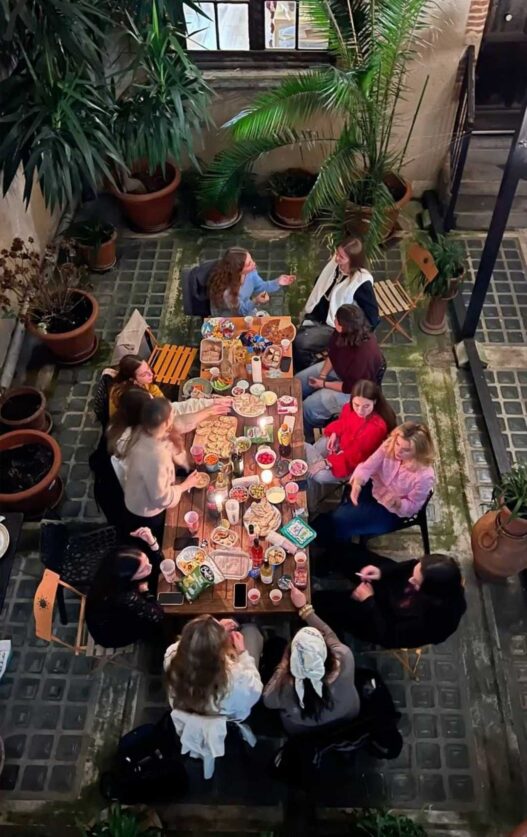
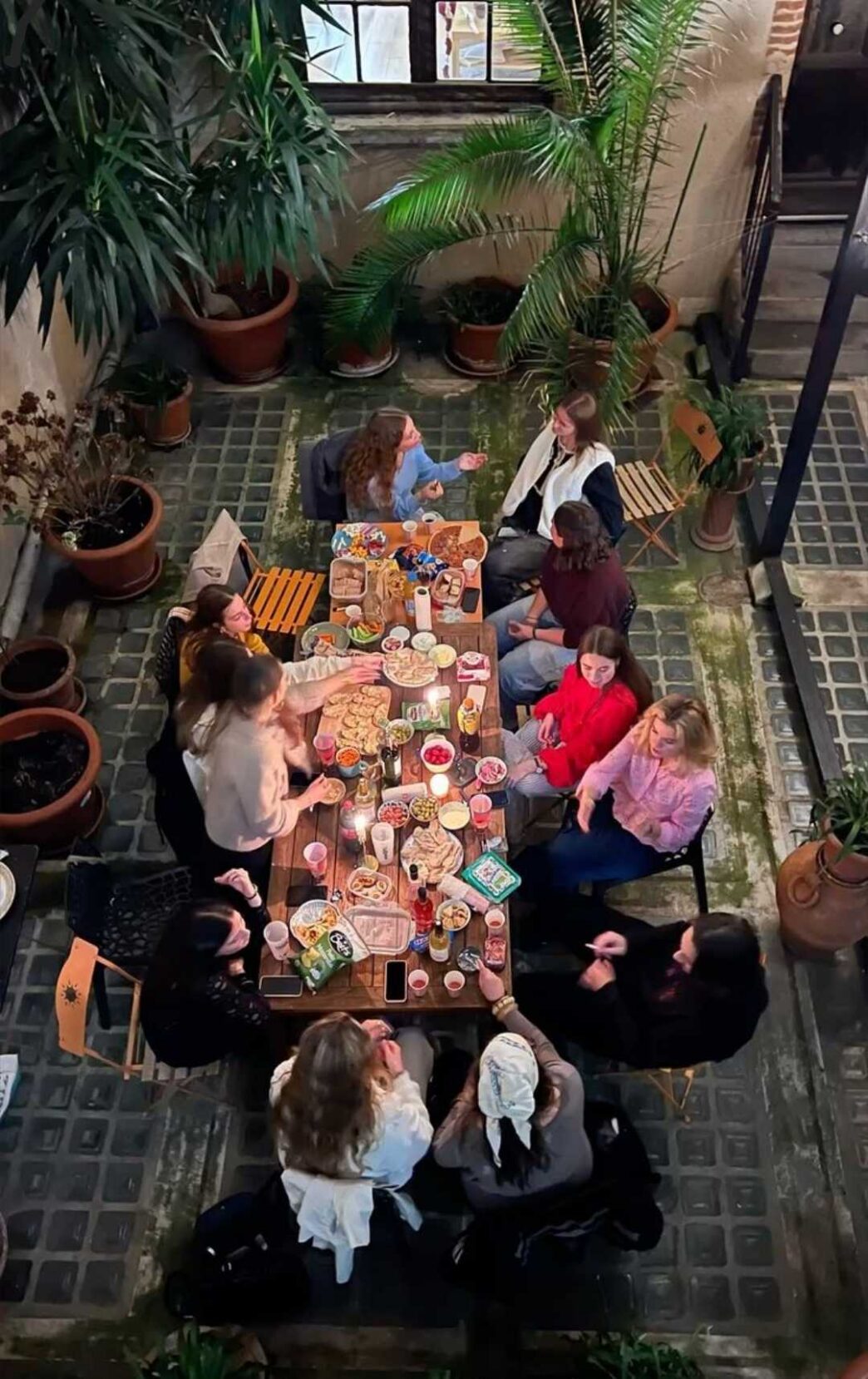
The internet in the late 90s and early 2000s promised this future of community, this cyberspace where you can talk with friends from around the world and connect at all times. More than 20 years later, that promise feels increasingly hollow. Instead of bringing people together, many argue that the internet has left us lonelier than ever. At the same time, a different phenomenon is taking off. People are paying hundreds of euros to join carefully curated social clubs, hoping to find something that social media failed to provide.
The idea is definitely not new. Social clubs have existed for centuries. While they first appeared in London in 1693, when Francesco Bianco, an Italian migrant, opened Mrs. White’s Chocolate House – a place that served both coffee and chocolate, and catered only to men – the concept took on a new life. London has more than 130 private clubs, New York around 50 but they’ve also started popping up all around Europe. On TikTok, social clubs have their own niche: you can find creators who base their whole content on giving advice on how to start or attend one of these events.
This resurgence of the social club made me wonder, what is the appeal of exclusive communities at a time when many people struggle with the cost of living? How have traditional social clubs changed over time, and what has emerged in their place? Who gets to enter these spaces and who is left outside? And perhaps most importantly, when did community become something we buy? To answer these questions, I traced the history of social clubs, their current boom and talked with two women in Romania about what it means to organize events without charging an extra fee just for attendence.
What exactly is a social club?
Mrs. White’s Chocolate House is often regarded as one of the earliest predecessors of the modern private members’ club.
What had once been a public meeting place became a marker of status: members gathered not only to discuss politics, business or sport, but also signal their social standing. That is how, suddenly, everyone wanted to join a social club.
Like society itself, clubs were structured along lines of class, gender and political ideology, reflecting the hierarchies of the world outside their walls. Some clubs, like White’s, Boodle’s and the Cocoa Tree Club, were for Tories, while Whigs joined Brooks’s. The Oxford and Cambridge Club only admitted members from their universities. None of these clubs accepted women, but starting 1886 they could join the University Club for Ladies.
This model spread out throughout Europe. In the nineteenth century, social clubs started to appear in Paris where they were often referred to as cercles. In Spain some of the well-known casinos, such as Casino de Madrid, started as social clubs, based on the relationship between these gatherings and gambling. There were other clubs in Vienna or Berlin that replicated the same model. In all of these social clubs, exclusivity was enforced through a system that is still relevant today: you had to be nominated by someone that mattered in that club, you had to respect the house rules and, ultimately, you had to be voted in to be accepted.
Fast forward to the twentieth century, some of these clubs lost their appeal as access to universities, workplaces and public institutions became more accessible. Another reason was the fact that these clubs were not able to rebrand and cater themselves to younger audiences. But then came the internet and the 2000s, especially the 2010s, when these private social clubs started to reinvent themselves and wanted to appeal to entrepreneurs, freelancers, people from the cultural world or artists.
I remember watching Season 6, Episode 2 of Girls, when Shoshanna takes Elijah and Jessa to a networking event hosted by Wemun, a fictional women’s coworking and social club run by a former college friend. It is how I remember the social clubs of the 2010s – they were polished, aspirational and just a little absurd. The episode is widely seen as a satirical nod to The Wing, the New York-based women’s club and coworking space founded by Audrey Gelman and Lauren Kassan in 2016.
The Wing emerged at the height of the girlboss era, promising community, belonging and a seat at the table for women who had historically been excluded from this kind of networks. But the company later became a symbol of the contradictions of that moment. It was criticized for high membership fees, accusations of racial exclusion and workplace discrimination and for promoting a version of feminism centered on networking and individual success rather than structural inequality. In 2021 the once buzzy-social club shut its doors.
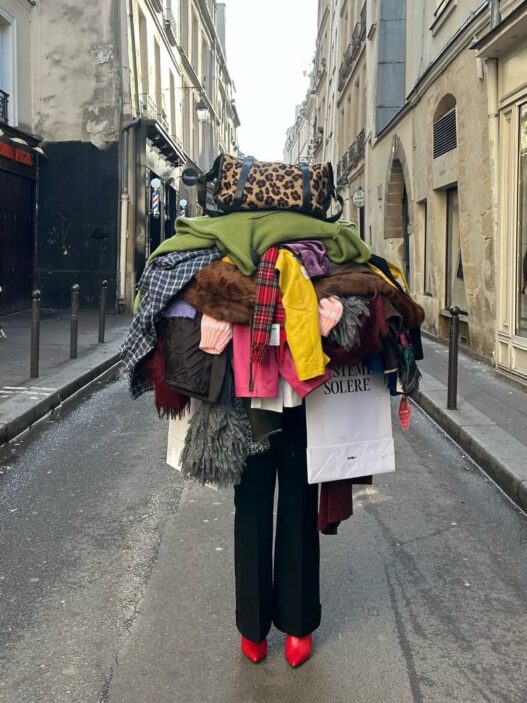
If we look at the situation now, it seems as though everything we do has become a club. We have running clubs, book clubs, film clubs, dating clubs and cooking clubs and all of them seem to promise to make us less lonely.
Alongside them, traditional social clubs continue to thrive, still relying on exclusivity and carefully curated communities as part of their appeal. Like many of the clubs of the 2010s, these spaces often cater to a specific demographic: people with enough disposable income to participate. While some events are free, many come with membership fees or ticket prices that place them out of reach for a large part of the population.
“I don’t want culture to become something inaccessible”
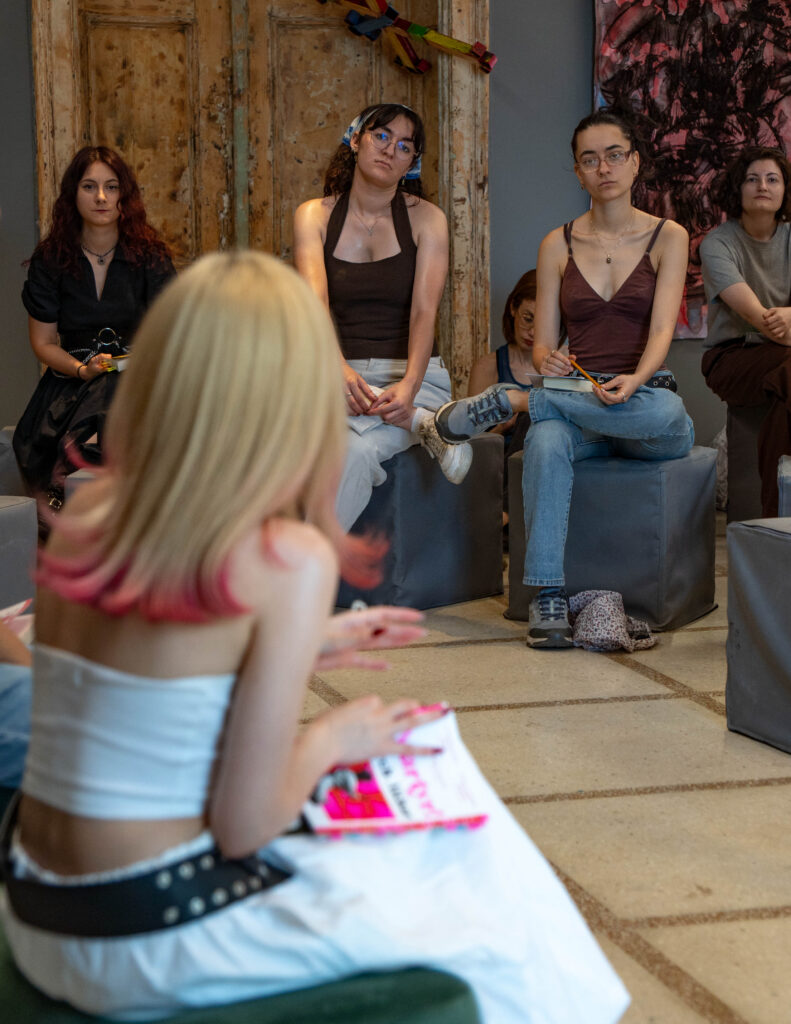
Cristina Alexandrescu is a writer and cultural worker who founded a book club but it’s completely different but also still a book club one year ago. She has never charged participants a fee. Over the past year, we’ve had countless conversations about what it means to organize an event like this one every month, from finding a venue and inviting guests to the invisible labor and personal resources it takes.
She did not start the book club with the thought of building a community; it’s just what ended up happening organically. Participants befriend each other, they have push-notifications enabled for the moment Cristina usually posts the registration link on social media, and the monthly events resemble a highly anticipated friend hang-out more than literary meet-ups with strangers.
“My decision not to charge people for these events is a deeply personal one. I grew up in a disadvantaged environment where opportunities like this were rare, and where there were very few cultural spaces that people without money could actually access.”, Cristina told me one day over coffee.
Cristina grew up in a village in one of the poorest counties in Romania, Vaslui. “There was no cultural infrastructure at all. The only thing left was the ruins of the village community center, where a few people who were experiencing homelessness were living. It rained inside, and the building didn’t even have windows. I recently checked Google Maps to see if the village library was still there. Unsurprisingly, it had been closed. Now it’s flanked by two villas.”
She hopes that at least the school library is still open. It is the place where she first read Harry Potter and where children whose families couldn’t afford much could access new worlds.
The main challenge is to find a place every month that will accommodate this gathering without charging any money. “I tell them it’s a community project and that I simply can’t afford to pay to rent the venue or cover any potential losses they might incur during the two hours we’re using the space. Fortunately, I still come across people who are willing to host us without even bringing up the financial stuff.”
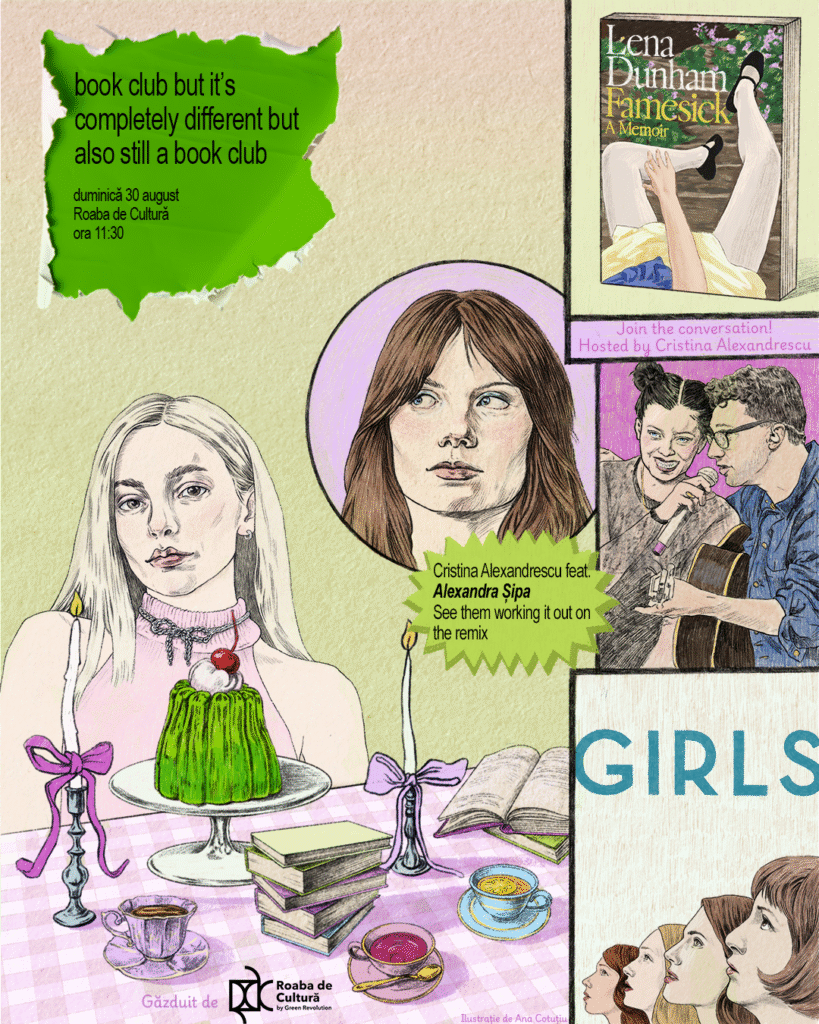
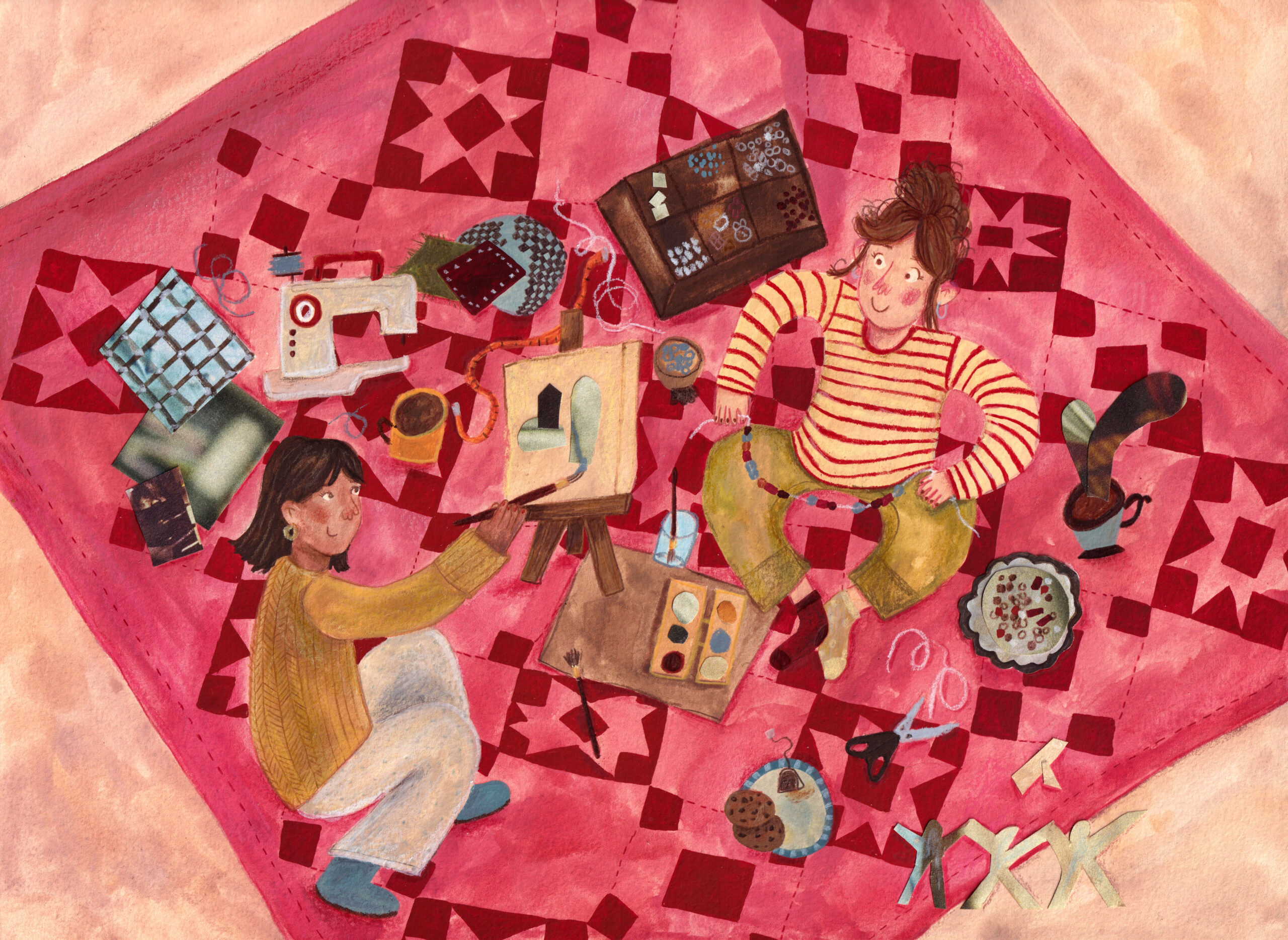
Cristina has a full-time job in public relations, so the book club is something she does on the side. Ana Cotuțiu is the illustrator who is in charge of the visual identity that is now easily recognizable for most people in Bucharest: the whimsical setting, contrasted with ‘brat’ green and the omnipresent details – the jelly cake, the coffee cup on the table, some books and a candle. “I don’t have any funding. It’s a project I’m only just beginning, and I have no expectations for it. I simply want to see how far it can go if it can go anywhere at all”, Cristina told her when she asked if Ana wanted to be part of the project.
One year later, they work together almost every month in order to make the event happen. Other women have joined forces with them too: Ioana Bolchiș is making desserts on theme with the book for the participants and Alexandra Grigore is always taking pictures that the host later posts on her Instagram.
Can a community club survive without charging a fee?
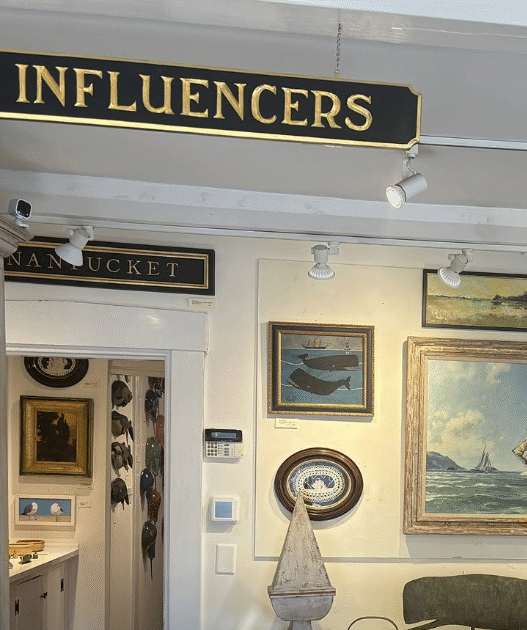
With the rise of run clubs, reading groups, social clubs, film clubs, and other offline communities, a different kind of cultural capital is beginning to emerge, one that is no longer centered on influencers. In a Vogue Business article, Amy Francombe posed the question of whether the new influencers might actually be community event leaders. The piece unpacks how brands should be careful when approaching event leaders because their community is not just something that they can commodify. Offline gatherings have even changed marketing and brand strategies because it is not just about numbers anymore, but creating that sense of community that people miss.
Cristina is a bit hesitant when it comes to partnering with brands to support the book club. The writer realized that having a brand backing up one of the book club’s editions would come with conditions that might not align with her values. ”I’d probably prefer a local or smaller brand. Even then, though, the question always remains: what comes attached to financial support, no matter how modest it may be?”
There is also Cristina’s desire to make everyone feel welcome. When she speaks about it, she is acutely aware of the cognitive dissonance she has to navigate. While she wants her events to be accessible to anyone, she also wants people to recognize that the cultural work her and other people do is not meant to be free.
Andrada Ionescu, the founder of GenFemei (GenF), also spoke about the chronic lack of funding for cultural work and how difficult it can be to avoid reproducing the very models perpetuated by the institutions that have failed to address this issue.
„You want to have an inclusive gathering but you also want to pay the artists or people that make it possible in the first place”, she told me one morning.
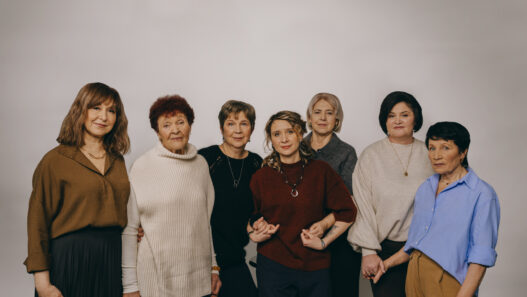
GenF was founded after Andrada finished university as an initiative to promote young female artists. She started this alongside three other women: Mara Baboianu, Cristina Dănciulescu and Diana Rață. Four years later, the organization has shifted its focus and is now seeking to engage more directly with political issues. Last year, following the femicide of Teodora Marcu and the protests that erupted across Romania, the organizers orchestrated a response through the medium they know best: art. Coming together with Artown, an annual art festival, and Central FILIA, one of the country’s largest feminist organizations, they created street art installations focused on raising awareness about domestic violence.
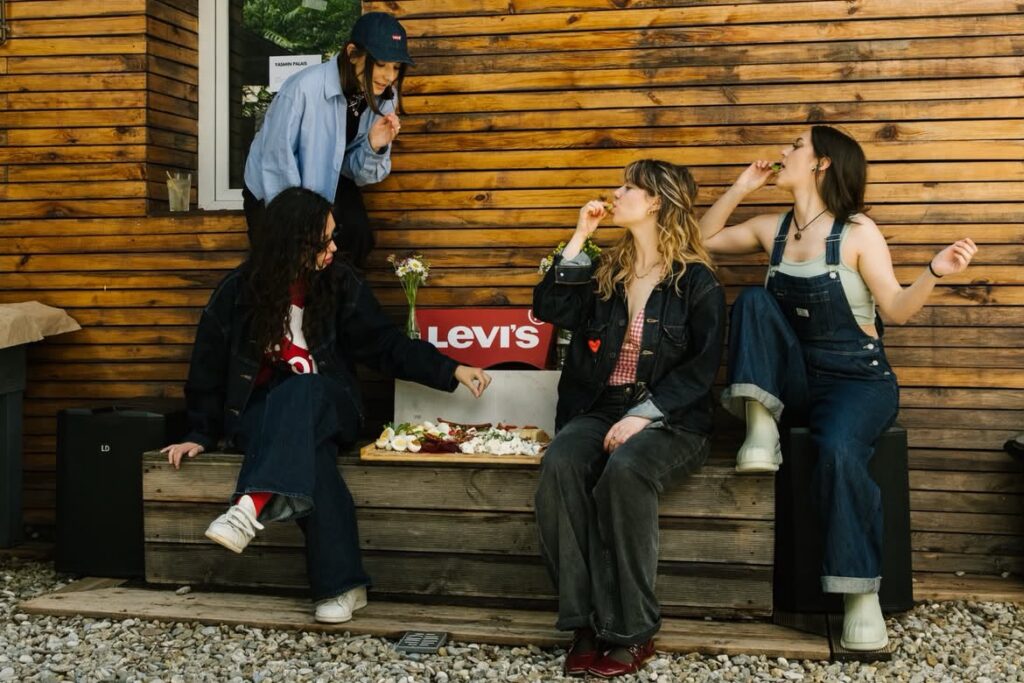
More than 2000 people have come to their events, mostly women and people from the queer community, but they say the place is open for everybody. In order for their gatherings to be accessible, they usually function based on donations. If you can, you donate. If not, that’s fine. The only events they charged for outright were the ones they could not sustain themselves: a lunch and a party with multiple DJs.
“I think we chose the donation model because there was a lot of enthusiasm at the time, and it all felt new. There didn’t seem to be many events like ours, and the model worked really well”, Andrada recalls the beginning of GenF. “The economic climate also didn’t feel nearly as difficult as it does now. We were still students, and finishing an event with 300 or even 500 lei felt incredible then.”
It was just this year that they also thought about how to make this sustainable: trying to offer an event for everybody but also being able to pay the artists involved or the organizers. So they learned to write applications for funds from the Ministry of Culture in Romania. Not because she wants profit, but because from the start her main worry was how to pay the women behind this project.
Until recently, they weren’t able to pay the artists. “It was only after raising money through tax redirections and sponsorships from a handful of companies that we were finally able to pay the artists involved in our last two projects an amount that, let’s say, comes closer to what should be considered a fair standard. Until then, ‘exposure’ had been the main form of compensation, but I know there comes a point when ‘exposure’ is no longer enough. Especially at a time like this, with austerity measures and budget cuts across the board, artists hear the promise of ‘exposure’ far too often.”
Who is left out?
There is a lot of talk about how gen Zs are tired of going to parties, coffee shops or bars. Instead, a new kind of third space is emerging through events like the ones Cristina or Andrada organize. However, it’s important to note that most of these gatherings aren’t accessible for all. A pottery workshop that costs around 50 euros might seem affordable to some, yet for someone earning the minimum wage it represents a significant amount. Those rules that I have mentioned earlier – membership, recommendations, voting, rules of access – may have changed, but they are not extinct. They are just more subtle now.
You need to have money, time, to know where these events take place, to have cultural access to them and to feel like you belong. Sociologist Pierre Bourdieu described this as the cultural capital, which encompasses the skills we have, and that the socio-cultural knowledge and social cues we are aware of may shape how we feel in a certain place.
When I visited Nicosia, the capital of Cyprus, I was struck by the diversity of the people gathered at one of the city’s leftist community centres. The crowd brought together different generations, backgrounds and social classes. I wondered then if accessibility is also about visibility. If you only discover community events through Instagram or other online circles, they inevitably reach a narrower audience than spaces that have long been embedded in their local neighbourhoods. Those most likely to be left out are the people who are already marginalized: queer people, Roma communities, refugees, migrant communities, people with disabilities, and those living in poverty.
Perhaps we should also expect more from the institutions that have long failed to create these kinds of spaces or to invest in the communities they are meant to serve. Building a community cannot rest solely on the shoulders of independent organizers. It may be a collective responsibility: to think about how we step outside our own privileged bubbles, how we make others feel genuinely welcome, and how we create spaces where belonging is not determined by money, cultural capital or social capital.
Written by Andra Mureșan.
Andra Mureșan is a journalist from Romania writing about gender-based violence, social issues, but also pop-culture and trends, from a critical point of view. Her work focuses primarily on domestic violence, including how Romanian courts treat women who have killed their husbands after experiencing domestic abuse, as well as cases of sexual violence and online abuse involving deepfakes.