




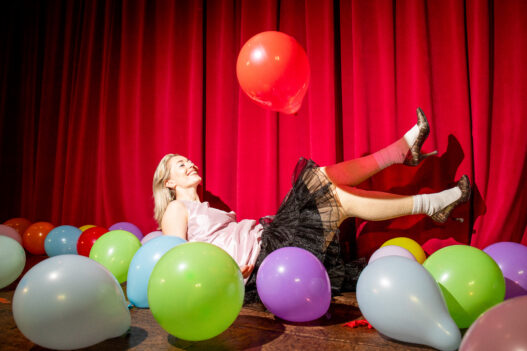
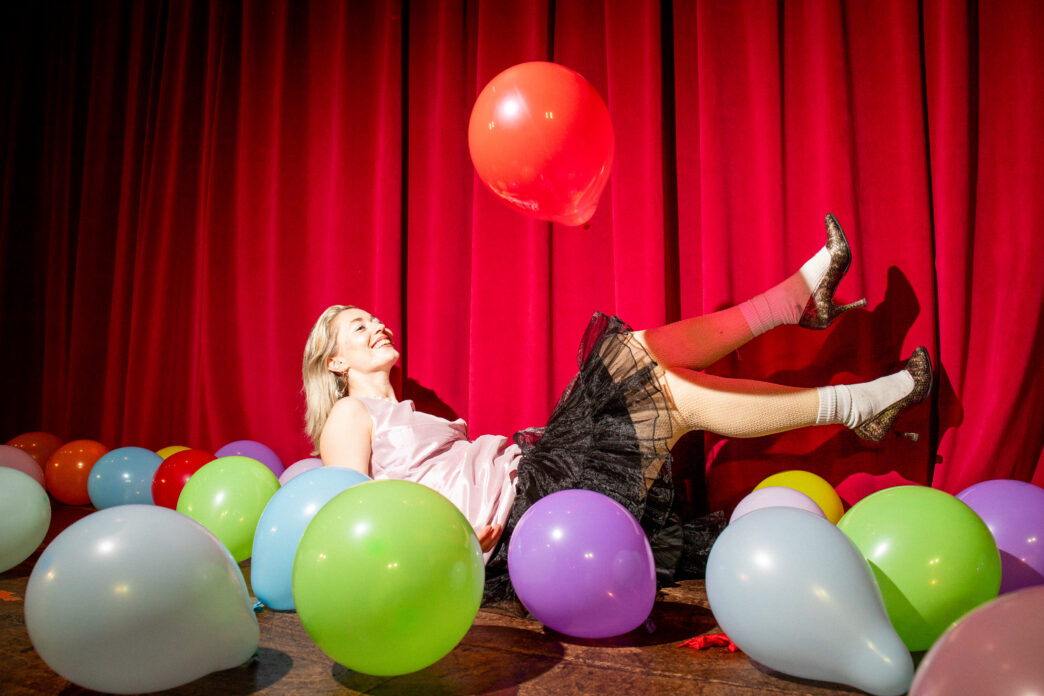
There is always a woman on the dance floor who outlasts everyone. The last one standing long after the playlist has looped back to the beginning, the beige buffet has gone cold, and most people have quietly retrieved their coats. Lois grew up watching these kinds of women at the working men’s clubs of Morecambe, a small seaside town on the Lancashire coast where, as she tells it, a Friday night out in the local club was essentially the place to be. That memory became the driving inspiration behind Small Town Party Girl, Lois’s new single and the opening statement of a new chapter in her music and personal life.
It is a deliberate pivot. Lois’s previous work — her debut and sophomore EPs Strange Men and Seven, released in 2023 and 2025, respectively — was confessional, exploratory in places, and at times harrowing, with songs about first love and sexual assault and the long tail of growing up. Small Town Party Girl is what comes after that kind of reckoning. It’s Prince and Grace Jones in the production, a mid-song dance break, and underneath it all, the specific joy of knowing you’ve done the hard work and are allowed to go meet a new version of yourself.
When Elton John played Small Town Party Girl on his Apple Music show the day after its release, Lois’s response was: It’s me! Lois from Morecambe! How is this even real? We spoke the week before any of that happened and turns out, dreaming beyond the borders of your home has a lot to do with it. 
Your new single Small Town Party Girl is out on the 22nd — how does it feel to be this close to releasing it?
It feels like it’s just come so quickly. I feel like I’ve been planning for so long, and now it’s in two days — just like, oh my god. But yeah, I’m very excited.
Walk me through the story behind the song. Where did it come from?
It came about just under a year ago, right after I’d finished writing the Seven EP. That project was very confessional — all about processing the change in my life, going from being a child to being an adult, and sitting in that sticky in-between stage where you don’t really know where you’re meant to be. After releasing it, I found some peace, and all I wanted to do was go out, party, live my life, and really embrace this new chapter — one where everything in my life isn’t determined by what happened to me.
So I spent a lot of time going to queer nightclubs in Leeds, events, parties, meeting new people. And through doing that, I realised that everybody in the room has their own shit going on, everybody has their own story, but for one night, we all get to share this music and be part of a community and just let ourselves go.
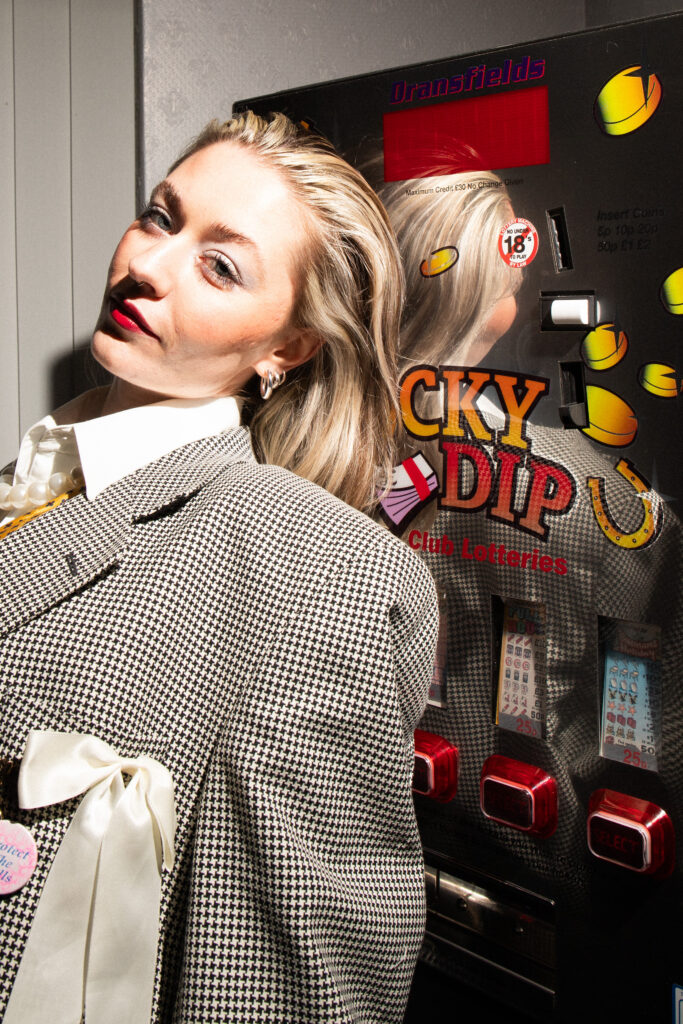
Small Town Party Girl came from my love of disco and 80s music — Grace Jones, Madonna, Prince. I’m a huge Prince fan. I found that what I was listening to was very different from what I was making, and I wanted to bring them together. I was talking to my producer Jules about my hometown, Morecambe — a very small seaside town where not much really goes on, and the biggest night of the year was everyone getting dressed up for the local working men’s club. The same beige buffet, the same people, the same 80s playlist. When I was a kid, I used to hate being dragged along. But then I found a love for them — just watching the room, seeing the different characters and the different things take place.
So the song came from that: my love of 80s music and celebrating my hometown. When we wrote it, me and Jules got very excited. We felt like we were onto something new and really fun. It feels like the perfect song to open this new chapter.
Looking at your discography from 2022 to now — The Way You Are, the Strange Men EP, and Seven — each project feels like a different version of you. What do those moments represent?
The Way You Are feels like so long ago. I wrote it when I was maybe 19 or 20 — I was listening to a lot of Olivia Dean, Hiatus Kaiyote, a lot of neo-soul — and I was in my first really strong, happy relationship. I was just very young and very consumed by love. That EP is more like a mixtape from my teenage years: discovering new music, falling in love, and exploring how broad the spectrum of love really is. You have songs like The Way You Are and Twisting the Wind, which are very loved-up and magical, and then Strange Men, which is about the not-so-nice side — experiencing sexual assault, perceiving love as one thing and it becoming something else. Running is about grief through love, about losing a partner. Strong is about owning my body and wanting to protect myself. That project was my first experience of love in all its different forms — and my way of giving something to the younger version of myself who was going through relationships for the first time and needed something to guide her.
Seven came from a bit older, more reflective place — looking at how those teenage experiences affected me as an adult, how they shaped the way I love other people. Phoenix is about the shared experience between women: sexual assault, being told our opinions aren’t valued, our voices not heard in the same way. It was my love letter to my friends, my family, and anyone who’s been through similar things.
And now Small Town Party Girl — breaking free of all that, not being determined by my experiences, trying to find moments of joy. We all know this is a very scary and difficult time for a lot of people. If I can do even the tiniest thing to help lift someone, I want this project to be full of joy and expression and letting yourself go.
So much of your music speaks to shared female experience — the good, the bad and the ugly. How has being a woman in the music industry shaped both your artistic identity and the community you’re trying to build around your work?
It has massively shaped my music. When I started writing, it was a way of expressing the mistreatment I was facing and not knowing what to do with it all. Over time, it evolved into wanting to speak out on these issues for young women and young people experiencing them — to show them they’re not alone, that they have a voice, and that they have a right to stand up for themselves.
When I was younger, I was very naive, which is natural. You want to believe the best in people, believe they have your best interests at heart. But I always had a gut feeling of, this doesn’t make me feel great. Because it was a man in a position of power, older than me, I assumed he must know best. Mine, on Seven, was my warning song — for anyone who’s had a negative experience in the industry, who’s been talked down to, made to feel like their ideas aren’t worth it, like their voice shouldn’t be heard. Trust that feeling in your gut. I didn’t for a long time, and I really regret that.
Because of what I went through, I’ll always be more cautious. But without that experience, I don’t think I’d have written the projects I have. My aim is to call it out, not take it, and hopefully give other people the confidence to do the same.
You recently played The Great Escape, and you have shows coming up this summer. What’s your relationship with performing live?
I love performing so much. Live music is my home; it’s where I love to be. Performing songs live is literally my favourite thing in the world, and I hope to do it forever.
I do get nervous before I go on, whether it’s a big crowd or a small crowd. But then once I get into the first song, I just love it. It’s where it all makes sense
You’ve played Leeds, Manchester, London — how do audiences differ across those cities?
Most of my performances have been up north. Leeds crowds are always great. Manchester — we went on tour in March, and that show surprised me. It was my first ever tour, and I’d kind of expected a couple of people to show up, hopefully. But we sold it out, and the crowd was just so up for it. It was amazing.
London is still warming up. I still need to convince London a little bit, get them to move more. London crowds can often be like, okay, prove yourself to me. And I kind of like that challenge. I’m like, all right, then — here’s what I’ve got.
You’ve said your music was written to be performed. Does your love of theatrics and visual storytelling shape the way you write?
Massively. I love theatrics, I love the drama. I love creating characters to live inside my musical world. Small Town Party Girl was such an easy one for me — I drew all my references from my hometown, from the music videos I grew up watching on TV: Grace Jones, Madonna, Talking Heads.
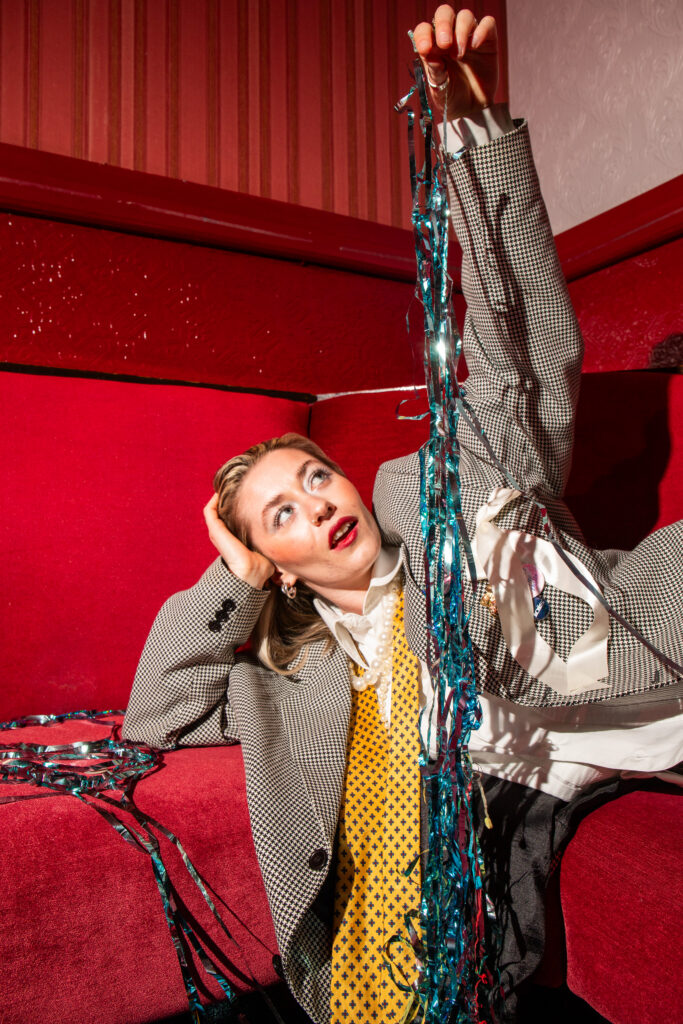
I’m a very visual person. When I wrote Small Town Party Girl, I saw a music video idea straight away — I see colours, shapes, silhouettes. The music is always the most important thing, and I love to write and record, but building a world around it, the costume and the artwork — that’s the bones, and everything around it is a really fun extension. I love to wear the big suits, the matching two-pieces. That’s my thing.
Fashion is a big part of how you present yourself. What do your outfits say about you?
It’s got to be camp, it’s got to be fun, it’s got to be vintage. Charity shops, always.
If you could design your dream tour, what would it look like?
Because this whole project is about the working men’s clubs I grew up in, I would love to do a working men’s club tour. Go to the smaller, more rural, out-of-centre towns, and really celebrate that small-town energy. The venues are always so cool, there’s so much history there. I’d love to do one in my hometown, Morecambe and bring some local artists, do something somewhere people don’t usually go. And obviously a big show in Leeds too.
Your music is deeply personal — trauma, identity, grief. How do you balance that vulnerability with protecting yourself?
Once I’ve got it out of my head and into a song, it’s a much safer space to talk about. I can view it as this is the song rather than this is my experience, even though that’s exactly what the song is about. It allows me to speak about things in a place I feel safe, and in a way where you don’t have to say word for word what happened. People can take their own meanings from it.
I’ve never been able to hide in my music, but I’ve never found it tricky to share through it either. That space always feels safe. If I didn’t have music as an outlet, I think I’d struggle. It’s the place I can put all of that.
Who are you when you’re not performing?
I’m always listening to music. I don’t think I ever have a silent day. I’ve always got my headphones with me and a backup pair in case they die. But when I’m not in performance mode, I’m often just outside, book in hand, always trying to find new stuff to listen to, expanding my musical knowledge.
I’m quite a quiet person day to day, actually. Maybe that’s what lets me recharge for when I go on stage.
Your new single is a love letter to a small northern town. What would you say to a young girl in a place like that, dreaming of doing what you do?
Always dream bigger than where you are from. When I was growing up, I only knew the town that I was in and felt that that’s where I’d be forever. But that’s not true. There is a whole world out there. So pick up an instrument, pick up a pen, be creative and always dream beyond the borders of your town.
Interview by Teodora Strugaru
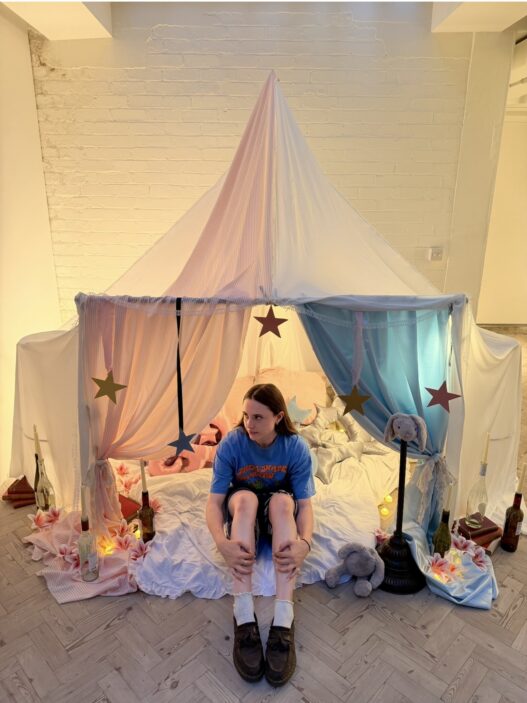
Photo credit: Sarah Oglesby