










Every Woman Has a Dating Safety Routine. Why Do We Pretend That’s Normal?
“Share your location.” “Text me when you get home.” “Send me his profile.” “Don’t give him your real number yet.”
For many women, these aren’t exceptional precautions. They’re simply part of dating.
Long before a first date is planned, a quiet checklist begins. Screenshots are sent to group chats. Photos are reverse-image searched. Instagram accounts are scanned for mutual friends and signs that someone is who they claim to be. Phone numbers stay private for as long as possible. Meetings are arranged in busy public places, preferably during daylight hours. Friends know the venue, the time, and sometimes even receive a live location.
These rituals have become so commonplace that they rarely register as remarkable. They are shared between sisters, friends, colleagues, and strangers online as practical advice for navigating modern dating.
Those precautions are rooted in experience rather than paranoia.
A 2023 Pew Research Center survey found that 66% of women under 50 who had used online dating had experienced at least one form of unwanted behaviour, including unsolicited sexual messages, persistent unwanted contact, offensive name-calling, or threats of physical harm.
Yet perhaps the most remarkable thing about these routines is how little we question why they exist in the first place.
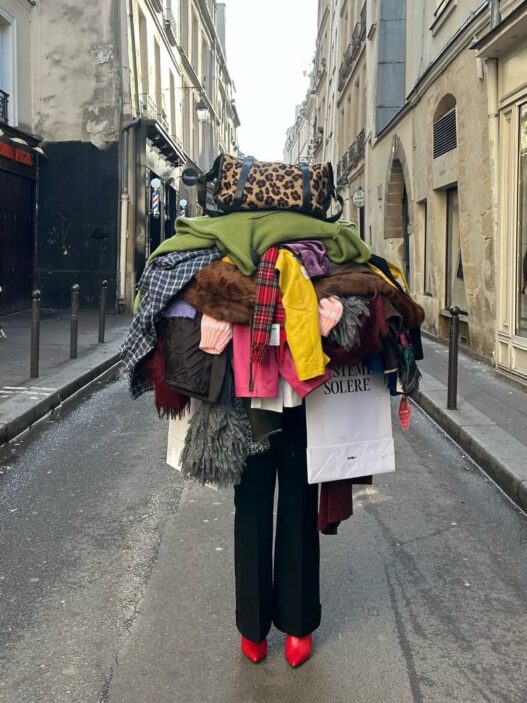
Safety has become unpaid emotional labour
The conversation around dating safety often centres on what women should do differently.
Don’t meet too soon. Don’t share your address. Trust your instincts. Watch your drink. Don’t tell him where you work.
While this advice is well intentioned, it quietly reinforces an uncomfortable assumption: that managing risk is primarily the responsibility of the individual woman.
What receives far less attention is the cumulative mental effort involved in constantly assessing strangers.
Every new match requires a series of judgments.
Does this profile look genuine? Is this photo AI-generated? Why does this person want to move to WhatsApp immediately? Why are they avoiding video calls? Are they simply awkward or is something more concerning happening?
Most of this work happens silently, long before two people ever meet. Psychologists often describe this kind of invisible planning, monitoring, and anticipating as emotional labour. Although the term originally referred to managing emotions in the workplace, it has increasingly been used to describe the invisible work that disproportionately falls on women in many areas of life.
Online dating has quietly become another place where this labour is expected.
Technology has changed. The burden hasn’t.
Dating apps have transformed how people meet. Millions of relationships now begin with a swipe, a message, or a shared interest discovered online. Yet while the technology has evolved rapidly, the expectation that women must personally manage their own safety has remained remarkably constant. In many cases, the digital tools designed to connect people also create new opportunities for unwanted contact.
Sharing a phone number can lead to persistent messages that are difficult to block. Social media accounts reveal workplaces, routines, and friendship circles. AI-generated images make fake profiles increasingly convincing. The rise of generative AI has also made it harder to rely on techniques like reverse-image searches, once considered a simple way to verify identities.
Trust is also being tested by fraud. More than half (52%) of online dating users say they’ve encountered someone they believed was trying to scam them on a dating platform, according to Pew Research Center.
As technology changes, women adapt their routines. The burden simply shifts with it.
Vigilance has become normal
Perhaps the most striking aspect of these behaviours is not that they exist, but that they are widely accepted as ordinary. Few people would question a woman for sharing her location before a first date.
Few would suggest she was being overly cautious for asking a friend to call halfway through the evening. Instead, these behaviours are treated as common sense.
But common sense can sometimes disguise structural problems. If millions of women independently develop nearly identical safety routines, perhaps the issue is not individual anxiety.
Perhaps the system itself has normalised vigilance.
Platform responsibility rarely enters the conversation
Public discussions about dating safety often end with advice for users.
Be careful. Stay alert. Trust your instincts.
What they rarely ask is whether platforms themselves should shoulder more responsibility for reducing the need for constant risk management. Many dating platforms have introduced features intended to improve safety, including photo verification, in-app calling, location-sharing tools, and easier reporting systems. These developments represent meaningful progress, but they also highlight an important point: safer design is possible.
Jehan Rajendra, founder of Agilis Dating, believes the conversation often focuses too heavily on what women should do rather than what platforms should build.
“For years, the industry has treated safety as a user problem instead of a design problem. We tell people to be more careful, but we don’t ask enough whether the product itself can reduce unnecessary risk. On our platform, for instance, messages are automatically screened for known lure and scam patterns. Someone trying to move a conversation off-platform too quickly, or steer it toward money, gets flagged before it becomes the user’s problem to notice and report. Better platform design can’t eliminate bad actors, but it can remove some of the situations that force users to constantly second-guess every interaction.”
When users are given ways to communicate without immediately revealing personal information, or when suspicious behaviour can be reported more easily, some of the invisible work shifts away from individuals. Technology cannot eliminate every risk.
But thoughtful design can reduce unnecessary ones.
Safety should not come at the cost of connection
One of the quieter consequences of constant vigilance is how it shapes relationships before they even begin. Approaching every conversation with suspicion is emotionally exhausting.
The hope of meeting someone new sits alongside an awareness that caution must always come first. This creates a difficult tension. Healthy relationships depend on openness and trust. Safe dating often requires scepticism and restraint. Women are expected to navigate both simultaneously.
Over time, this balancing act contributes to the dating fatigue so many people now describe. It is not simply endless swiping that feels draining.It is the invisible work surrounding every interaction.
A different conversation
None of this suggests that women should abandon the precautions that help keep them safe. Sharing locations, meeting publicly, protecting personal information, and checking in with friends remain sensible decisions. The question is not whether these routines are necessary. The question is why they have become so necessary that they barely deserve comment.
When safety advice becomes so deeply embedded in dating culture that it feels ordinary, we risk accepting a world in which vigilance is simply part of being a woman. Perhaps the conversation needs to move beyond teaching women how to stay safe.
Perhaps it is time to ask how technology, platform design, and digital culture can better share that responsibility.
Because finding love should require vulnerability. It should not require becoming an investigator first.
Jehan Rajendra is the founder of Agilis Dating, a London-based technology company. Agilis is available on iOS and Android worldwide at agilis.dating.
Illustrated by Izabella Szabó.