






The celebrity interview has spent the past few years reinventing itself: over fried chicken, over hot wings, in the backs of cars, on the tube, each new format attempting to get past the media training to the person underneath while catching the eye of audiences shaped by an increasingly aggressive attention economy.
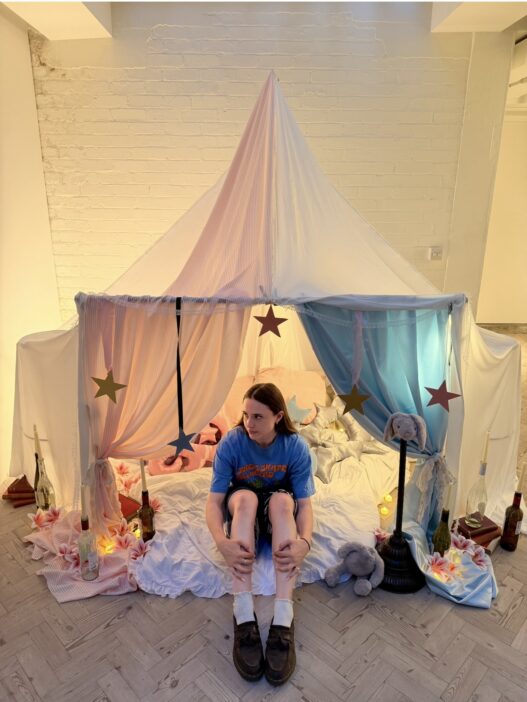
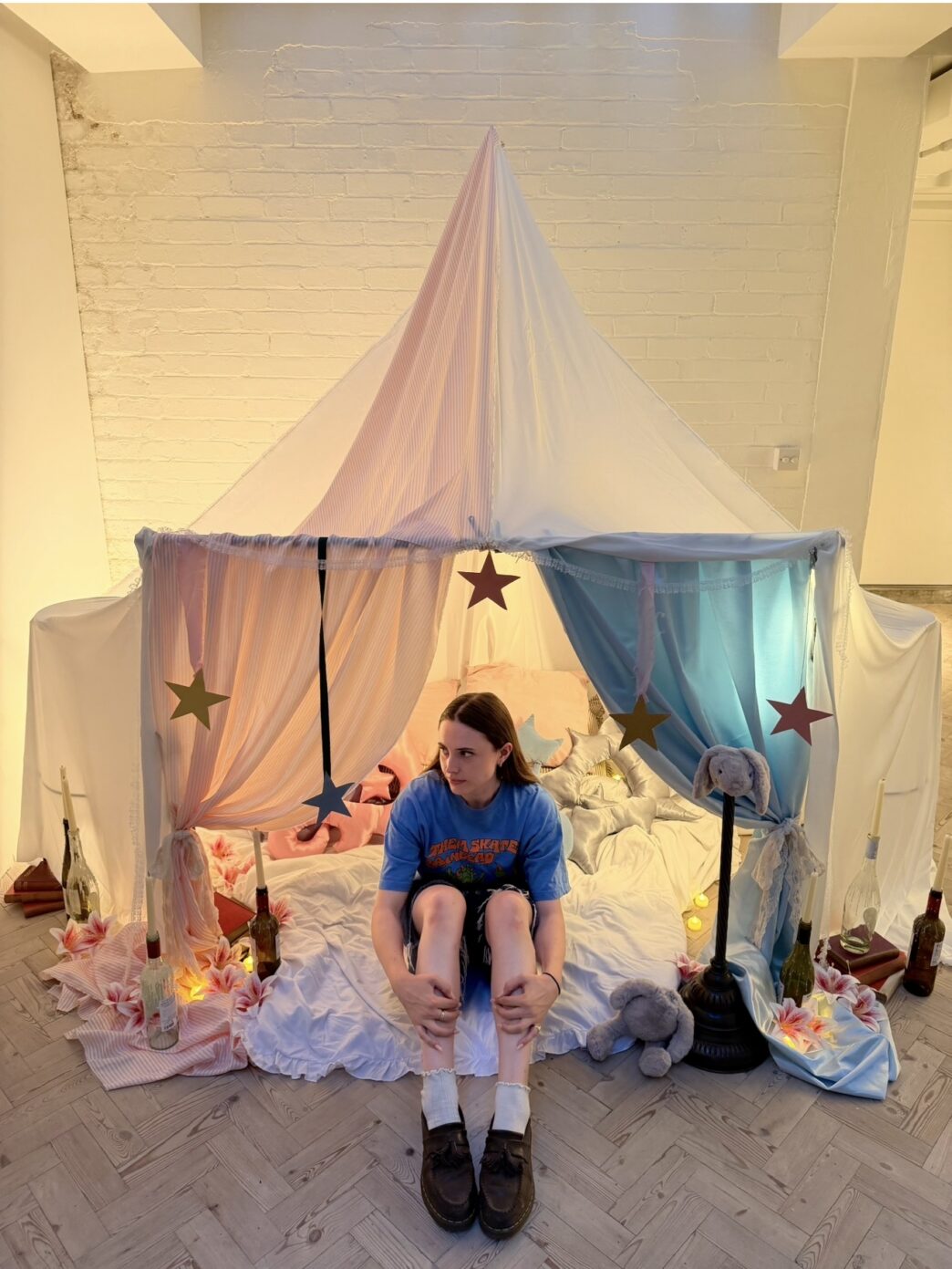
Iona Bielby, creator and host of the show Stargazer, decided that instead of catering to algorithms and hot takes, she would bet on a working theory she had been turning around in her head since she was a teenager: people tend to be more truthful in the intimacy of lying down at a sleepover. Bielby and her guest climb into a homemade blanket fort, fairy lights and stars cut from paper surrounding them, a single camera rigged overhead, stretch out side by side, and talk to the starry ceiling.
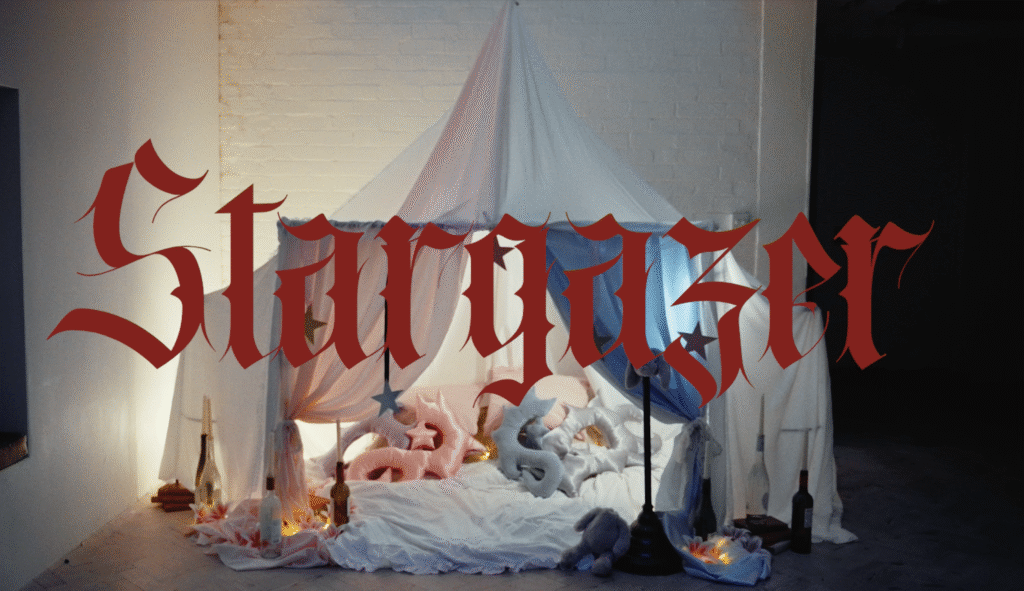
Bielby went to high school in a small town in Massachusetts, where, not being one for parties, she’d sneak onto the local football field at night with a friend and lie in the grass under the stars. The fort came from childhood afternoons building pillow forts with her brothers. “There’s kind of this feeling of heaviness in the air when it comes to these little magical moments,” she muses. “Specifically at nighttime in the summer, or autumn time when the leaves change.” Much of her work to this day has been about trying to replicate those moments.
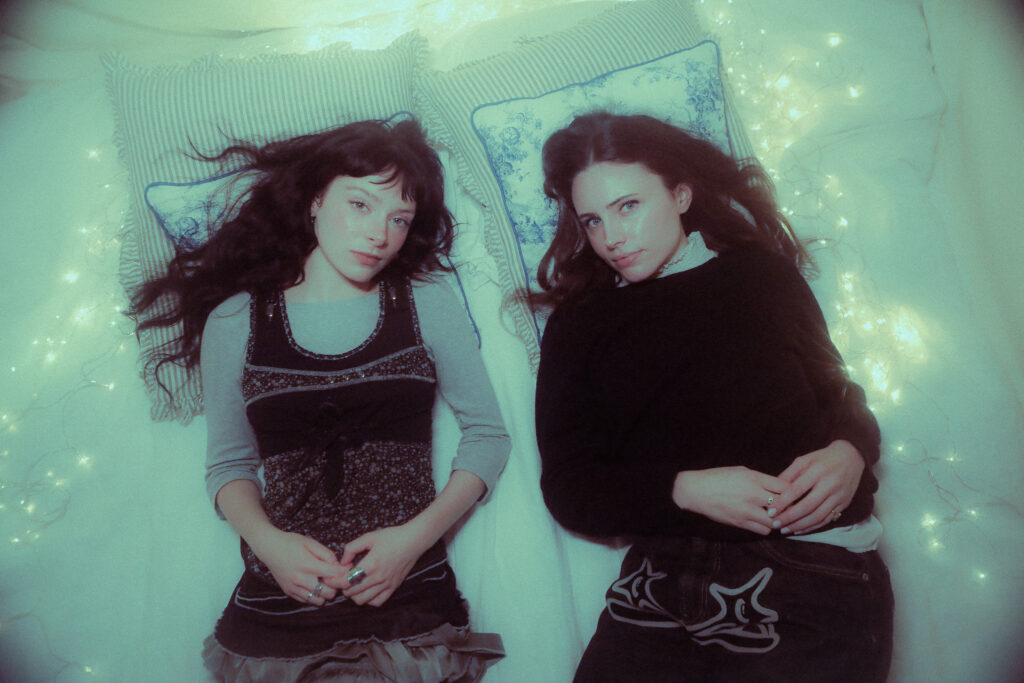
“Lying down at sleepovers is something I’ve done a lot growing up,” she says, “and you do open up a little bit more.” That hunch became the seed of Stargazer, and she admits she was naïve to assume it would survive contact with a camera and audiences. And yet, it did.
‘It really feels like you’re alone with the other person’
When Finn Wolfhard’s team reached out, Bielby had just cleared two months to recover creatively. She got two weeks’ notice instead, and a choice: open season three with the biggest name she’d ever had and risk fumbling it in public, or wait. She went for it. Editing the episode afterwards, she watched her own theory play out in the footage.
Wolfhard sitting up, in the show’s new opening segments, was one person. Wolfhard lying down was another: relaxed, digressive, offering stories she hadn’t asked for. Her explanation doubles as a diagnosis of the modern press junket. In an interview room, an artist brings a team, and the team watches, and the encounter becomes a performance.
“But when you’re lying down, you can’t see anything. You can just see the camera up above. It really feels like you’re alone with the other person.”
The lying-down section has its own title, “Stars Have Teeth”, and it is the part of the show she protects most fiercely. “That’s really the meat of the show, and the magic of it,” she says. “The no-limits conversation.” It’s also where casual viewers used to bail, because not everyone wants twenty unbroken minutes of a single overhead shot. Season three builds towards it in segments instead, playing around with different formats on the way. The ambition is to occupy a gap she thinks online media has left open. “There’s a disconnect between really serious platforms and really funny platforms. There’s no in-between. I really want to be that in-between.”
Why going mainstream doesn’t have to mean selling out
Bielby braced for the word “sellout” when the Wolfhard episode dropped. It never came, which still surprises her. Up until that point, her show had deliberately championed indie music’s next wave, frequently turning down bigger names no matter how good the exposure would have been. She felt comfortable bringing in a household name, she explains, precisely because she had no intention of compromising the essence of the show.
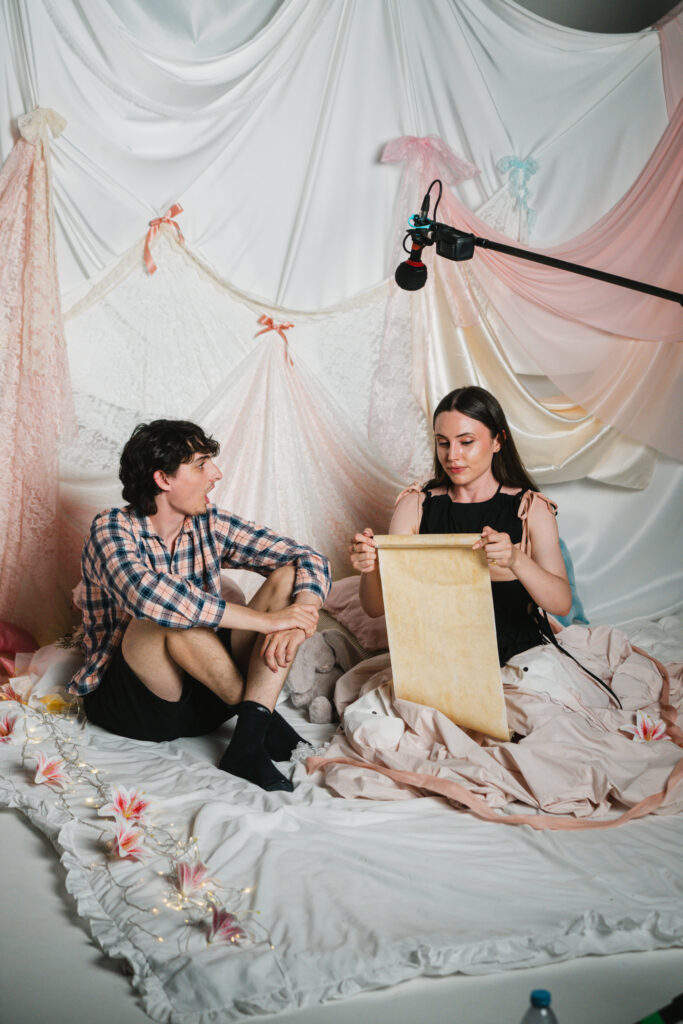
She made it clear from the beginning that she wasn’t going to stick to the classic press junket script. She asked Wolfhard about his money. She asked whether he has regrets about Stranger Things. “If a big artist is coming on the show, they gotta answer the questions,” she says. “There’s not gonna be any special treatment.” In Wolfhard’s case, the initial draw was that she genuinely likes his music, and that she’d noticed how consistently he champions independent artists, a habit people at his level rarely keep up.
There is a longer game underneath, and she’s upfront about it. She calls it 4D chess. She wants Stargazer to become the kind of institution where a new face can arrive with two hundred followers and leave with two hundred thousand, and if borrowing a famous name occasionally lets her funnel that attention back down to the emerging artists the show was built for, she’ll take the trade. “It feels like a win-win-win situation,” she says, “as long as I’m being authentic.”
‘I Will Not Be Missed‘
For most of the show’s run, Bielby has written, directed, booked, promoted and edited all of it herself, though she’d now push back on the label of one-woman show.
“At the end of the day, no one’s ever going to care about your project as much as you do,” she says, a familiar sentiment for any overworked creative.
Which is why season three was a new beginning on multiple fronts. Two managers have come on board. She hired a small camera crew for the Wolfhard shoot, and a professional editor cut the episode because the four-day turnaround made doing it herself impossible. She was, by her own admission, a nightmare collaborator, sending notes down to the millisecond. Everything she makes, she says, is “just translating what’s in my brain to what’s on the screen,” and outsourcing any part of that translation feels like handing over a part of herself.

The cost of the arrangement is burnout, which she has hit badly at least twice, badly enough to retreat to the countryside and speak to no one for a week at a time. She knows that isn’t a healthy coping mechanism and says so plainly. “I feel a lot of shame around not doing absolutely everything by myself,” she wrote, “which is something I should probably talk about in therapy.”
Doing absolutely everything herself is also, perhaps, a survival strategy. Interviewing -and journalism as a whole- is still a boys’ club. She only started being paid for a lot of the interview work she does a few months ago, something she tells me when I ask her if there is a gendered dimension to her work that she is always aware of, and she knows her male counterparts were paid all along.
Her response has been to refuse to shrink. “I am going to come in and work so fucking hard that I will not be missed,” she tells me laughing. Part of that is also demystifying the work she does and the industry as a whole. She always takes the time to respond to the DMs and the emails sent by young women who watch her interviews and hope to one day do something similar.
The Moments That Hang
Asked what she wants people to take away from Stargazer, she answers in what can only be considered true to the brand she’s built piece by piece. “I always want people to feel creatively rebellious,” she wrote to me after our call. “And deeper than that, I want people to feel like they’re allowed to take up space and be weird.”
It’s the same permission she’s spent years granting herself, it seems, and it loops back, in the end, to a football field in Massachusetts. “There’s always just been something I’ve been chasing that I haven’t quite found,” she says. “I try to capture something that’s lingering in the air, whether that’s tension, whether that’s friendship, whether that’s awkwardness. I’m so interested in those moments that hang.”
Written by Teodora Strugaru.